
Genus · Elapidae
Types of bandys
6 species make up the genus Vermicella, the snakes commonly called bandys. All of them are venomous.
About bandy-bandy snakes
Vermicella are Australia's boldly black-and-white ringed bandy-bandies, small burrowing elapids built almost entirely around eating other burrowing snakes.
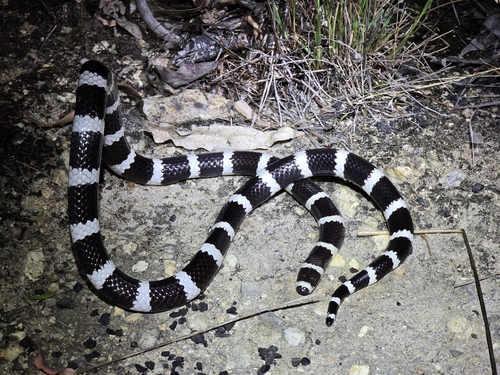
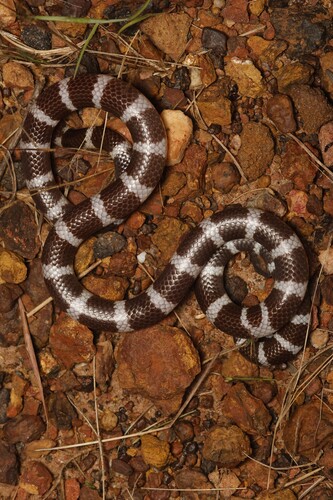
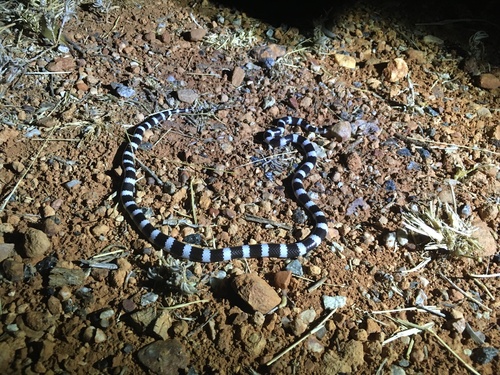
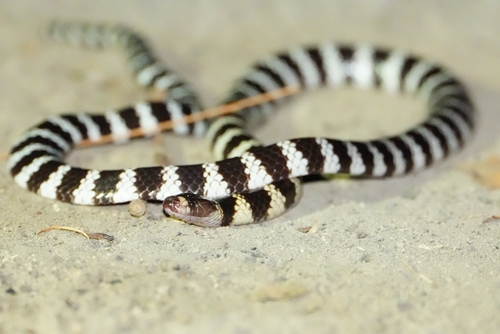
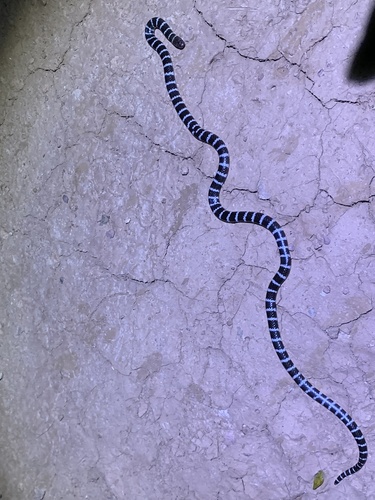
Vermicella is a genus of small, fossorial snakes endemic to Australia and placed in the family Elapidae, the same front-fanged family that includes cobras, taipans, and tiger snakes. Members are universally known as bandy-bandies for their sharply contrasting pattern of alternating black and white (or cream) rings that run the full length of the body. That ringed look is the genus signature and the fastest way to recognize one in the field.
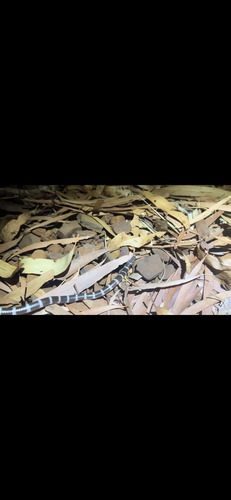
These are burrowing specialists. They spend most of their lives underground or under cover such as soil, leaf litter, logs, and rocks, and they are most often seen on the surface at night, especially after rain when they may move across roads and open ground. The genus is distributed across much of mainland Australia, with different species occupying their own regions, from the eastern seaboard to the arid center and the northwest. Habitats range from forests and woodlands to drier shrublands and sandy or stony country, reflecting the spread of the six species in our database.
Recognition comes down to body shape and pattern together. Bandy-bandies are slender with a blunt, rounded snout suited to pushing through soil, a short tail, and the diagnostic complete dark and pale rings encircling the body. When threatened, several species perform a distinctive defensive display, raising one or more stiff loops or arches of the body off the ground. This bluff is striking but it is a warning posture, not an attack.
As elapids, Vermicella are venomous and front-fanged, so they are not harmless in the strict sense. In practice bandy-bandies are considered of low danger to people: they are small, secretive, reluctant to bite, and their venom is geared toward subduing their prey rather than threatening humans, with no record of serious envenomation. That said, no wild venomous snake should be handled. Treat any elapid with respect, leave it alone, and seek medical care for any suspected bite rather than trying to assess severity yourself.
Ecologically, Vermicella are dietary specialists that feed largely or entirely on blind snakes (typhlopids), the worm-like burrowing snakes they hunt underground. This narrow prey focus shapes their whole biology, from the burrowing build to the nocturnal, rain-linked surface activity. Like many Australian elapids they reproduce by laying eggs. Their nocturnal, subterranean habits mean people rarely encounter them except by chance at night or when one is turned up during digging or yard work.
Vermicella belongs to the Elapidae family (Cobras, mambas, coral & sea snakes). Front-fanged venomous snakes, many with potent neurotoxic venom. Usually slender with a head barely wider than the neck and fixed front fangs (not the folding fangs of vipers). Coral snakes are boldly ringed; sea snakes have a flattened, paddle-like tail.
Danger: All elapids are venomous and the family is responsible for a large share of fatal snakebites worldwide. Many are shy, but bites can be life-threatening. Treat any bite as a medical emergency.
All species (6)
Keep learning
- Venomous vs Nonvenomous: How to Tell the DifferenceThe folk rules for telling venomous snakes apart, where each one fails, and why location-based identification beats guessing by sight.
- Are Snakes Dangerous? The Real Risk, in PerspectiveMost snakes are harmless and avoid people. Here is the honest picture of snakebite risk worldwide and how to lower your own.
- Snake Venom Explained: How It Works and WhyWhat snake venom actually is, why it evolved, the main venom types, fang delivery, how antivenom works, and why ranking the most venomous snake is hard.
- How Snakes Move, Hunt, and EatHow snakes move without legs, hunt as ambushers or active foragers, kill by constriction or venom, and swallow prey wider than their head.