
Genus · Colubridae
Types of glasstails
7 species make up the genus Urotheca, the snakes commonly called glasstails. None are considered dangerous to humans.
About brittle snakes
Slender, brightly striped forest-floor snakes of Central and South America, famous for tails that snap off when grabbed.
Urotheca is a genus of small, slender colubrid snakes in the large family Colubridae, which holds the majority of the world's snake species. The genus is found in the New World tropics, and the seven species in our database represent a group built for life among leaf litter and low vegetation. The name and the common label brittle snake point to the trait that defines them in the field: a long, fragile tail that breaks away easily when a predator strikes, letting the snake escape while the detached piece distracts the attacker.
These snakes live in Central America and northwestern South America, favoring humid lowland and foothill rainforest. They are ground dwellers that move through damp leaf litter, root tangles, and the bases of plants, often near streams and other moist microhabitats. Like many small forest colubrids, they are secretive and spend much of their time hidden, so most encounters are brief glimpses on the forest floor rather than open sightings.
Members are recognized in general terms by a thin, elongate body, a head only modestly distinct from the neck, and bold longitudinal striping or banding that runs the length of the body. Common names in this group, such as Ribboned Brittle-Snake, Orange-bellied Glasstail, Tawney-headed Litter Snake, and Pale Ground Snake, reflect both the striped, ribbon-like patterning and the fragile, glass-like tail. The bright patterns can resemble those of more dangerous snakes, a likely defensive mimicry common among small tropical colubrids.
Urotheca snakes are not considered dangerous to people. They are small and non-aggressive, and they are not front-fanged venomous snakes like vipers or elapids. Some colubrids in this broad group carry mild rear-fanged secretions used to subdue small prey, but these species pose no meaningful threat in normal circumstances. Even so, no wild snake should be handled, and any snakebite that causes unusual swelling, pain, or other symptoms should be treated as a medical matter. In the United States contact Poison Control at 1-800-222-1222, and elsewhere call local emergency services.
Ecologically these are small predators of the litter layer. As with similar slender forest colubrids, the diet centers on small prey such as lizards, frogs, and invertebrates encountered on the ground. They are egg-laying snakes, in keeping with most members of the family. Their main defenses are concealment, speed, warning coloration, and the signature tail break, all of which favor avoiding confrontation rather than fighting.
Urotheca belongs to the Colubridae family (Colubrids). The largest snake family, and the one most snakes you meet belong to. Typically round pupils, a head only slightly wider than the neck, and no heat-sensing facial pit or rattle. Scales may be smooth and glossy or keeled and matte depending on the species.
Danger: Almost all colubrids are harmless. A small number are rear-fanged with medically significant venom, the boomslang and the twig (vine) snakes of Africa being the dangerous exceptions. Most colubrids will flee or bluff rather than bite.
All species (7)
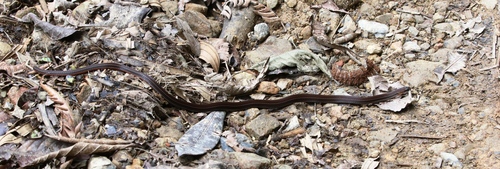 Ribboned Brittle-SnakeUrotheca lateristrigaHarmless
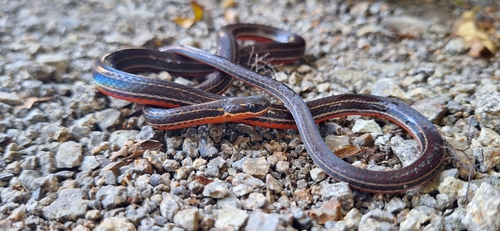 Orange-bellied GlasstailUrotheca guentheriHarmless
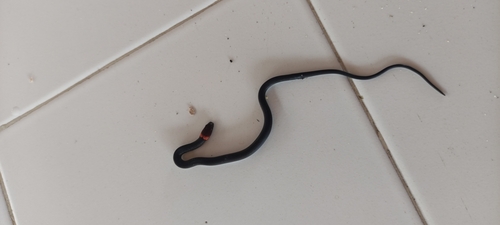 Tawney-headed Litter SnakeUrotheca fulvicepsHarmless
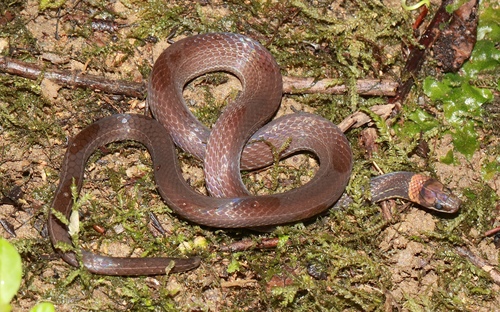 Pale Ground SnakeUrotheca decipiensHarmless
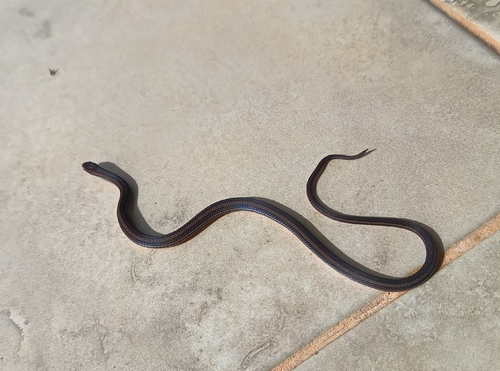 Urotheca multilineataHarmless
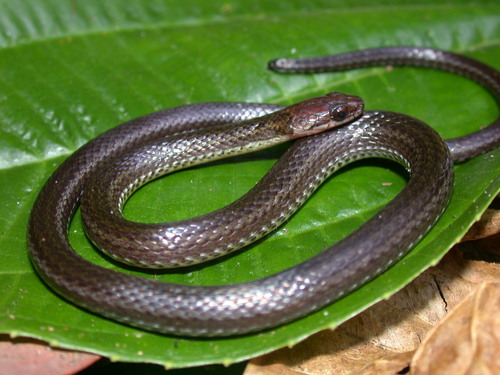 Costa Rican GlasstailUrotheca pachyuraHarmless
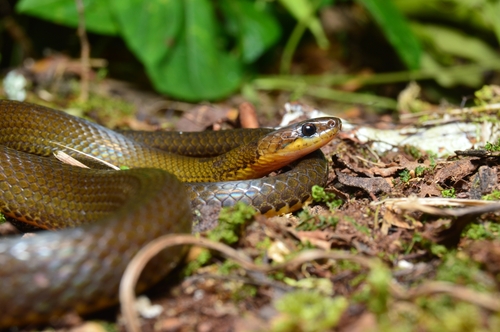 Myer's GlasstailUrotheca myersiHarmless
Keep learning
- What Is a Snake? Anatomy and the BasicsA clear overview of what makes a snake a snake: limbless body plan, anatomy, evolution from lizards, species diversity, and why they are ectothermic.
- How Snakes Move, Hunt, and EatHow snakes move without legs, hunt as ambushers or active foragers, kill by constriction or venom, and swallow prey wider than their head.
- What Do Snakes Eat?All snakes are carnivores. Learn what snakes eat, how diet changes with size and age, how often they feed, and how they hunt and swallow prey.
- Venomous vs Nonvenomous: How to Tell the DifferenceThe folk rules for telling venomous snakes apart, where each one fails, and why location-based identification beats guessing by sight.