
Genus · Typhlopidae
Types of worm snakes
7 species make up the genus Typhlops, the snakes commonly called worm snakes. None are considered dangerous to humans.
About blind snakes
Tiny, burrowing, worm-like snakes that spend almost their whole lives underground.
Typhlops is a genus of blind snakes in the family Typhlopidae. These are small, slender, secretive snakes built for life underground, and they belong to a group of primitive snakes that branched off early in snake evolution. Members look so much like earthworms that people routinely mistake them for one, which is exactly why so many carry common names like worm snake.
The genus is centered on the Caribbean, with Typhlops species native to the West Indies including Jamaica, Puerto Rico, and Hispaniola. The broader family Typhlopidae is far more widespread, occurring across tropical and subtropical regions worldwide. Typical habitat is soft soil, leaf litter, rotting logs, and the loose ground around roots, where the snakes tunnel and stay hidden from view.
You recognize a blind snake by its small size, smooth shiny scales, a body of nearly uniform width from head to tail, and a short blunt tail often tipped with a tiny spine. The eyes are reduced to dark spots under the head scales and detect little more than light and dark, which is the source of the name. The mouth is small and tucked under the snout, an adaptation for burrowing rather than biting.
These snakes are harmless to people. They are not venomous, they do not have fangs capable of injecting venom, and their tiny mouths cannot meaningfully bite a human. Their main defenses are escape into the soil, writhing, and releasing a foul-smelling musk. There is no medical danger from a blind snake. As with any wild animal, the sensible approach is to observe it and leave it undisturbed rather than handle it.
Ecologically, blind snakes are useful insect controllers. They feed mainly on ants and termites, including the eggs, larvae, and pupae, hunting them inside their colonies underground. Many Typhlopidae reproduce by laying eggs, and some lineages in the family are known to reproduce without males through parthenogenesis. Behavior is overwhelmingly fossorial and nocturnal, so most sightings happen after heavy rain or when someone turns over a log or digs in moist soil.
Typhlops belongs to the Typhlopidae family (Blindsnakes). Tiny, worm-like burrowing snakes that raid ant and termite nests. Looks like a small, glossy earthworm with smooth scales and no obvious neck, eyes, or pattern.
Danger: Harmless. They do not bite people and have no venom.
All species (7)
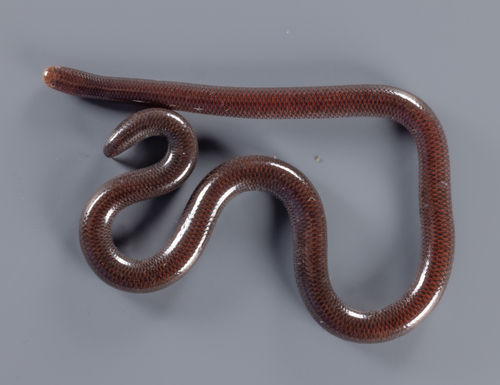 Jamaica Worm SnakeTyphlops jamaicensisHarmless
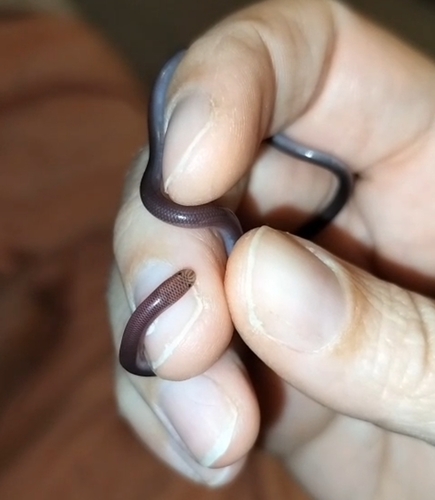 Puerto Rican Worm SnakeTyphlops rostellatusHarmless
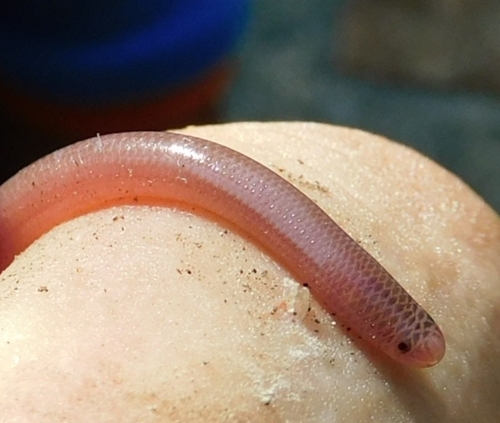 Hispaniola Worm SnakeTyphlops pusillusHarmless
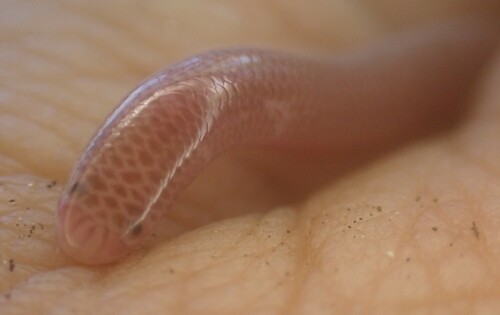 Earthworm Blind SnakeTyphlops lumbricalisHarmless
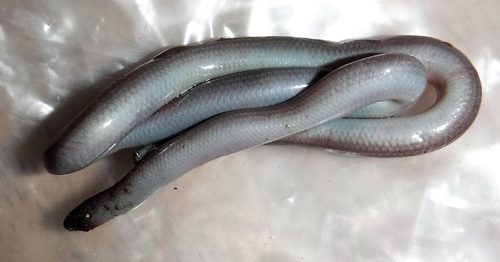 Schwartz' Worm SnakeTyphlops schwartziHarmless
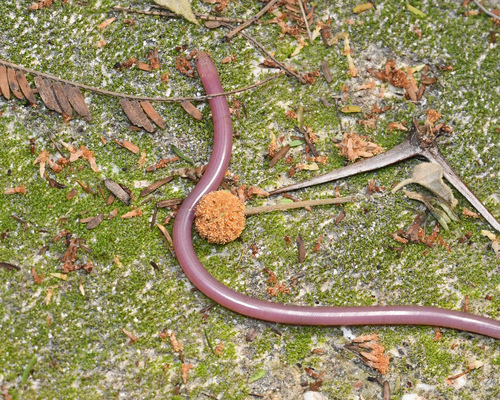 Island Worm SnakeTyphlops sulcatusHarmless
- No photoTiburon Peninsula BlindsnakeTyphlops hectusHarmless
Keep learning
- What Is a Snake? Anatomy and the BasicsA clear overview of what makes a snake a snake: limbless body plan, anatomy, evolution from lizards, species diversity, and why they are ectothermic.
- How Snakes Move, Hunt, and EatHow snakes move without legs, hunt as ambushers or active foragers, kill by constriction or venom, and swallow prey wider than their head.
- What Do Snakes Eat?All snakes are carnivores. Learn what snakes eat, how diet changes with size and age, how often they feed, and how they hunt and swallow prey.
- Venomous vs Nonvenomous: How to Tell the DifferenceThe folk rules for telling venomous snakes apart, where each one fails, and why location-based identification beats guessing by sight.