
Genus · Viperidae
Types of vipers
4 species make up the genus Tropidolaemus, the snakes commonly called vipers. All of them are venomous.
About temple pit vipers
Tropidolaemus are slow-moving, arboreal pit vipers of Southeast Asia, famous for the ornate Wagler's pit viper kept at the Penang Snake Temple.
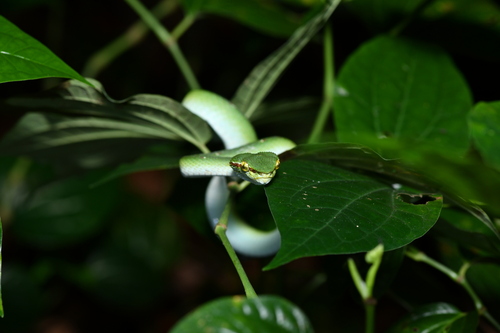
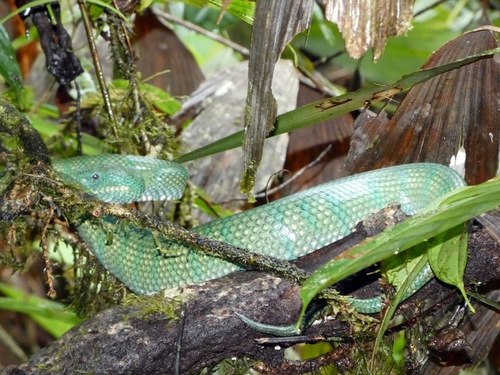
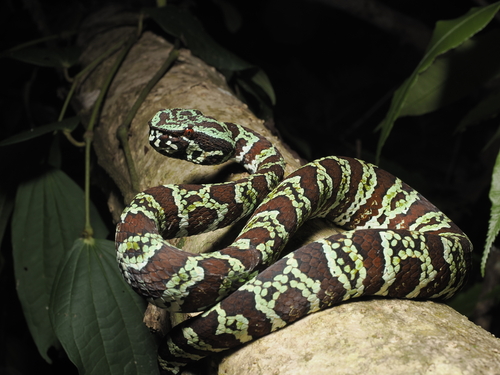
Tropidolaemus is a small genus of venomous snakes in the family Viperidae, within the pit viper subfamily Crotalinae. Like all pit vipers, its members carry a heat-sensing pit between each eye and nostril that detects the body warmth of prey. The genus is best known through Wagler's pit viper, the species that gives the group its common name because large numbers of them rest among the offerings at the Penang Snake Temple in Malaysia. Our database holds four species: Wagler's Pit Viper, the Bornean Keeled Pit Viper, the Broad-banded Temple Pitviper, and the South Philippine Temple Pitviper.
These are snakes of Southeast Asian rainforest. The genus ranges across southern Thailand, peninsular Malaysia, Indonesia, Borneo, and the Philippines, with individual species often tied to particular islands or regions. They are strongly arboreal, spending most of their lives coiled on branches, vines, and foliage in lowland and hill forest, frequently near water. Because they sit motionless for long stretches waiting to ambush prey, they can be easy to overlook in dense green vegetation.
In general terms, Tropidolaemus are stout-bodied snakes with a broad, triangular head clearly wider than the neck, vertical cat-like pupils, and a prehensile tail suited to climbing. Many show vivid coloring, green grounds banded or speckled with yellow, white, or black, and the sexes can look strikingly different, with females often larger and more boldly patterned than the smaller, brighter males. The combination of the heat-sensing facial pit, keeled scales, and an arboreal ambush posture is typical of the group.
These are venomous snakes and should be treated as dangerous. As pit vipers they deliver venom through long, hinged fangs, and a bite can cause significant local pain, swelling, and tissue effects. They are not aggressive and generally rely on camouflage and stillness rather than fleeing, which means bites usually happen when a snake is touched, grabbed, or stepped near. Never handle a wild Tropidolaemus and never assume one is harmless because it is sitting still. If a bite occurs, treat it as a medical emergency: keep the person calm and still, and seek professional care immediately by contacting local emergency services or, in the United States, Poison Control at 1-800-222-1222.
Ecologically, Tropidolaemus are sit-and-wait ambush predators. They feed mainly on small vertebrates such as lizards, frogs, birds, and small mammals, striking from a coiled position and using venom to subdue prey. Like most pit vipers, they give birth to live young rather than laying eggs. Their slow, deliberate behavior and reliance on concealment make them a classic example of how arboreal vipers earn a living by waiting rather than hunting on the move.
Tropidolaemus belongs to the Viperidae family (Vipers & pit vipers). Heavy-bodied venomous snakes with long, hinged, hollow fangs. Broad, triangular head distinct from a narrow neck, heavy body, and (usually) vertical, cat-like pupils. Pit vipers also have a heat-sensing pit; true vipers do not.
Danger: Every viper is venomous, and the family includes some of the world's most medically important snakes. Venom is typically hemotoxic, causing pain, swelling, tissue damage, and bleeding. Treat any viper bite as a medical emergency.
All species (4)

Keep learning
- Venomous vs Nonvenomous: How to Tell the DifferenceThe folk rules for telling venomous snakes apart, where each one fails, and why location-based identification beats guessing by sight.
- Are Snakes Dangerous? The Real Risk, in PerspectiveMost snakes are harmless and avoid people. Here is the honest picture of snakebite risk worldwide and how to lower your own.
- Snake Venom Explained: How It Works and WhyWhat snake venom actually is, why it evolved, the main venom types, fang delivery, how antivenom works, and why ranking the most venomous snake is hard.
- How Snakes Move, Hunt, and EatHow snakes move without legs, hunt as ambushers or active foragers, kill by constriction or venom, and swallow prey wider than their head.