
Genus · Colubridae
Types of jiboinhas
2 species make up the genus Tropidodryas, the snakes commonly called jiboinhas. None are considered dangerous to humans.
About Brazilian forest racers
A small genus of slender, agile snakes endemic to the Atlantic Forest of Brazil, known for a clever caudal lure in young animals.
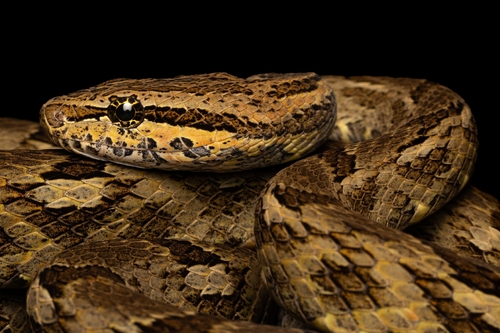
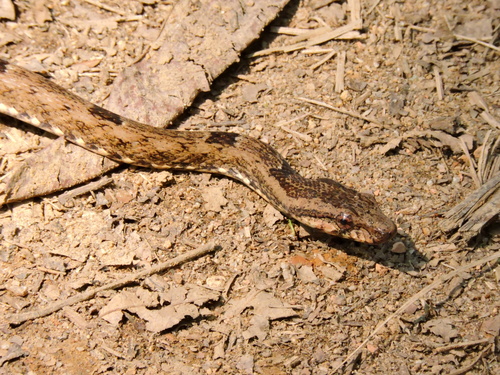
Tropidodryas is a genus of snakes in the family Colubridae, the largest and most diverse snake family in the world. Our database holds two species, Tropidodryas serra, often called the Serra snake, and Tropidodryas striaticeps, sometimes called Jiboinha. Both are endemic to Brazil, meaning they are found there and nowhere else, and they are tied to the Atlantic Forest region along the country's southeastern coast and interior.
These are mid-sized, slender snakes adapted to life in and around forest vegetation. In general terms they have keeled scales, large eyes, and a build that supports moving through leaf litter, low brush, and trees. Coloration runs to browns and grays with darker patterning that breaks up the body against bark and litter. A notable behavior recorded in the genus is caudal luring, where a young snake twitches the tip of its tail to mimic a moving insect or worm and draw small prey within striking range. They feed largely on small vertebrates such as frogs, lizards, and small rodents, and like most colubrids they lay eggs.
Members of Tropidodryas are not front-fanged venomous snakes and are not considered dangerous to people. Some colubrids carry mild rear-fang secretions used to subdue small prey, and these are not a medical concern for humans, but the general rule still holds: do not handle wild snakes, since identification mistakes and defensive bites happen. If anyone is bitten by a snake they cannot confidently identify and symptoms develop, treat it as a medical situation and contact emergency services or, in the United States, Poison Control at 1-800-222-1222.
Tropidodryas belongs to the Colubridae family (Colubrids). The largest snake family, and the one most snakes you meet belong to. Typically round pupils, a head only slightly wider than the neck, and no heat-sensing facial pit or rattle. Scales may be smooth and glossy or keeled and matte depending on the species.
Danger: Almost all colubrids are harmless. A small number are rear-fanged with medically significant venom, the boomslang and the twig (vine) snakes of Africa being the dangerous exceptions. Most colubrids will flee or bluff rather than bite.
All species (2)
Keep learning
- What Is a Snake? Anatomy and the BasicsA clear overview of what makes a snake a snake: limbless body plan, anatomy, evolution from lizards, species diversity, and why they are ectothermic.
- How Snakes Move, Hunt, and EatHow snakes move without legs, hunt as ambushers or active foragers, kill by constriction or venom, and swallow prey wider than their head.
- What Do Snakes Eat?All snakes are carnivores. Learn what snakes eat, how diet changes with size and age, how often they feed, and how they hunt and swallow prey.
- Venomous vs Nonvenomous: How to Tell the DifferenceThe folk rules for telling venomous snakes apart, where each one fails, and why location-based identification beats guessing by sight.