
Genus · Colubridae
Types of snail-eating snakes
7 species make up the genus Tropidodipsas, the snakes commonly called snail-eating snakes. None are considered dangerous to humans.
About snail-eating snakes
Small, secretive tropical snakes built to pull snails and slugs from their shells.
Tropidodipsas is a genus of small snakes in the family Colubridae, the largest and most diverse snake family in the world. The group is part of the snail-eating and slug-eating snake assemblage, and its members are commonly called snail-eating snakes. Our database lists 7 species, including Fischer's Snail-Eating Snake, the Banded Snail Sucker, Philippi's Snail-Eating Snake, and Zweifel's Snail-Eating Snake.
These snakes are found in Mexico and Central America, where they live in humid and seasonally dry tropical settings. Like many small colubrids, they favor moist leaf litter, low vegetation, and the ground layer of forests and woodland edges, places where their soft-bodied prey is abundant. They tend to be secretive and are most active at night, which is part of why several species in the genus are poorly documented.
In general terms, Tropidodipsas snakes are slender and modest in size, with members typically ranging from roughly 30 to 60 centimeters in length. Many show a banded color pattern of alternating dark and light rings along the body, which is reflected in common names such as the Banded Snail Sucker. The head is often blunt and only slightly distinct from the neck, suiting an animal that probes among litter and crevices rather than chasing fast prey.
These are harmless snakes to people. They are not front-fanged venomous species and pose no medical danger to humans. Their feeding biology centers on a specialized jaw and tooth structure used to extract snails and slugs, not on subduing large or defensive prey, so a bite is not a realistic concern. As with any wild animal, the responsible approach is to observe and not handle, and to leave identification of unfamiliar snakes to people who know the local fauna.
Ecologically, Tropidodipsas are dietary specialists. They feed primarily on land snails and slugs, using elongated lower jaw teeth and a feeding technique that lets them pull a snail's body free of its shell. Like the majority of colubrids, the genus is understood to be egg-laying, and individuals are quiet, low-profile foragers rather than bold or aggressive snakes. Their close tie to moist microhabitats and mollusk populations makes them good indicators of healthy, humid ground-level habitat.
Tropidodipsas belongs to the Colubridae family (Colubrids). The largest snake family, and the one most snakes you meet belong to. Typically round pupils, a head only slightly wider than the neck, and no heat-sensing facial pit or rattle. Scales may be smooth and glossy or keeled and matte depending on the species.
Danger: Almost all colubrids are harmless. A small number are rear-fanged with medically significant venom, the boomslang and the twig (vine) snakes of Africa being the dangerous exceptions. Most colubrids will flee or bluff rather than bite.
All species (7)
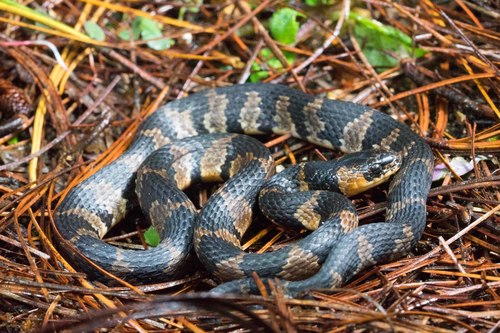 Fischer's Snail-Eating SnakeTropidodipsas fischeriHarmless
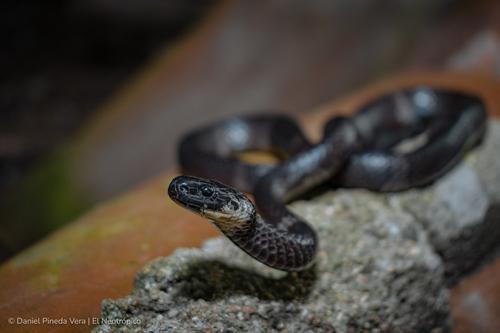 Banded Snail SuckerTropidodipsas fasciataHarmless
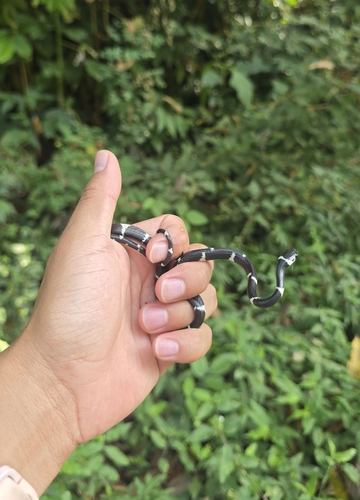 Philippi’s Snail-Eating SnakeTropidodipsas philippiiHarmless
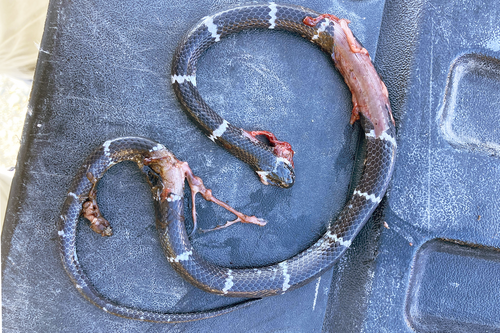 Tropidodipsas repletaHarmless
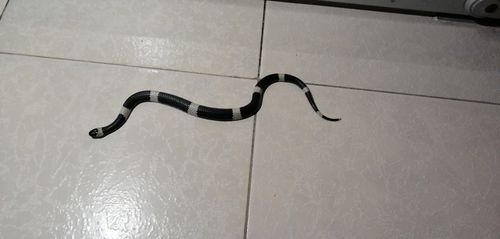 Zweifel’s Snail-Eating SnakeTropidodipsas zweifeliHarmless
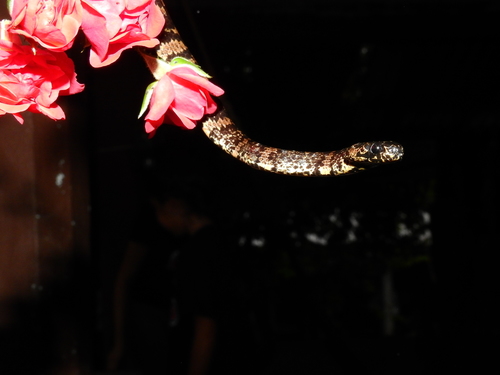 Tropidodipsas papavericolaHarmless
- No photoTropidodipsas tricolorHarmless
Keep learning
- What Is a Snake? Anatomy and the BasicsA clear overview of what makes a snake a snake: limbless body plan, anatomy, evolution from lizards, species diversity, and why they are ectothermic.
- How Snakes Move, Hunt, and EatHow snakes move without legs, hunt as ambushers or active foragers, kill by constriction or venom, and swallow prey wider than their head.
- What Do Snakes Eat?All snakes are carnivores. Learn what snakes eat, how diet changes with size and age, how often they feed, and how they hunt and swallow prey.
- Venomous vs Nonvenomous: How to Tell the DifferenceThe folk rules for telling venomous snakes apart, where each one fails, and why location-based identification beats guessing by sight.