
Genus · Elapidae
Tropidechis
The genus Tropidechis contains a single species. It is venomous.
About rough-scaled snake
A single, strongly keeled Australian elapid that is dangerously venomous and easy to mistake for a harmless keelback.
Tropidechis is a small genus in the family Elapidae, the front-fanged venomous snakes that include cobras, mambas, taipans, and most of Australia's terrestrial snake fauna. The genus is best known for the rough-scaled snake, Tropidechis carinatus, found along the eastern coast of Australia. As elapids, members have fixed front fangs and potent venom, which sets the genus apart from the superficially similar but harmless keelbacks it often shares habitat with.
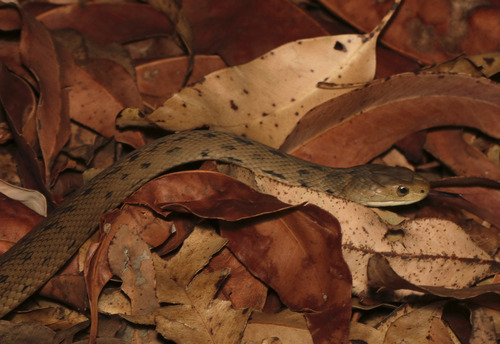
The rough-scaled snake lives in wet forests, rainforest margins, and well-watered gullies of coastal eastern Australia, often near creeks and damp ground. The defining feature is its strongly keeled body scales, which give the snake a rough, ridged texture and a matte appearance rather than a glossy sheen. The coloration is typically olive to brown with darker crossbands or blotches, and the build is moderate, with adults usually under a meter in length. This keeled, banded look is exactly why it is so often confused with the non-venomous keelback, Tropidonophis mairii, a mistake that can have serious consequences.
This snake is venomous and considered dangerous to humans. Its venom contains neurotoxins and components that can affect blood clotting and muscle tissue, and bites are treated as a medical emergency. It hunts frogs, lizards, small mammals, and other small prey, and like many Australian elapids it gives birth to live young rather than laying eggs. It is not aggressive but will defend itself if cornered or handled. Never handle a wild snake you suspect is a rough-scaled snake, and never rely on the keelback resemblance to judge safety. If a bite occurs, treat it as life-threatening, keep the person still, and seek emergency care immediately, in the US via Poison Control at 1-800-222-1222 or local emergency services.
Tropidechis belongs to the Elapidae family (Cobras, mambas, coral & sea snakes). Front-fanged venomous snakes, many with potent neurotoxic venom. Usually slender with a head barely wider than the neck and fixed front fangs (not the folding fangs of vipers). Coral snakes are boldly ringed; sea snakes have a flattened, paddle-like tail.
Danger: All elapids are venomous and the family is responsible for a large share of fatal snakebites worldwide. Many are shy, but bites can be life-threatening. Treat any bite as a medical emergency.
All species (1)
Keep learning
- Venomous vs Nonvenomous: How to Tell the DifferenceThe folk rules for telling venomous snakes apart, where each one fails, and why location-based identification beats guessing by sight.
- Are Snakes Dangerous? The Real Risk, in PerspectiveMost snakes are harmless and avoid people. Here is the honest picture of snakebite risk worldwide and how to lower your own.
- Snake Venom Explained: How It Works and WhyWhat snake venom actually is, why it evolved, the main venom types, fang delivery, how antivenom works, and why ranking the most venomous snake is hard.
- How Snakes Move, Hunt, and EatHow snakes move without legs, hunt as ambushers or active foragers, kill by constriction or venom, and swallow prey wider than their head.