
Genus · Leptotyphlopidae
Types of blind snakes
10+ species make up the genus Trilepida, the snakes commonly called blind snakes. None are considered dangerous to humans.
About blind snakes (slender blind snakes)
Tiny, worm-like burrowing snakes that spend almost their entire lives underground hunting ants and termites.
Trilepida is a genus in the family Leptotyphlopidae, the slender blind snakes or threadsnakes. These are among the smallest and most secretive snakes in the world. They look more like earthworms than typical snakes: a thin, cylindrical, more or less uniform-width body covered in smooth, tightly overlapping scales, a blunt tail that often ends in a tiny spine, and eyes reduced to faint dark spots under the head scales. The family as a whole contains the thinnest snakes on Earth, and Trilepida fits that mold.
The genus belongs to the broader group of fossorial, or burrowing, snakes that live almost entirely in soil, leaf litter, and underground chambers. Trilepida is a Neotropical group, with species ranging across parts of South America, including Brazil and surrounding regions, and into Central America. Members are typically found in soil, under rocks and logs, inside rotting wood, and within or near ant and termite nests. Because they stay buried, they are encountered far less often than their actual numbers would suggest, and several species are known from only a handful of specimens.
Recognizing a Trilepida in general terms means looking for the classic threadsnake build: very small size, a slender body of nearly even thickness from head to tail, smooth shiny scales, and the absence of functional eyes or any obvious distinction between the head and neck. Precise identification to species relies on fine scale counts and locality and is a job for specialists rather than field eyeballing. The database lists 10+ species in this genus, with real examples including the Big-scaled Blind Snake, the Espirito Santo Blind Snake, Joshua's Blind Snake, and Amaral's Blind Snake.
These snakes are completely harmless to people. They are not venomous, not rear-fanged, and not dangerous; their mouths are tiny and adapted for feeding on small soft-bodied invertebrates, not for biting in defense. Their diet is dominated by ants and termites, including the eggs, larvae, and pupae found inside nests, and they are well known for entering colonies to feed. When handled they may writhe, press the tail spine against the skin, or release a musky cloacal secretion, but they cannot harm a person. As with any wild animal, it is best to observe rather than handle, and to wash hands afterward.
Ecologically, Trilepida and its relatives play a quiet but useful role as predators of social insects and as prey for larger animals. Like other leptotyphlopids, they are believed to be egg-laying (oviparous), producing small clutches of elongated eggs, though the detailed reproductive biology of many individual species remains poorly documented. Much of what is confidently known about the genus comes from family-level traits, because the underground lifestyle makes direct observation difficult. There is no medical concern associated with these snakes; standard safety advice for any unidentified snake is to avoid handling and, in the rare event of a bite from a snake you cannot identify, to contact US Poison Control at 1-800-222-1222 or local emergency services.
Trilepida belongs to the Leptotyphlopidae family (Slender blindsnakes (threadsnakes)). Among the smallest snakes in the world, thin as a thread. Extremely thin and worm-like, uniformly colored, with vestigial eyes. Resembles a shiny piece of string.
Danger: Harmless. No venom and far too small to harm a person.
All species (12)
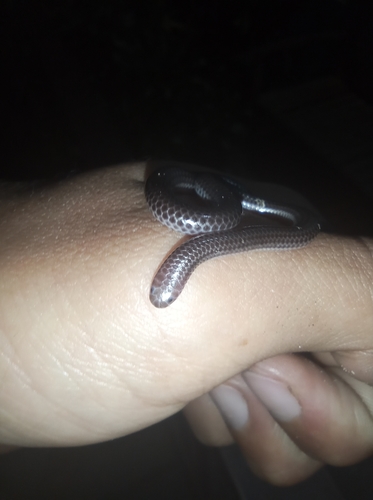 Big-scaled Blind SnakeTrilepida macrolepisHarmless
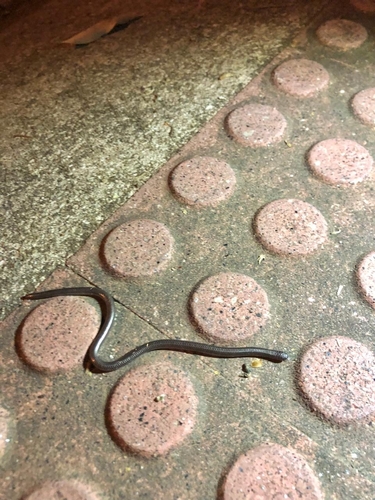 Espíritu Santo Blind SnakeTrilepida salgueiroiHarmless
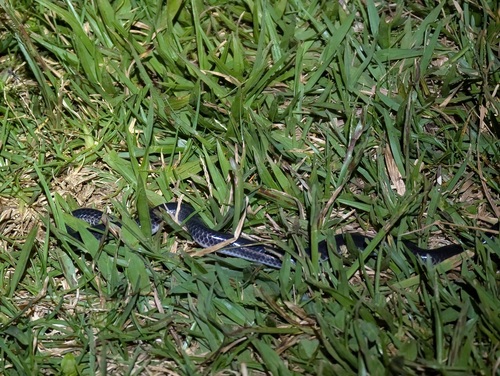 Joshua's Blind SnakeTrilepida joshuaiHarmless
 Amaral's Blind SnakeTrilepida koppesiHarmless
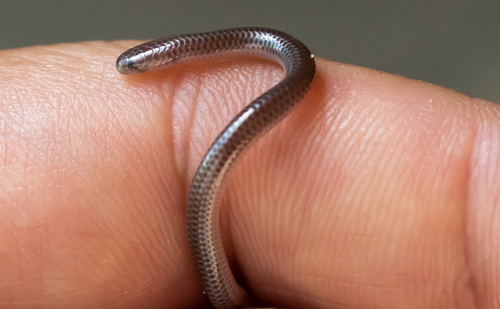 Dainty Blind SnakeTrilepida dimidiataHarmless
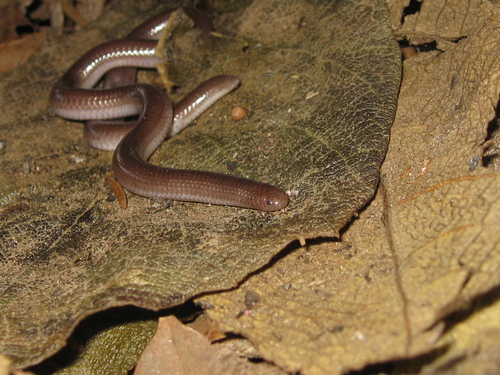 Trilepida janiHarmless
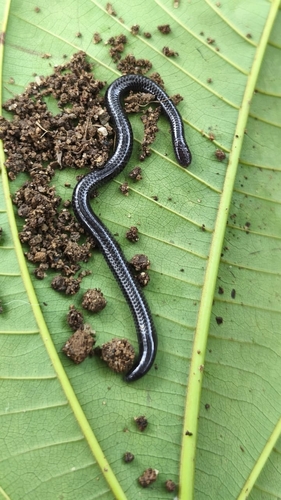 Caqueta Blind SnakeTrilepida brevissimaHarmless
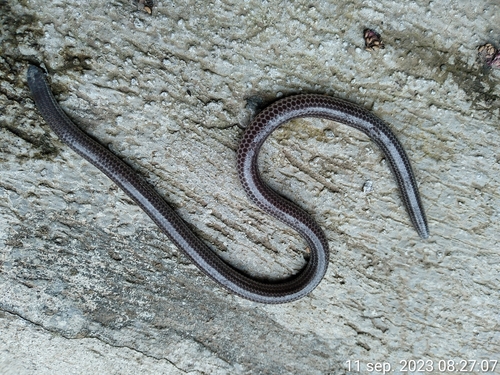 Trilepida pastusaHarmless
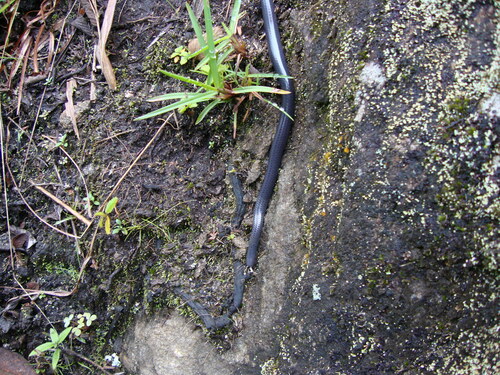 Bailey's Blind SnakeTrilepida anthracinaHarmless
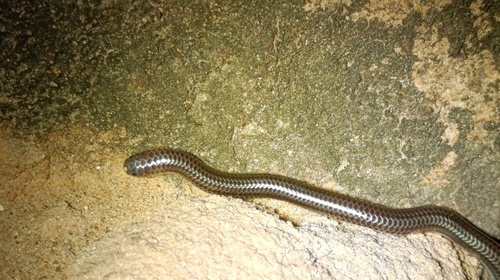 Trilepida fuliginosaHarmless
- No photoBrazilian Blind SnakeTrilepida brasiliensisHarmless
- No photoDugand's Blind SnakeTrilepida dugandiHarmless
Keep learning
- What Is a Snake? Anatomy and the BasicsA clear overview of what makes a snake a snake: limbless body plan, anatomy, evolution from lizards, species diversity, and why they are ectothermic.
- How Snakes Move, Hunt, and EatHow snakes move without legs, hunt as ambushers or active foragers, kill by constriction or venom, and swallow prey wider than their head.
- What Do Snakes Eat?All snakes are carnivores. Learn what snakes eat, how diet changes with size and age, how often they feed, and how they hunt and swallow prey.
- Venomous vs Nonvenomous: How to Tell the DifferenceThe folk rules for telling venomous snakes apart, where each one fails, and why location-based identification beats guessing by sight.