
Genus · Colubridae
Types of worm-eating snakes
7 species make up the genus Trachischium, the snakes commonly called worm-eating snakes. None are considered dangerous to humans.
About worm-eating snakes
Small, secretive Asian colubrids that spend their lives burrowing through moist soil in search of earthworms.
Trachischium is a genus of small, slender snakes in the family Colubridae, the largest and most diverse snake family on Earth. The genus is sometimes grouped within the natricine snakes, a lineage that also includes keelbacks and water snakes. Members are commonly called worm-eating snakes or Oriental slender snakes, names that capture both their narrow build and their specialized diet. They are easy to overlook because they live mostly out of sight.
These snakes are found across the eastern Himalayas and adjacent uplands of South and Southeast Asia, including northern India, Nepal, Bhutan, Bangladesh, northern Myanmar, and parts of southern China. They favor moist, forested hill country and mid to high elevation habitats, where they shelter under leaf litter, logs, stones, and loose damp soil. Their preference for cool, humid montane conditions is one reason they are seldom encountered by people.
In general terms, a Trachischium is small and cylindrical with a narrow, slightly rounded head that is barely distinct from the neck, smooth or weakly keeled scales, and a relatively short tail. Adults are typically modest in length rather than large. Coloration tends toward plain browns, grays, or olive tones on the back, and several species show contrasting yellow, orange, or reddish bellies, which is reflected in names like the Coral-bellied Wormsnake and the Yellowbelly Worm-eating Snake.
These are harmless snakes. They are not venomous, they do not pose a danger to people, and they have no medically significant bite. Their small mouths and gentle disposition mean they rely on burrowing and hiding rather than defense. As a general principle, wild snakes should be observed rather than handled, and any snake bite that causes concern warrants contacting US Poison Control at 1-800-222-1222 or local emergency services, even when the species is believed to be harmless.
Ecologically, Trachischium are fossorial specialists. As their common name suggests, they feed largely on earthworms and other soft-bodied soil invertebrates, hunting through damp ground and leaf litter. Like most colubrids in this region they are egg-laying, producing small clutches. Their secretive, burrowing behavior, small size, and narrow diet make them quiet but important members of the soil food web in the hill forests where they live.
Trachischium belongs to the Colubridae family (Colubrids). The largest snake family, and the one most snakes you meet belong to. Typically round pupils, a head only slightly wider than the neck, and no heat-sensing facial pit or rattle. Scales may be smooth and glossy or keeled and matte depending on the species.
Danger: Almost all colubrids are harmless. A small number are rear-fanged with medically significant venom, the boomslang and the twig (vine) snakes of Africa being the dangerous exceptions. Most colubrids will flee or bluff rather than bite.
All species (7)
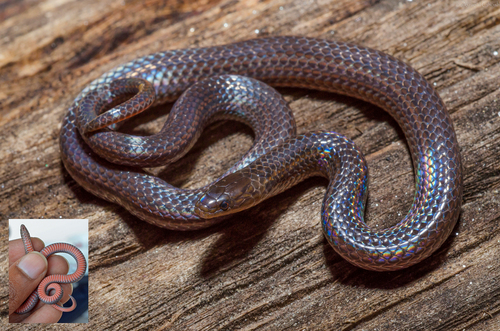 Coral-bellied WormsnakeTrachischium guentheriHarmless
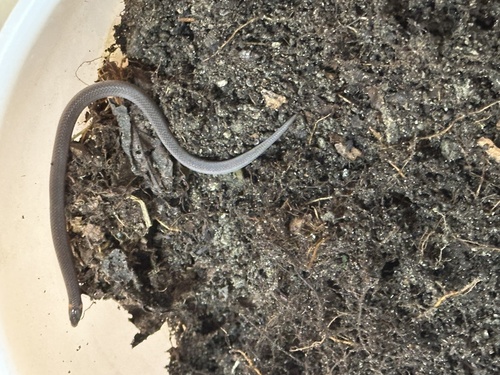 Mountain Worm-eating SnakeTrachischium monticolaHarmless
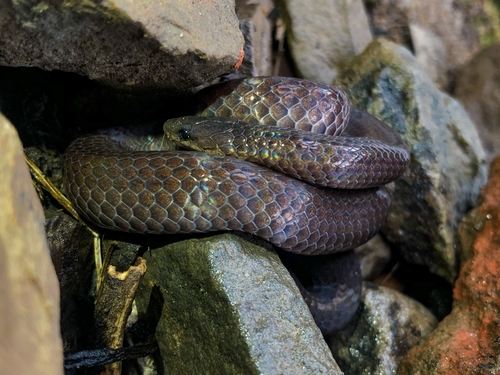 Blyth's Reticulate SnakeTrachischium reticulataHarmless
 Yellowbelly Worm-eating SnakeTrachischium tenuicepsHarmless
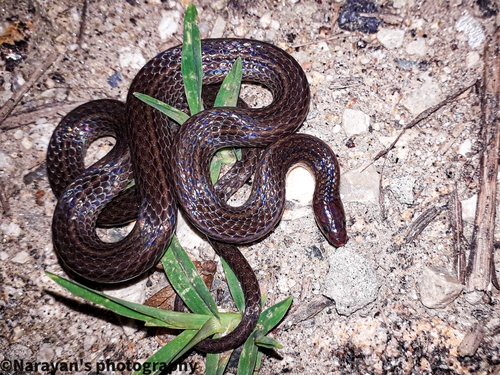 Blackbelly Worm-eating SnakeTrachischium fuscumHarmless
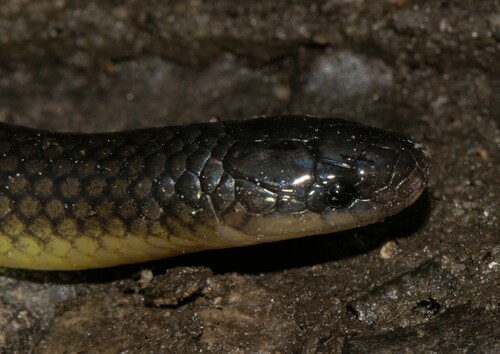 Mizoram Ground SnakeTrachischium hmuifangHarmless
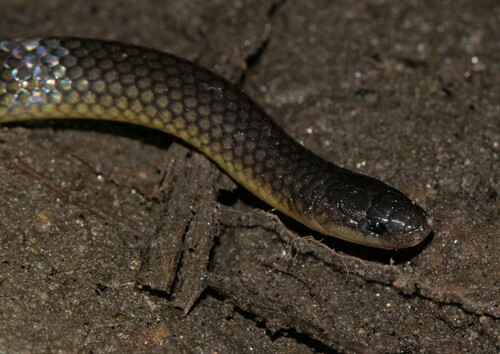 Olive Oriental Slender SnakeTrachischium laeveHarmless
Keep learning
- What Is a Snake? Anatomy and the BasicsA clear overview of what makes a snake a snake: limbless body plan, anatomy, evolution from lizards, species diversity, and why they are ectothermic.
- How Snakes Move, Hunt, and EatHow snakes move without legs, hunt as ambushers or active foragers, kill by constriction or venom, and swallow prey wider than their head.
- What Do Snakes Eat?All snakes are carnivores. Learn what snakes eat, how diet changes with size and age, how often they feed, and how they hunt and swallow prey.
- Venomous vs Nonvenomous: How to Tell the DifferenceThe folk rules for telling venomous snakes apart, where each one fails, and why location-based identification beats guessing by sight.