
Genus · Colubridae
Types of tree snakes
4 species make up the genus Toxicodryas, the snakes commonly called tree snakes. None are considered dangerous to humans.
About African tree snakes
Toxicodryas are slender, large-eyed African tree snakes that hunt by night and carry a mild rear-fanged venom.
Toxicodryas is a small genus of slender, arboreal snakes in the family Colubridae, the largest snake family on Earth. For many years its species were lumped into the broad Old World cat snake genus Boiga, and they are still often called African cat snakes or African tree snakes because of the same general body plan: a long, laterally compressed body, a distinct head, and very large eyes with vertical, cat-like pupils suited to night vision.
The genus is restricted to sub-Saharan Africa, where its members live in forests, woodlands, savanna edges, and gardens across central, western, and parts of eastern and southern Africa. As the common name suggests, these are climbing snakes. They spend much of their time in trees, shrubs, and tangles of vegetation, where their slim build and grasping body let them move easily through branches in search of prey and resting sites.
In general terms you recognize a Toxicodryas by the combination of a slender climbing body, a clearly set-off head wider than the neck, and large eyes with vertical pupils. Color varies by species and often by sex, ranging from browns and grays to patterned forms, which is why field identification is best confirmed by a regional guide rather than color alone. The vertical pupil and arboreal habits are the most reliable everyday clues.
These are rear-fanged (opisthoglyphous) snakes. They have enlarged, grooved teeth set toward the back of the upper jaw and a mild venom used to subdue small prey. They are not considered dangerous to people in the way front-fanged snakes like cobras or vipers are, and serious envenomation of humans is not a typical risk. Even so, a rear-fanged snake can still deliver venom with a sustained, chewing bite, so no wild snake should be handled. If anyone is bitten, do not rely on home remedies; seek medical care promptly and contact US Poison Control at 1-800-222-1222 or your local emergency services.
Ecologically, Toxicodryas are nocturnal hunters that feed on small vertebrates. Like many slender colubrids, their diet centers on lizards, birds, bird eggs, small mammals, and other small prey they encounter while climbing. They are egg-laying (oviparous), as is typical for the family Colubridae, and they tend to be secretive and non-aggressive, relying on camouflage and a quick retreat rather than confrontation when disturbed.
Toxicodryas belongs to the Colubridae family (Colubrids). The largest snake family, and the one most snakes you meet belong to. Typically round pupils, a head only slightly wider than the neck, and no heat-sensing facial pit or rattle. Scales may be smooth and glossy or keeled and matte depending on the species.
Danger: Almost all colubrids are harmless. A small number are rear-fanged with medically significant venom, the boomslang and the twig (vine) snakes of Africa being the dangerous exceptions. Most colubrids will flee or bluff rather than bite.
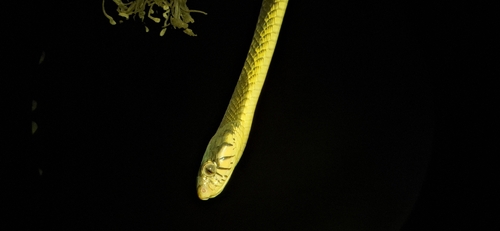
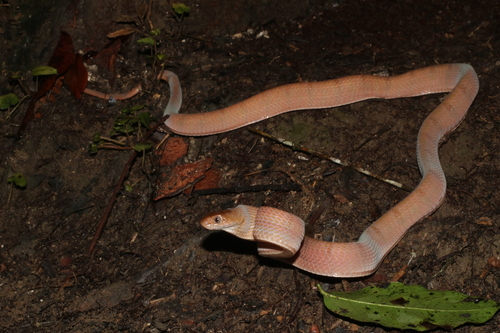
All species (4)


Keep learning
- What Is a Snake? Anatomy and the BasicsA clear overview of what makes a snake a snake: limbless body plan, anatomy, evolution from lizards, species diversity, and why they are ectothermic.
- How Snakes Move, Hunt, and EatHow snakes move without legs, hunt as ambushers or active foragers, kill by constriction or venom, and swallow prey wider than their head.
- What Do Snakes Eat?All snakes are carnivores. Learn what snakes eat, how diet changes with size and age, how often they feed, and how they hunt and swallow prey.
- Venomous vs Nonvenomous: How to Tell the DifferenceThe folk rules for telling venomous snakes apart, where each one fails, and why location-based identification beats guessing by sight.