
Genus · Pseudoxyrhophiidae
Types of water snakes
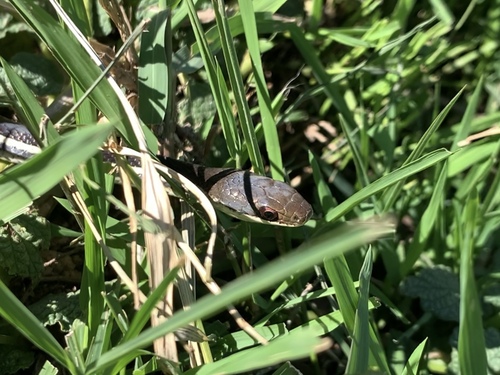
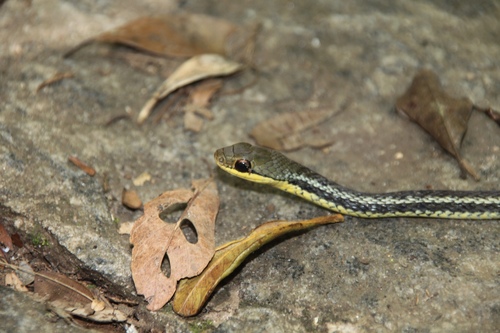
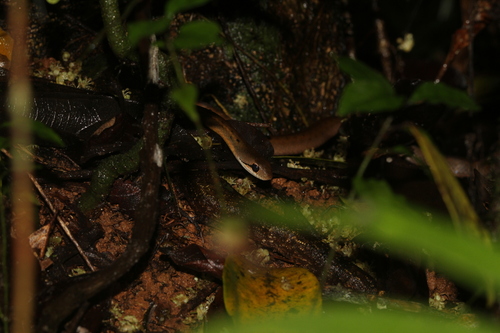
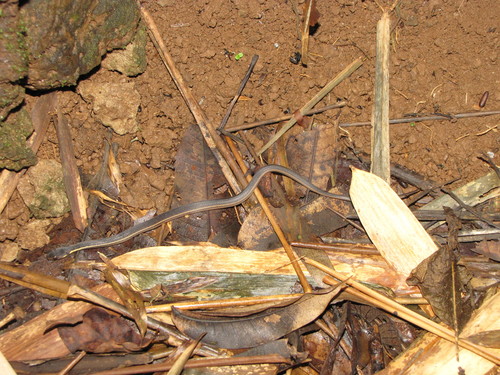
4 species make up the genus Thamnosophis, the snakes commonly called water snakes. None are considered dangerous to humans.
About Madagascar water snakes
Slender, semi-aquatic Madagascar snakes that hunt frogs and fish in streams and marshes.
Thamnosophis is a small genus of snakes found only on Madagascar. It belongs to the family Pseudoxyrhophiidae, a large group of mostly harmless snakes that radiated across Madagascar and the nearby Comoros and Seychelles. Because the island was isolated for tens of millions of years, this family evolved into a wide range of forms with little competition, and Thamnosophis represents the water-loving branch of that radiation.
These are commonly called Madagascar water snakes because most members live close to fresh water. You will find them along streams, marsh edges, rice paddies, and the floors of humid forest, often near the banks where frogs gather. Several species carry pale stripes running the length of the body, which is reflected in names like the Lateral Water Snake, the Forest Water Snake, the Eastern Madagascar Water Snake, and the Yellow-striped Water Snake.
In general terms, a Thamnosophis is a slim, medium-bodied snake with smooth scales, a fairly distinct head, and clear eyes suited to active daytime hunting. Body color is usually brown, olive, or grayish with one or more lighter lengthwise stripes. They are agile both on land and in water. Reliable identification to species is difficult and is best left to scale counts and locality data, so treat broad shape and striping as group hints rather than firm species marks.
On the safety question, members of this genus are not considered dangerous to people. Pseudoxyrhophiid snakes are typically harmless or mildly rear-fanged, meaning any small enlarged teeth sit at the back of the mouth and any weak saliva-borne secretion is used to subdue small cold-blooded prey, not to defend against humans. There is no record of these snakes causing serious harm. Even so, wild snakes can bite and should not be handled, and the safest approach with any snake you cannot positively identify is to leave it alone. If a bite ever causes a worrying reaction, contact emergency services or US Poison Control at 1-800-222-1222.
Ecologically, Thamnosophis are active foragers that feed mainly on frogs, tadpoles, and fish, with smaller prey taken when available. Like most snakes in their family they are egg-layers. They are largely diurnal, relying on speed and quick strikes rather than constriction or venom to secure a meal, and they play a normal role in Madagascar's freshwater food webs as both predator and prey.
Thamnosophis belongs to the Pseudoxyrhophiidae family (Malagasy snakes). A spectacular radiation of mostly harmless snakes centered on Madagascar. Highly variable; identification is usually by region and genus rather than a single family trait.
Danger: Considered harmless to humans. Some are mildly venomous (rear-fanged) but not medically significant.
All species (4)
Keep learning
- What Is a Snake? Anatomy and the BasicsA clear overview of what makes a snake a snake: limbless body plan, anatomy, evolution from lizards, species diversity, and why they are ectothermic.
- How Snakes Move, Hunt, and EatHow snakes move without legs, hunt as ambushers or active foragers, kill by constriction or venom, and swallow prey wider than their head.
- What Do Snakes Eat?All snakes are carnivores. Learn what snakes eat, how diet changes with size and age, how often they feed, and how they hunt and swallow prey.
- Venomous vs Nonvenomous: How to Tell the DifferenceThe folk rules for telling venomous snakes apart, where each one fails, and why location-based identification beats guessing by sight.