
Genus · Uropeltidae
Types of earth snakes
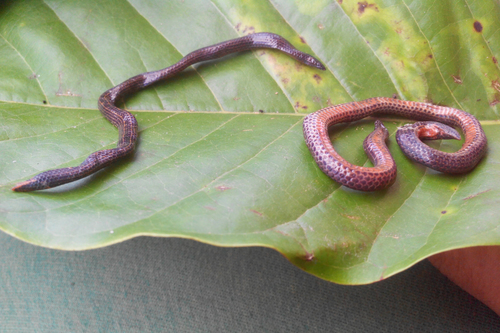
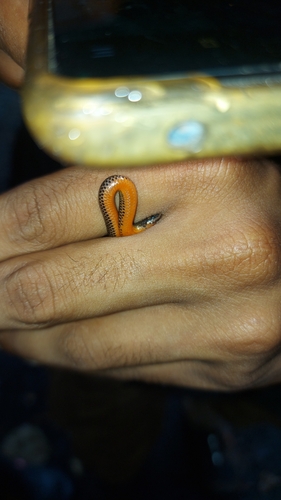
3 species make up the genus Teretrurus, the snakes commonly called earth snakes. None are considered dangerous to humans.
About shieldtails
Burrowing shieldtail snakes from the hill forests of the southern Western Ghats in India.
Teretrurus is a small genus of shieldtail snakes in the family Uropeltidae. Uropeltids are a group of primitive, non-venomous burrowing snakes found only in peninsular India and Sri Lanka, and Teretrurus sits squarely within this southern Indian radiation. The family name and the common name shieldtail both come from the unusual tail, which in most members ends in an enlarged, roughened, or flattened shield of keeled scales.
These are dedicated underground animals. Shieldtails spend nearly all of their lives in soil and leaf litter, typically in cool, moist montane and submontane forests of the Western Ghats. They surface mainly after heavy rain or when soil is disturbed, which is why even common species are seldom seen. The genus is restricted to a small geographic area, and the species in it are poorly studied compared to more familiar snakes.
Members are recognized by features shared across the shieldtail family rather than by flashy markings. They are small and cylindrical with a short, blunt, cone-shaped head built for pushing through earth, smooth glossy body scales, tiny eyes, a very short tail ending in the characteristic shield, and often dark brown to purplish coloring sometimes broken by paler flecks or bands. The narrow head and reduced eyes are clear signs of a life spent tunneling rather than hunting in the open.
Shieldtails are harmless to people. They are non-venomous, have small mouths suited to soft-bodied prey, and do not bite defensively in any meaningful way. They pose no danger and play a quiet beneficial role in forest soil. There is no medical concern associated with this genus. As with any wild animal, the responsible approach is to observe and leave it undisturbed rather than handle it.
Ecologically these snakes feed mainly on earthworms and other soft-bodied invertebrates encountered underground. Like other uropeltids they are believed to give live birth to small litters rather than laying eggs, which is typical for the family. Their behavior is secretive and slow-moving above ground; the blunt tail shield is thought to help anchor or plug the burrow and may serve in defense against predators that pursue them into the soil.
Teretrurus belongs to the Uropeltidae family (Shield-tailed snakes). Burrowing snakes with a bizarre, roughened tail tip. Small, glossy, cylindrical, with tiny eyes and a distinctive truncated or rough tail tip.
Danger: Harmless. No venom.
All species (3)
Keep learning
- What Is a Snake? Anatomy and the BasicsA clear overview of what makes a snake a snake: limbless body plan, anatomy, evolution from lizards, species diversity, and why they are ectothermic.
- How Snakes Move, Hunt, and EatHow snakes move without legs, hunt as ambushers or active foragers, kill by constriction or venom, and swallow prey wider than their head.
- What Do Snakes Eat?All snakes are carnivores. Learn what snakes eat, how diet changes with size and age, how often they feed, and how they hunt and swallow prey.
- Venomous vs Nonvenomous: How to Tell the DifferenceThe folk rules for telling venomous snakes apart, where each one fails, and why location-based identification beats guessing by sight.