
Genus · Colubridae
Types of short-tail snakes
3 species make up the genus Tantillita, the snakes commonly called short-tail snakes. None are considered dangerous to humans.
About dwarf short-tailed snakes
Tantillita is a small group of tiny, secretive ground snakes from Mexico and Central America that almost no one ever sees.
Tantillita is a genus of very small colubrid snakes in the family Colubridae, the largest snake family in the world. The name and common label both point to the same defining trait: these are diminutive, slender snakes with notably short tails. They are close relatives of the better known Tantilla centipede snakes, and like that group they live their lives mostly out of sight, tucked under leaf litter, logs, and surface debris.
The genus is found in southern Mexico and parts of Central America, including the Yucatan region and adjacent lowland forests. Members are tied to warm, humid, low-elevation habitats where there is plenty of ground cover to hide in. Because they are so small and fossorial in habit, meaning they spend much of their time burrowed or hidden in soil and litter, they are rarely encountered even where they occur.
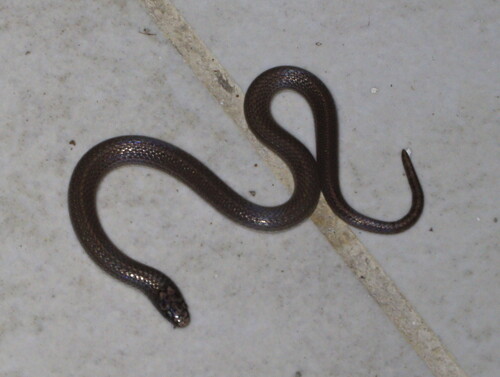
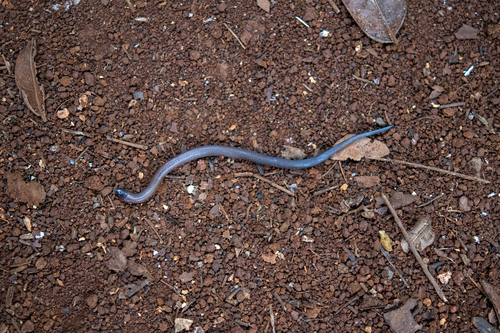
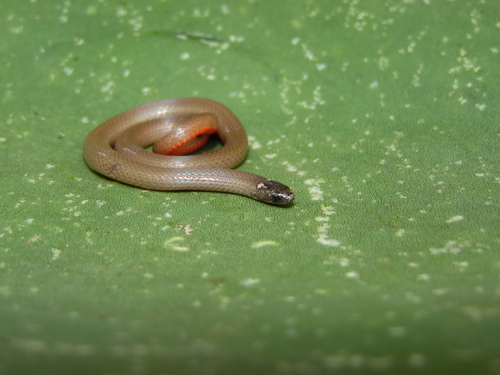
Recognizing a Tantillita in general terms means looking for a small, smooth-scaled, slender snake with a short tail and a head that is barely wider than the neck. The few described species, such as the Yucatecan Dwarf Short-tail Snake, Linton's Dwarf Short-tail Snake, and the Speckled Dwarf Short-tail Snake, are separated mainly by fine scale and color details that take an expert to confirm. Their small size and secretive nature make field identification difficult, and they are easily confused with other tiny ground-dwelling colubrids in the same range.
These snakes are harmless to people. They are not front-fanged venomous snakes, and there is no evidence they pose any danger to humans. Like many small colubrids, the broader family includes rear-fanged species that use mild saliva to subdue tiny prey, but any such effect would be irrelevant to a human given these snakes' minute size and inoffensive behavior. They do not strike at people and rely on hiding rather than confrontation.
Ecologically, dwarf short-tailed snakes are believed to feed on small invertebrates such as insects and their larvae, consistent with other tiny leaf-litter colubrids. They are egg-laying snakes, as is typical for most of the colubrid family, though specific reproductive details for these obscure species are poorly documented. Their behavior is shy and cryptic: when uncovered they tend to wriggle quickly back into cover rather than display or bite.
Tantillita belongs to the Colubridae family (Colubrids). The largest snake family, and the one most snakes you meet belong to. Typically round pupils, a head only slightly wider than the neck, and no heat-sensing facial pit or rattle. Scales may be smooth and glossy or keeled and matte depending on the species.
Danger: Almost all colubrids are harmless. A small number are rear-fanged with medically significant venom, the boomslang and the twig (vine) snakes of Africa being the dangerous exceptions. Most colubrids will flee or bluff rather than bite.
All species (3)
Keep learning
- What Is a Snake? Anatomy and the BasicsA clear overview of what makes a snake a snake: limbless body plan, anatomy, evolution from lizards, species diversity, and why they are ectothermic.
- How Snakes Move, Hunt, and EatHow snakes move without legs, hunt as ambushers or active foragers, kill by constriction or venom, and swallow prey wider than their head.
- What Do Snakes Eat?All snakes are carnivores. Learn what snakes eat, how diet changes with size and age, how often they feed, and how they hunt and swallow prey.
- Venomous vs Nonvenomous: How to Tell the DifferenceThe folk rules for telling venomous snakes apart, where each one fails, and why location-based identification beats guessing by sight.