
Genus · Colubridae
Types of white-lipped snakes
2 species make up the genus Symphimus, the snakes commonly called white-lipped snakes. None are considered dangerous to humans.
About white-lipped snakes
Small, slender Mesoamerican colubrids named for the pale lip scales that frame the face.
Symphimus is a small genus in the family Colubridae, the largest and most diverse snake family in the world. It holds just two recognized species, the Yucatan White-lipped Snake and the Mexican White-lipped Snake, both found only in Mexico and adjacent parts of Mesoamerica. As true colubrids, they belong to the broad assemblage of slender, agile, mostly harmless snakes that make up the bulk of New World snake diversity. The common name comes from the noticeably light coloring along the upper lip scales, a feature that helps distinguish them from look-alike small snakes in the same region.
These are small, thin-bodied snakes built for life close to the ground in warm, often dry to semi-humid habitats. The Yucatan species is tied to the forests and scrub of the Yucatan Peninsula, while the Mexican White-lipped Snake occupies dry forest and brushland along Mexico's Pacific slope. In general terms you recognize a Symphimus by its modest size, smooth scales, fairly plain back, and the contrasting pale lip markings that give the genus its name. They are easy to overlook and are not commonly encountered, so much of what is known comes from scattered field records rather than detailed study.
Symphimus snakes are harmless to people. They are not front-fanged venomous snakes, and there is no evidence they pose any medical threat to humans. Like many small colubrids they feed on small prey such as insects and other invertebrates, and they reproduce by laying eggs as is typical for the family. They are secretive, ground-dwelling, and inoffensive. As a general rule with any wild snake, the right response is to leave it undisturbed and observe from a distance. If anyone is ever bitten by an unidentified snake and symptoms appear, contact emergency services or US Poison Control at 1-800-222-1222.
Symphimus belongs to the Colubridae family (Colubrids). The largest snake family, and the one most snakes you meet belong to. Typically round pupils, a head only slightly wider than the neck, and no heat-sensing facial pit or rattle. Scales may be smooth and glossy or keeled and matte depending on the species.
Danger: Almost all colubrids are harmless. A small number are rear-fanged with medically significant venom, the boomslang and the twig (vine) snakes of Africa being the dangerous exceptions. Most colubrids will flee or bluff rather than bite.
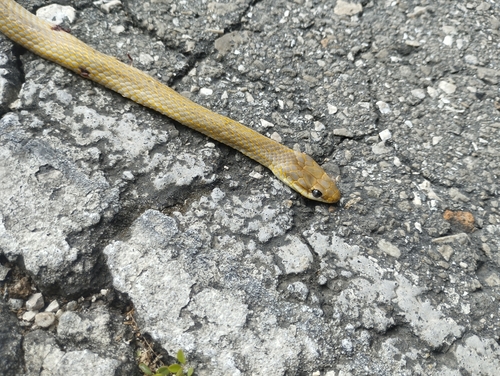
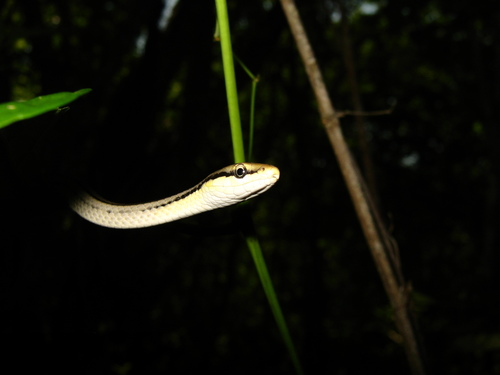
All species (2)
Keep learning
- What Is a Snake? Anatomy and the BasicsA clear overview of what makes a snake a snake: limbless body plan, anatomy, evolution from lizards, species diversity, and why they are ectothermic.
- How Snakes Move, Hunt, and EatHow snakes move without legs, hunt as ambushers or active foragers, kill by constriction or venom, and swallow prey wider than their head.
- What Do Snakes Eat?All snakes are carnivores. Learn what snakes eat, how diet changes with size and age, how often they feed, and how they hunt and swallow prey.
- Venomous vs Nonvenomous: How to Tell the DifferenceThe folk rules for telling venomous snakes apart, where each one fails, and why location-based identification beats guessing by sight.