
Genus · Colubridae
Types of blood snakes
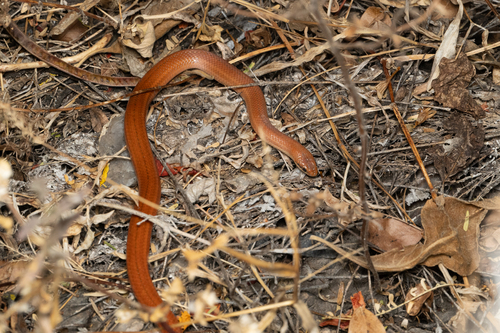
2 species make up the genus Stenorrhina, the snakes commonly called blood snakes. None are considered dangerous to humans.
About scorpion-eating snakes
Small, secretive New World snakes that specialize in hunting scorpions and large invertebrates.
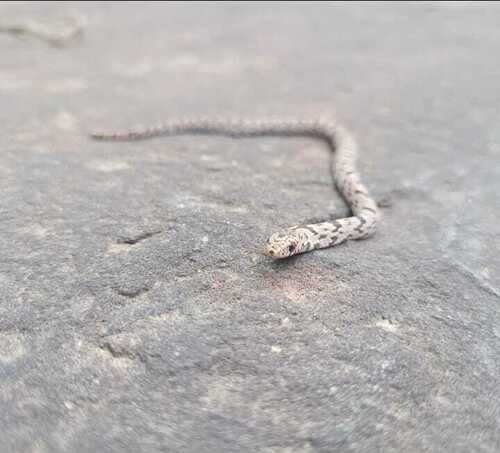
Stenorrhina is a small genus in the family Colubridae, the largest and most diverse snake family in the world. It contains only two recognized species, the blood snake (Stenorrhina freminvillei) and Degenhardt's scorpion-eating snake (Stenorrhina degenhardtii). Both occur across Mexico, Central America, and into northern South America, where they live in tropical and subtropical lowlands, dry forests, scrub, and agricultural edges. Within Colubridae they sit among the New World terrestrial colubrids, a group built for life on and just under the ground rather than in trees or water.
These are modest, sturdy snakes with smooth scales, a small head that is barely set off from the neck, and a blunt, somewhat pointed snout suited to pushing through soil and leaf litter. Coloration is variable and can range from reddish or brownish to patterned forms, which is part of why the common name 'blood snake' attaches to one species. They are fossorial and semi-fossorial, meaning they spend much of their time burrowing or hiding under rocks, logs, and debris, and they are not often seen in the open. As a general rule, recognizing them in the field comes down to size, the burrowing build, and range rather than any single flashy marking.
Ecologically, Stenorrhina is notable for its diet: these snakes prey heavily on scorpions, spiders, and other large arthropods, an unusual specialization among snakes. They are egg-laying (oviparous) and pose no meaningful danger to people. Some New World colubrids are rear-fanged with mild venom used to subdue invertebrate prey, but Stenorrhina is regarded as harmless to humans and is not a medically significant snake. Even so, no wild snake should be handled, and if anyone is ever bitten by an unidentified snake, contact emergency services or US Poison Control at 1-800-222-1222.
Stenorrhina belongs to the Colubridae family (Colubrids). The largest snake family, and the one most snakes you meet belong to. Typically round pupils, a head only slightly wider than the neck, and no heat-sensing facial pit or rattle. Scales may be smooth and glossy or keeled and matte depending on the species.
Danger: Almost all colubrids are harmless. A small number are rear-fanged with medically significant venom, the boomslang and the twig (vine) snakes of Africa being the dangerous exceptions. Most colubrids will flee or bluff rather than bite.
All species (2)
Keep learning
- What Is a Snake? Anatomy and the BasicsA clear overview of what makes a snake a snake: limbless body plan, anatomy, evolution from lizards, species diversity, and why they are ectothermic.
- How Snakes Move, Hunt, and EatHow snakes move without legs, hunt as ambushers or active foragers, kill by constriction or venom, and swallow prey wider than their head.
- What Do Snakes Eat?All snakes are carnivores. Learn what snakes eat, how diet changes with size and age, how often they feed, and how they hunt and swallow prey.
- Venomous vs Nonvenomous: How to Tell the DifferenceThe folk rules for telling venomous snakes apart, where each one fails, and why location-based identification beats guessing by sight.