
Genus · Colubridae
Types of groundsnakes
10+ species make up the genus Stegonotus, the snakes commonly called groundsnakes. None are considered dangerous to humans.
About Ground snakes
Stout, big-headed nocturnal colubrids of the Indo-Australian region that hunt close to the ground and pose no danger to people.
Stegonotus is a genus of nonvenomous snakes in the family Colubridae, the largest snake family and a group that holds the majority of the world's living snakes. Like most colubrids, these are typical-looking snakes built around a single functional lung, smooth or lightly keeled body scales, and a head covered by large, regular plate-like scales. Members are commonly called ground snakes for their habit of moving and foraging on or near the surface. Our database holds 10+ species in this genus.
The genus is centered on the Indo-Australian region. Stegonotus snakes occur across New Guinea and surrounding islands of Wallacea and the Philippines, extending into parts of northern Australia and Southeast Asia. They are generally lowland and forest-associated animals that turn up in rainforest, forest edge, plantations, gardens, and other moist habitats, and several species do well in disturbed and human-modified settings. Many island species are localized, and the genus has been actively revised as new forms are described, so distribution details for individual species continue to be refined.
Recognizing a Stegonotus comes down to general build rather than flashy pattern. These are medium-sized, fairly solid-bodied snakes with a head that is noticeably distinct from the neck and a somewhat blunt snout. Coloration is usually plain and understated, with the common Slaty-grey Snake living up to its name in slate, grey, or dark brown tones, while other members carry darker heads or muted bands. They lack the bright warning colors of many dangerous snakes, and identification is best confirmed by locality and scale detail rather than color alone.
Stegonotus snakes are not venomous and are considered harmless to humans. They are not front-fanged venom-delivery animals; within Colubridae some lineages are rear-fanged, but Stegonotus is not regarded as medically significant and is not a danger to people. A frightened individual may flatten, musk, or bite defensively, and any bite from a wild snake should be cleaned and watched. As with all wild snakes, the sound approach is to observe and leave it alone rather than handle it, both for the animal's sake and because field identification can be uncertain. If you are bitten and unsure of the species, contact local emergency services or US Poison Control at 1-800-222-1222.
Ecologically these are nocturnal, ground-active predators. Their diet is broad for their size and can include frogs and frog eggs, small reptiles and reptile eggs, and small mammals, with at least one member known as the Batjan Frog-eating Snake for its amphibian focus. Like many colubrids, Stegonotus snakes are egg-laying. They spend the day hidden under logs, leaf litter, and ground cover and emerge after dark to forage, filling a quiet but important role as small predators across the forests and islands they inhabit.
Stegonotus belongs to the Colubridae family (Colubrids). The largest snake family, and the one most snakes you meet belong to. Typically round pupils, a head only slightly wider than the neck, and no heat-sensing facial pit or rattle. Scales may be smooth and glossy or keeled and matte depending on the species.
Danger: Almost all colubrids are harmless. A small number are rear-fanged with medically significant venom, the boomslang and the twig (vine) snakes of Africa being the dangerous exceptions. Most colubrids will flee or bluff rather than bite.
All species (14)
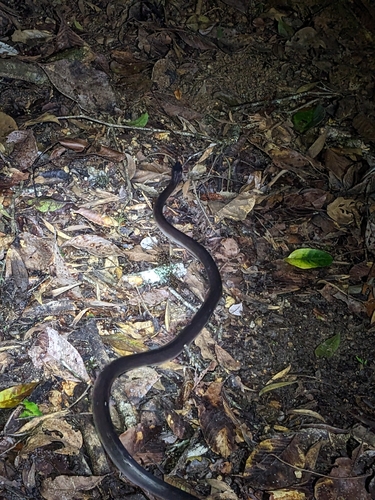 Slaty-grey snakeStegonotus australisHarmless
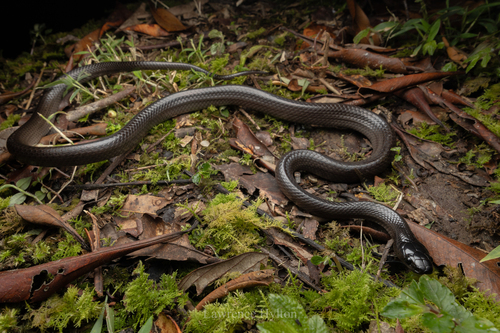 Dark-headed Sabah GroundsnakeStegonotus caligocephalusHarmless
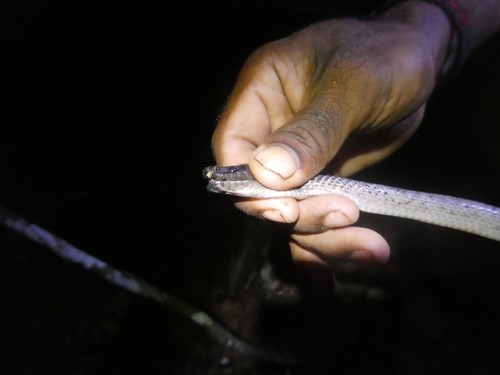 Rainbow GroundsnakeStegonotus iridisHarmless
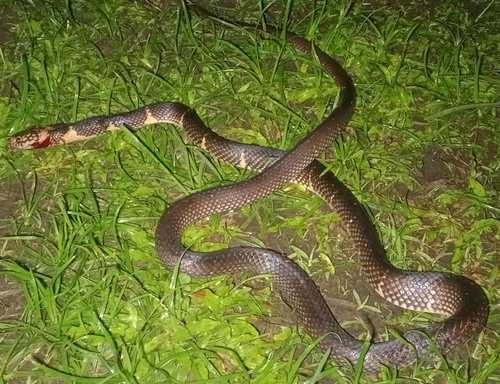 Batjan Frog-eating SnakeStegonotus batjanensisHarmless
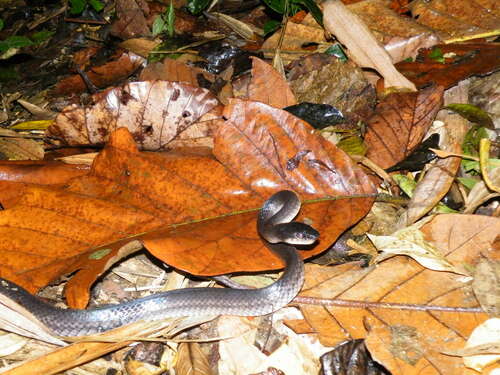 Muller's Wolf SnakeStegonotus muelleriHarmless
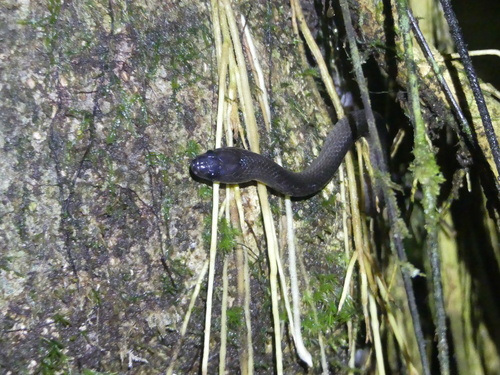 Bird's Head Peninsula GroundsnakeStegonotus cucullatusHarmless
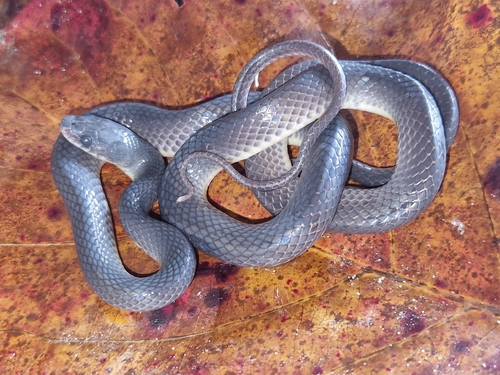 De Rooij's GroundsnakeStegonotus derooijaeHarmless
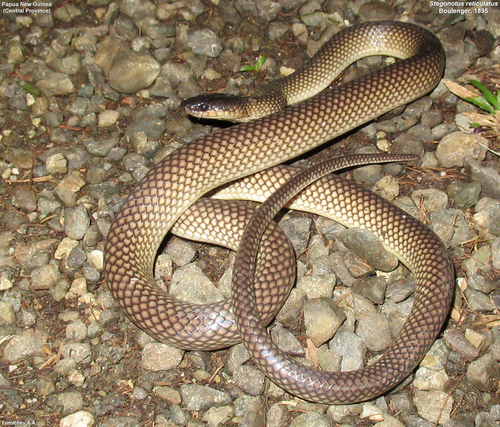 Reticulated Slaty SnakeStegonotus reticulatusHarmless
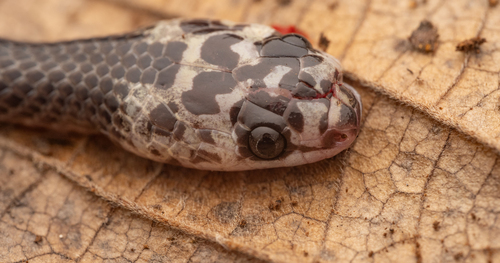 Diehl's Little GroundsnakeStegonotus diehliHarmless
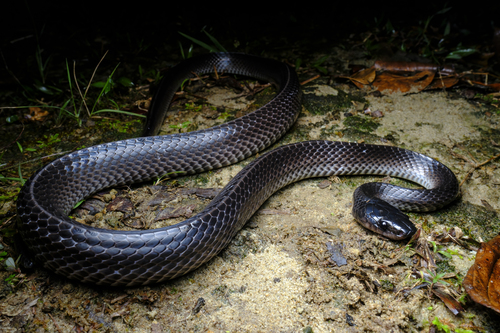 Borneo Frog-eating SnakeStegonotus borneensisHarmless
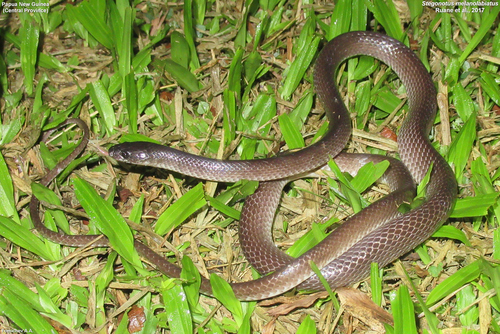 Black-lipped GroundsnakeStegonotus melanolabiatusHarmless
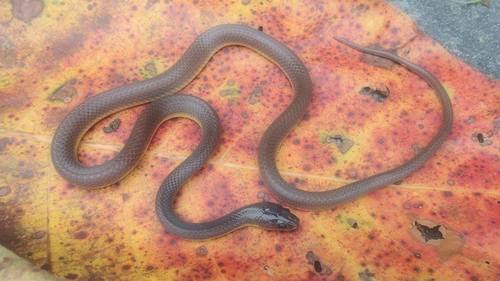 Maluku GroundsnakeStegonotus modestusHarmless
- No photoBiak Island GroundsnakeStegonotus parvusHarmless
- No photoStegonotus apliniHarmless
Keep learning
- What Is a Snake? Anatomy and the BasicsA clear overview of what makes a snake a snake: limbless body plan, anatomy, evolution from lizards, species diversity, and why they are ectothermic.
- How Snakes Move, Hunt, and EatHow snakes move without legs, hunt as ambushers or active foragers, kill by constriction or venom, and swallow prey wider than their head.
- What Do Snakes Eat?All snakes are carnivores. Learn what snakes eat, how diet changes with size and age, how often they feed, and how they hunt and swallow prey.
- Venomous vs Nonvenomous: How to Tell the DifferenceThe folk rules for telling venomous snakes apart, where each one fails, and why location-based identification beats guessing by sight.