
Genus · Colubridae
Smithophis
6 species make up the genus Smithophis. None are considered dangerous to humans.
About rain snakes
Smithophis is a small genus of stream-loving Asian colubrids known only from the wet hill country of northeast India and nearby Myanmar.
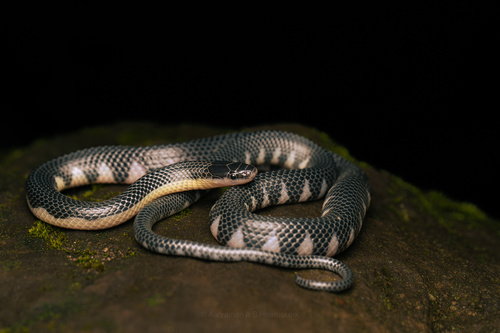
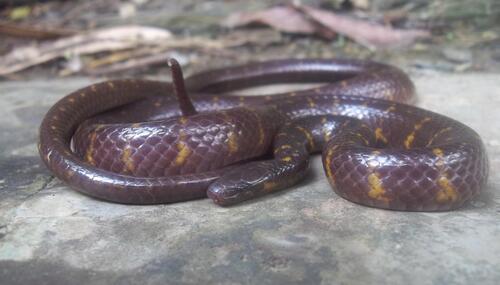
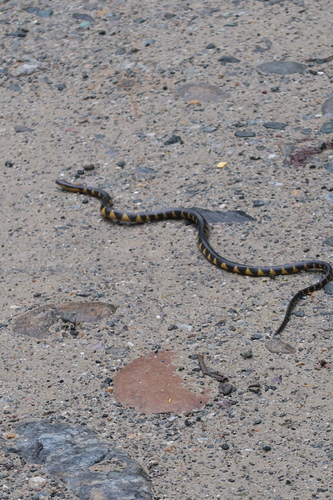
Smithophis is a genus of natricine colubrid snakes, meaning it belongs to the same broad family (Colubridae) that holds most of the world's harmless and mildly fanged snakes, and within it sits among the keelback and water-snake relatives. The genus was described only recently, and it currently holds a handful of species, including the Narrow-banded Rain Snake, the Brown Trapezoid Snake, and the Mizo Brook Snake. As a young genus, much of what is known comes from a small number of specimens and localities.
These snakes are tied to running water in cool, forested uplands. They are found in the hill ranges of northeast India, principally Mizoram, Meghalaya, and surrounding states, with records extending into northern Myanmar. Typical habitat is the edge of clear hill streams and brooks, seeps, and damp leaf litter in mid-elevation forest. Members of this group are semiaquatic and tend to stay close to water, which is why names like brook snake and rain snake attach to them.
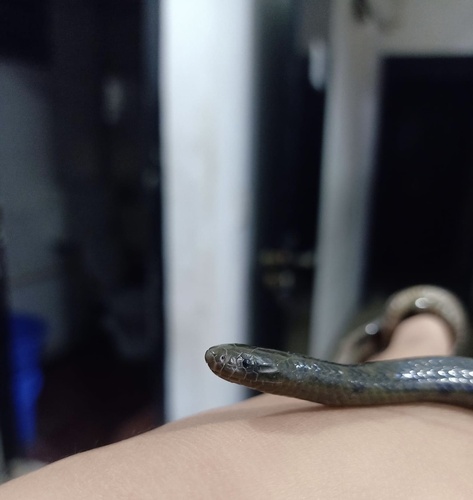
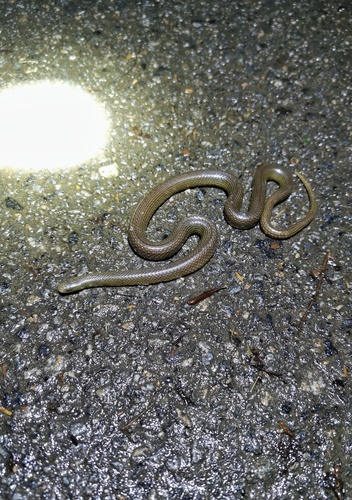
In general terms, Smithophis are slender, modestly sized colubrids with smooth to weakly keeled scales and patterns that can include banding or a trapezoid-like dorsal marking, depending on the species. They are easy to confuse with other small Asian stream snakes, so reliable identification usually depends on scale counts and locality rather than color alone. Treat any field identification of an obscure hill-stream snake as provisional.
Like the great majority of colubrids in this lineage, Smithophis are not front-fanged vipers or elapids and are not considered dangerous to people. There is no evidence that they pose a medically significant threat. That said, the natricine relatives of this group can carry rear-positioned teeth and mild oral secretions, so the honest framing is harmless to humans in any practical sense but still a wild animal. Do not handle wild snakes. If anyone is bitten and symptoms develop, or if the species is uncertain, contact emergency care: in the US call Poison Control at 1-800-222-1222, and elsewhere use local emergency services.
Ecologically these snakes behave like other small stream-associated colubrids. Their diet is presumed to center on the soft-bodied and aquatic prey common along brooks, such as worms, tadpoles, small fish, and amphibians, though precise diet data for the rarer species is limited. They are most active in the wet season, which gives the rain snake its name, and reproduction in this lineage is generally by egg laying. Because the genus is newly recognized and narrowly distributed, careful, hands-off observation does more for science than collection.
Smithophis belongs to the Colubridae family (Colubrids). The largest snake family, and the one most snakes you meet belong to. Typically round pupils, a head only slightly wider than the neck, and no heat-sensing facial pit or rattle. Scales may be smooth and glossy or keeled and matte depending on the species.
Danger: Almost all colubrids are harmless. A small number are rear-fanged with medically significant venom, the boomslang and the twig (vine) snakes of Africa being the dangerous exceptions. Most colubrids will flee or bluff rather than bite.
All species (6)
Keep learning
- What Is a Snake? Anatomy and the BasicsA clear overview of what makes a snake a snake: limbless body plan, anatomy, evolution from lizards, species diversity, and why they are ectothermic.
- How Snakes Move, Hunt, and EatHow snakes move without legs, hunt as ambushers or active foragers, kill by constriction or venom, and swallow prey wider than their head.
- What Do Snakes Eat?All snakes are carnivores. Learn what snakes eat, how diet changes with size and age, how often they feed, and how they hunt and swallow prey.
- Venomous vs Nonvenomous: How to Tell the DifferenceThe folk rules for telling venomous snakes apart, where each one fails, and why location-based identification beats guessing by sight.