
Genus · Colubridae
Simophis
The genus Simophis contains a single species. It is not considered dangerous to humans.
About São Paulo false coral snakes
A small South American colubrid that wears coral-snake colors without the coral snake's bite.
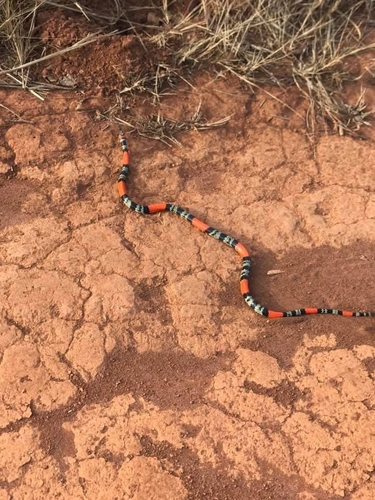
Simophis is a tiny genus in the family Colubridae, the largest and most varied family of snakes worldwide. The best known member is the São Paulo false coral snake, Simophis rhinostoma, found across parts of southeastern and central Brazil and neighboring South America. As its name suggests, the genus belongs to a broad group of harmless and mildly venomous snakes that share banded patterns echoing the truly dangerous coral snakes, a resemblance known as mimicry.
These are slender, modestly sized ground snakes that favor open and semi-open habitats such as the cerrado savanna, grasslands, and forest edges of central and southeastern South America. In general terms, false coral snakes are recognized by ringed or banded color schemes built from reds, blacks, and pale tones. The pattern is the point of confusion: many harmless mimics, true coral snakes, and lookalikes overlap in range, and color order alone is not a reliable way to tell a safe snake from a venomous one. Identification should be left to experts, not field rules of thumb.
Like most colubrids in this group, Simophis is not considered a danger to people and is not a front-fanged venomous snake of medical concern. Members feed on small prey typical of ground-dwelling colubrids and reproduce by laying eggs, as is common across the family. Even so, no wild snake should be handled, because a coral-snake lookalike can be misidentified, and the true coral snakes it resembles carry potent venom. If anyone is bitten by a snake that cannot be confidently identified, treat it as a medical emergency and contact emergency services or US Poison Control at 1-800-222-1222 right away.
Simophis belongs to the Colubridae family (Colubrids). The largest snake family, and the one most snakes you meet belong to. Typically round pupils, a head only slightly wider than the neck, and no heat-sensing facial pit or rattle. Scales may be smooth and glossy or keeled and matte depending on the species.
Danger: Almost all colubrids are harmless. A small number are rear-fanged with medically significant venom, the boomslang and the twig (vine) snakes of Africa being the dangerous exceptions. Most colubrids will flee or bluff rather than bite.
All species (1)
Keep learning
- What Is a Snake? Anatomy and the BasicsA clear overview of what makes a snake a snake: limbless body plan, anatomy, evolution from lizards, species diversity, and why they are ectothermic.
- How Snakes Move, Hunt, and EatHow snakes move without legs, hunt as ambushers or active foragers, kill by constriction or venom, and swallow prey wider than their head.
- What Do Snakes Eat?All snakes are carnivores. Learn what snakes eat, how diet changes with size and age, how often they feed, and how they hunt and swallow prey.
- Venomous vs Nonvenomous: How to Tell the DifferenceThe folk rules for telling venomous snakes apart, where each one fails, and why location-based identification beats guessing by sight.