
Genus · Colubridae
Types of suckers
10+ species make up the genus Sibon, the snakes commonly called suckers. None are considered dangerous to humans.
About snail-eating snakes
Slender, big-eyed nocturnal snakes of the American tropics that feed almost entirely on snails and slugs.
Sibon is a genus of small to medium tree-dwelling snakes in the family Colubridae, the largest and most varied snake family on Earth. The genus belongs to a group of New World colubrids often called snail-eaters or snail suckers, a name that reflects their highly specialized diet. The species in our database, including the Cloudy Snail-eating Snake, Stejneger's Snail Sucker, the Ringed Snail Sucker, and the Slender Snail Sucker, are all part of this same dietary guild.
These snakes live in the Neotropics, ranging from southern Mexico through Central America and into northern and central South America. They favor humid environments such as lowland and montane rainforest, cloud forest, and forest edges, often near streams and other damp places where their prey is abundant. They are mostly nocturnal and spend much of their time climbing through low vegetation, shrubs, and trees rather than moving on the ground.
Members of Sibon are recognizable by a very slender body, a short blunt head that is distinct from the neck, and large prominent eyes suited to night activity. Many species are strongly banded or blotched with contrasting colors, though pattern varies widely between species and individuals. The narrow body and arboreal habits are typical of snakes that hunt slow-moving prey among branches and leaves.
Their ecology centers on soft-bodied prey. They eat land snails, slugs, and the eggs of other animals, using slender jaws to extract snails from their shells. Like many colubrids they are egg-laying, producing small clutches. Their behavior is non-aggressive; when threatened some may flatten the body or put on a defensive display rather than attempt to bite, and they rely on camouflage and a secretive lifestyle to avoid predators.
Sibon snakes are not considered dangerous to people. They are non-venomous in any medically significant sense and pose no real threat to humans, which is part of why they are valued by naturalists as harmless, beneficial insect-and-mollusk eaters. That said, no wild snake should be handled casually, and any snake should be identified with care before assuming it is harmless. If a bite from any wild snake causes concern, or if you are unsure of the species, contact emergency services or US Poison Control at 1-800-222-1222.
Sibon belongs to the Colubridae family (Colubrids). The largest snake family, and the one most snakes you meet belong to. Typically round pupils, a head only slightly wider than the neck, and no heat-sensing facial pit or rattle. Scales may be smooth and glossy or keeled and matte depending on the species.
Danger: Almost all colubrids are harmless. A small number are rear-fanged with medically significant venom, the boomslang and the twig (vine) snakes of Africa being the dangerous exceptions. Most colubrids will flee or bluff rather than bite.
All species (16)
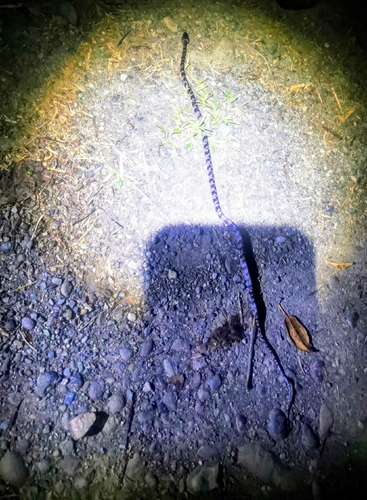 Cloudy Snail-eating SnakeSibon nebulatusHarmless
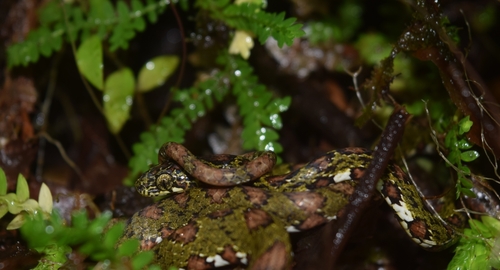 Stejneger's Snail SuckerSibon longifrenisHarmless
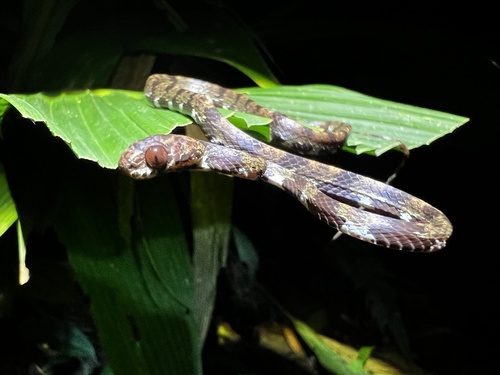 Ringed Snail SuckerSibon annulatusHarmless
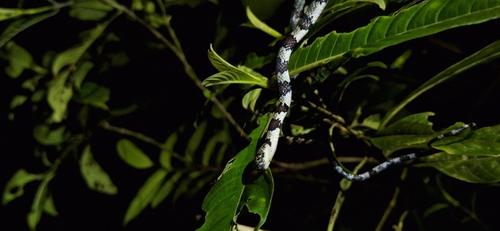 Slender Snail SuckerSibon dimidiatusHarmless
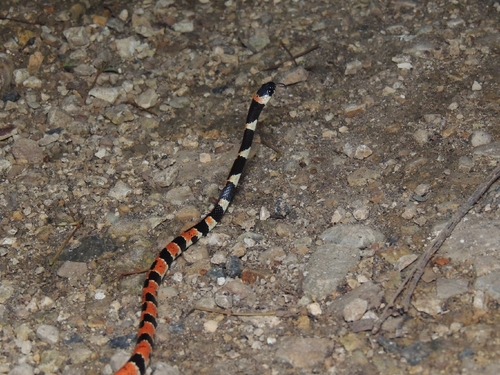 Cope's Snail SuckerSibon anthracopsHarmless
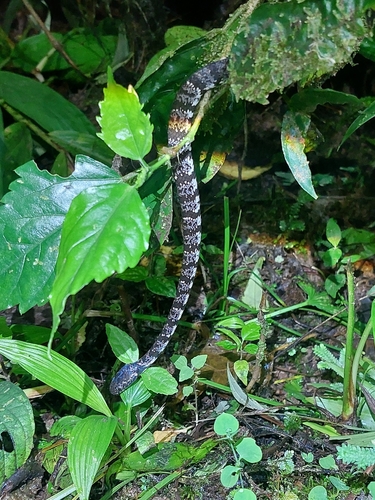 Vieira's Snail-eating SnakeSibon vieiraiHarmless
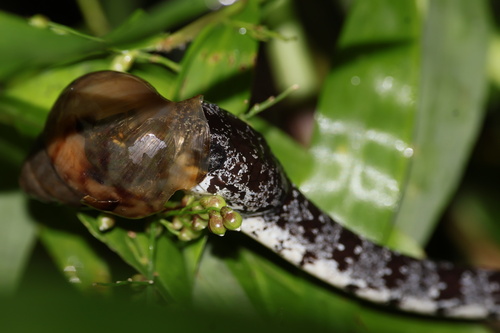 Sibon nigralbusHarmless
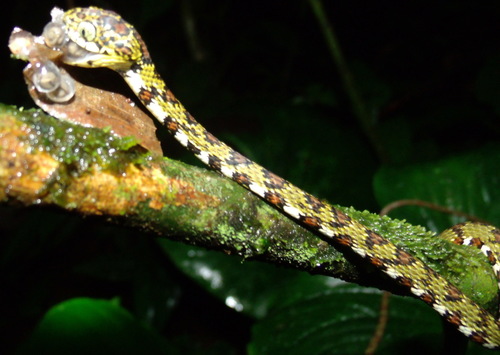 Argus Snail SuckerSibon argusHarmless
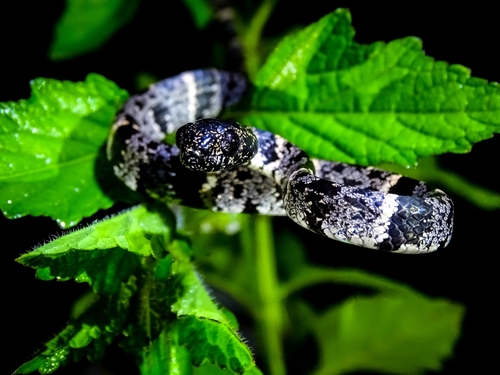 Sibon leucomelasHarmless
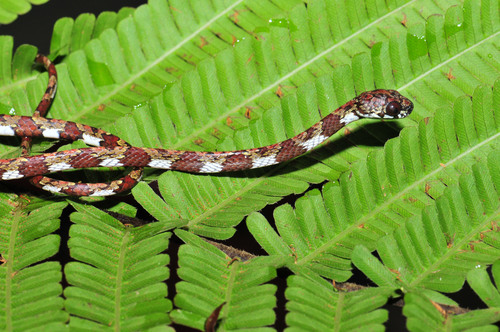 Sibon canopyHarmless
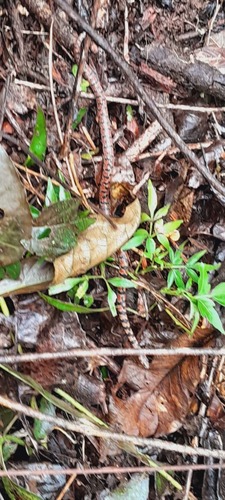 Carr's Snail SuckerSibon carriHarmless
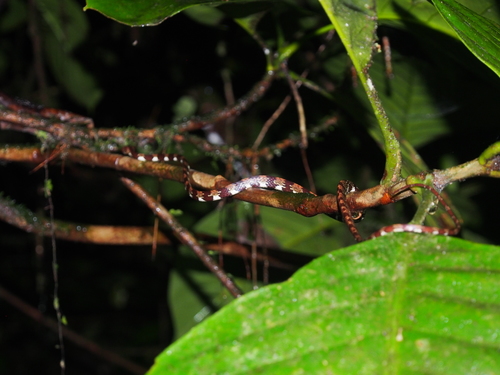 Red-eyed SnaileaterSibon lamariHarmless
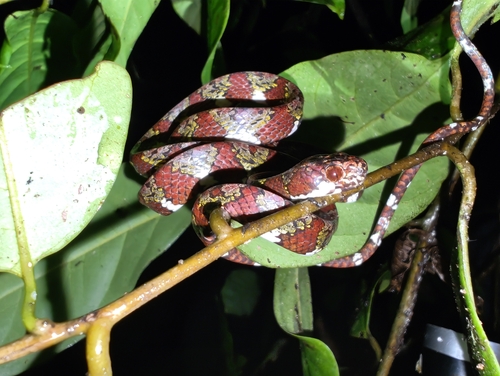 Sibon marleyaeHarmless
 Sibon bevridgelyiHarmless
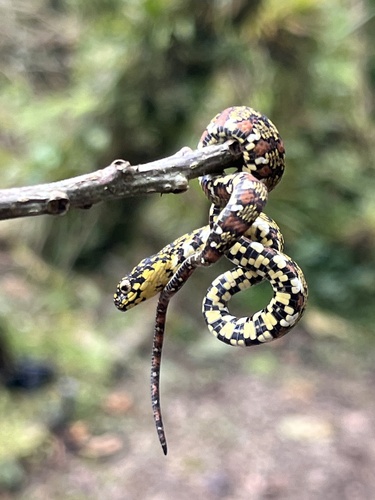 Sibon ayerbeorumHarmless
 Sibon irmelindicaprioaeHarmless
Keep learning
- What Is a Snake? Anatomy and the BasicsA clear overview of what makes a snake a snake: limbless body plan, anatomy, evolution from lizards, species diversity, and why they are ectothermic.
- How Snakes Move, Hunt, and EatHow snakes move without legs, hunt as ambushers or active foragers, kill by constriction or venom, and swallow prey wider than their head.
- What Do Snakes Eat?All snakes are carnivores. Learn what snakes eat, how diet changes with size and age, how often they feed, and how they hunt and swallow prey.
- Venomous vs Nonvenomous: How to Tell the DifferenceThe folk rules for telling venomous snakes apart, where each one fails, and why location-based identification beats guessing by sight.