
Genus · Leptotyphlopidae
Types of blind snakes
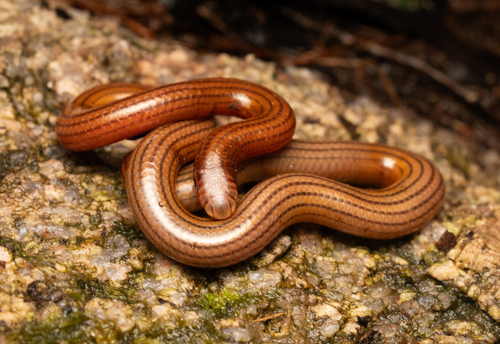
3 species make up the genus Siagonodon, the snakes commonly called blind snakes. None are considered dangerous to humans.
About Blind snakes (threadsnakes)
Tiny, worm-like burrowing snakes that live almost their entire lives underground.
Siagonodon is a genus of small fossorial snakes in the family Leptotyphlopidae, the slender blind snakes or threadsnakes. The family is a group of miniature, primitive snakes built for life in soil and leaf litter, and Siagonodon sits firmly within that mold. Our database holds three species, including the Seven-striped Blind Snake, the Mato Grosso Blind Snake, and Degerbol's Blind Snake. These are obscure, rarely encountered animals, and most of what is reliably known about them comes from understanding the family as a whole.
Like other leptotyphlopids, members of Siagonodon are found in the warmer parts of the Americas, where they inhabit soil, sand, rotting logs, and the burrows of ants and termites. They are committed burrowers, so they are far more often turned up by digging, plowing, or lifting cover objects than seen moving in the open. They favor loose, moist substrates that are easy to push through and that hold the small invertebrate prey they depend on.
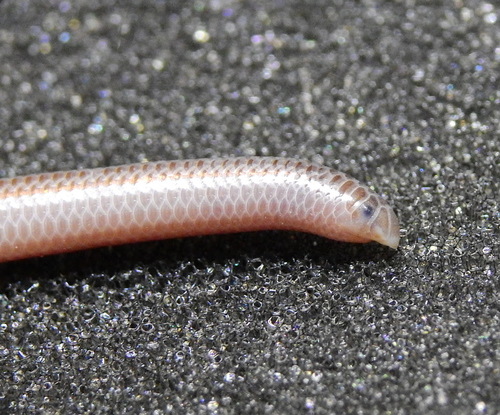
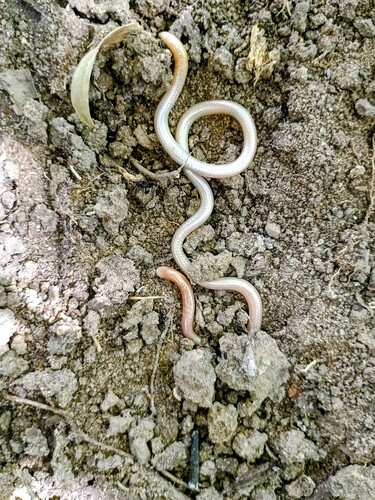
Recognizing a threadsnake comes down to a handful of shared traits rather than species-level detail. They are extremely thin and roughly uniform in width from end to end, with a blunt head, a short tail that often ends in a tiny spine, and tight, smooth, shiny scales that give them a glossy look. The eyes are reduced to dark spots under the head scales and do little more than sense light and dark, which is the source of the blind snake name. They are easy to mistake for earthworms at a glance.
These snakes are completely harmless to people. They are non-venomous, have no fangs, and their mouths are far too small to bite a human in any meaningful way. There is no medical danger from them. The honest framing is simply that they are tiny, fragile, inoffensive animals that pose no threat. As with any wildlife, the right move is to leave them be rather than handle them, and they are best appreciated where they are found.
Ecologically, threadsnakes are specialists on ants and termites, feeding heavily on the soft larvae, pupae, and eggs inside colonies, which they raid using chemical cues. They reproduce by laying small clutches of eggs, in keeping with the family pattern, and some leptotyphlopids are known to produce very small clutches of relatively large eggs. Their behavior is secretive and almost entirely subterranean, so encounters are usually accidental and brief.
Siagonodon belongs to the Leptotyphlopidae family (Slender blindsnakes (threadsnakes)). Among the smallest snakes in the world, thin as a thread. Extremely thin and worm-like, uniformly colored, with vestigial eyes. Resembles a shiny piece of string.
Danger: Harmless. No venom and far too small to harm a person.
All species (3)
Keep learning
- What Is a Snake? Anatomy and the BasicsA clear overview of what makes a snake a snake: limbless body plan, anatomy, evolution from lizards, species diversity, and why they are ectothermic.
- How Snakes Move, Hunt, and EatHow snakes move without legs, hunt as ambushers or active foragers, kill by constriction or venom, and swallow prey wider than their head.
- What Do Snakes Eat?All snakes are carnivores. Learn what snakes eat, how diet changes with size and age, how often they feed, and how they hunt and swallow prey.
- Venomous vs Nonvenomous: How to Tell the DifferenceThe folk rules for telling venomous snakes apart, where each one fails, and why location-based identification beats guessing by sight.