
Genus · Colubridae
Senticolis
The genus Senticolis contains a single species. It is not considered dangerous to humans.
About Green rat snakes
A single slender, climbing rat snake of the southwestern United States and Mexico, harmless to people and often green or olive as an adult.
Senticolis is a small genus in the family Colubridae, the largest snake family in the world and home to most of the familiar nonvenomous snakes people encounter. The genus holds one recognized species, the Green Rat Snake (Senticolis triaspis). It was once grouped with the New World rat snakes in Elaphe, but anatomical and genetic study set it apart in its own genus. Within Colubridae it sits among the rat snakes and their close relatives, sharing the slender build, long body, and strong climbing habits typical of that group.
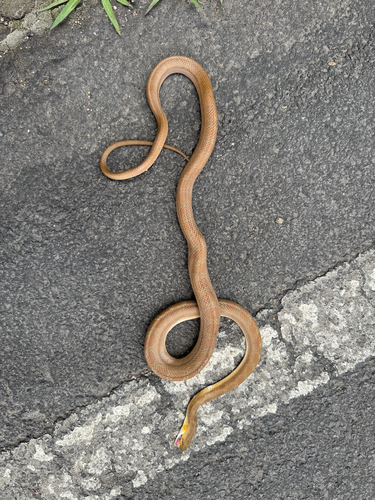
The Green Rat Snake ranges from southern Arizona and New Mexico south through Mexico into Central America. It favors rocky canyons, wooded foothills, riparian corridors, and oak or pine slopes, often near water in otherwise dry country. It is a capable climber found in trees, shrubs, and rock crevices as well as on the ground. Adults are typically olive to greenish or grayish, sometimes with faint blotching, while juveniles tend to be more strongly patterned and lose much of that marking as they mature. The slim body, smooth to weakly keeled scales, and large eyes are general field marks shared with other rat snakes.
Like the great majority of colubrids, the Green Rat Snake is nonvenomous and harmless to humans. It kills prey by constriction, feeding mainly on small mammals, birds, lizards, and eggs, and it reproduces by laying eggs. It is secretive and not aggressive, and is far more likely to flee or hide than to confront a person. As a general rule, leave any wild snake alone and observe it from a respectful distance rather than handling it. If a snakebite of uncertain identity ever occurs, treat it as a medical event and contact US Poison Control at 1-800-222-1222 or local emergency services.
Senticolis belongs to the Colubridae family (Colubrids). The largest snake family, and the one most snakes you meet belong to. Typically round pupils, a head only slightly wider than the neck, and no heat-sensing facial pit or rattle. Scales may be smooth and glossy or keeled and matte depending on the species.
Danger: Almost all colubrids are harmless. A small number are rear-fanged with medically significant venom, the boomslang and the twig (vine) snakes of Africa being the dangerous exceptions. Most colubrids will flee or bluff rather than bite.
All species (1)
Keep learning
- What Is a Snake? Anatomy and the BasicsA clear overview of what makes a snake a snake: limbless body plan, anatomy, evolution from lizards, species diversity, and why they are ectothermic.
- How Snakes Move, Hunt, and EatHow snakes move without legs, hunt as ambushers or active foragers, kill by constriction or venom, and swallow prey wider than their head.
- What Do Snakes Eat?All snakes are carnivores. Learn what snakes eat, how diet changes with size and age, how often they feed, and how they hunt and swallow prey.
- Venomous vs Nonvenomous: How to Tell the DifferenceThe folk rules for telling venomous snakes apart, where each one fails, and why location-based identification beats guessing by sight.