
Genus · Colubridae
Types of saphenophis snakes
4 species make up the genus Saphenophis, the snakes commonly called saphenophis snakes. None are considered dangerous to humans.
About Andean dwarf snakes
Small, secretive South American colubrids of the Andes that almost no one ever sees.
Saphenophis is a genus of small, slender snakes in the family Colubridae, the largest and most diverse snake family on Earth. The family is a catch-all for thousands of mostly slim, agile, terrestrial species, and Saphenophis sits among the many poorly known South American lineages within it. Our database includes four species, among them the Spotted Genuine-Snake and the Atahuallpa Saphenophis Snake. These are obscure animals, studied far less than common backyard colubrids, so much of what we can say honestly comes from family-level and regional patterns rather than detailed species accounts.
These snakes are tied to the Andean region of northwestern South America, with records pointing to montane and foothill zones in countries such as Colombia, Ecuador, and Peru. Like many small Andean colubrids, they tend to occupy moist forest, cloud forest edges, grasslands, and disturbed areas at moderate to higher elevations. They are ground-dwelling and reclusive, the kind of snake more likely to be found under leaf litter, logs, or rocks than out in the open.
In general terms, members of Saphenophis are small, smooth-scaled snakes with the typical colubrid build: a slim body, a head only modestly distinct from the neck, and round pupils. Coloration in this group tends toward browns, grays, and olive tones, sometimes with darker spotting or faint striping, the kind of muted pattern that blends into soil and leaf litter. Because the genus is so rarely encountered and several species look broadly similar, confident identification usually depends on locality plus close examination of scale counts by someone with herpetological training rather than on color alone.
On the safety question, the honest answer is that Saphenophis is not considered dangerous to people. These are small colubrids with no medical reputation for harmful bites, and there is no evidence they pose a venom threat to humans. That said, many colubrids carry mild rear-fanged secretions used to subdue small prey, and the venom biology of obscure genera like this one is simply not well documented. The responsible framing is to treat any wild snake as a wild animal: do not handle it, give it space, and let it move on. If a bite from any snake ever causes unusual swelling, pain, or other symptoms, contact emergency care or US Poison Control at 1-800-222-1222 or your local emergency services.
Ecologically, small colubrids of this kind typically feed on small prey such as insects, worms, amphibians, lizards, or smaller snakes, with diet narrowing by species and size. Reproduction across the family is varied, with many small colubrids laying eggs, though the specifics for Saphenophis are not well established. Behaviorally these are shy, non-aggressive snakes that rely on concealment and escape rather than confrontation. Their rarity in collections and field records means they remain an open frontier for South American herpetology, a reminder of how much of snake diversity is still quietly understudied.
Saphenophis belongs to the Colubridae family (Colubrids). The largest snake family, and the one most snakes you meet belong to. Typically round pupils, a head only slightly wider than the neck, and no heat-sensing facial pit or rattle. Scales may be smooth and glossy or keeled and matte depending on the species.
Danger: Almost all colubrids are harmless. A small number are rear-fanged with medically significant venom, the boomslang and the twig (vine) snakes of Africa being the dangerous exceptions. Most colubrids will flee or bluff rather than bite.
All species (4)
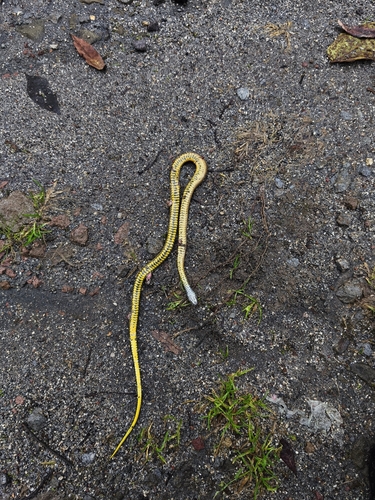
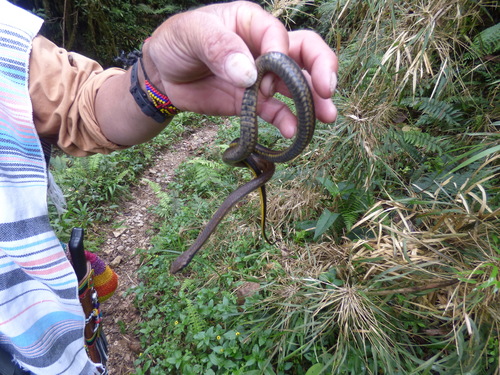
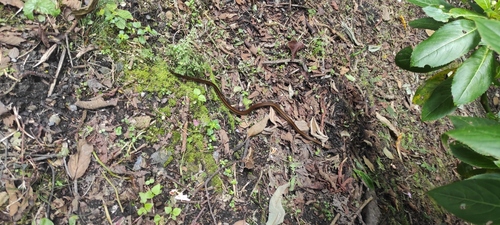
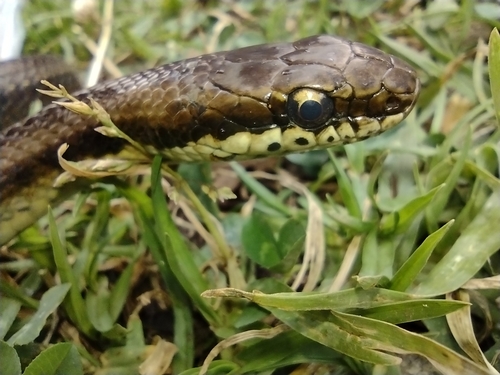
Keep learning
- What Is a Snake? Anatomy and the BasicsA clear overview of what makes a snake a snake: limbless body plan, anatomy, evolution from lizards, species diversity, and why they are ectothermic.
- How Snakes Move, Hunt, and EatHow snakes move without legs, hunt as ambushers or active foragers, kill by constriction or venom, and swallow prey wider than their head.
- What Do Snakes Eat?All snakes are carnivores. Learn what snakes eat, how diet changes with size and age, how often they feed, and how they hunt and swallow prey.
- Venomous vs Nonvenomous: How to Tell the DifferenceThe folk rules for telling venomous snakes apart, where each one fails, and why location-based identification beats guessing by sight.