
Genus · Colubridae
Types of patch-nosed snakes
9 species make up the genus Salvadora, the snakes commonly called patch-nosed snakes. None are considered dangerous to humans.
About patch-nosed snakes
Patch-nosed snakes are fast, slender, day-active colubrids of arid North America, named for the enlarged scale that caps the snout like a small shield.
Salvadora is a genus of snakes in the family Colubridae, the largest and most diverse snake family. The common name patch-nosed snake comes from the single large, free-edged rostral scale that sits over the tip of the snout, a distinctive feature thought to help these snakes dig in loose soil and root out buried prey and eggs. With 9 species in our database, Salvadora is a modest, well-defined group centered on the dry country of the southwestern United States, Mexico, and Central America.
The genus is a creature of warm, open, arid and semi-arid land. Its range runs from the desert Southwest of the United States down through Mexico and into parts of Central America, across deserts, scrublands, grasslands, rocky slopes, chaparral, and dry brushy flats. These are terrestrial, sun-loving snakes built for speed across open ground, and they are most often seen moving quickly through the day rather than hiding from the heat.
Patch-nosed snakes are recognizable as a group by a slim, lightly built body, a fairly distinct head, large eyes suited to daytime hunting, and the namesake enlarged rostral scale over the snout. Most members are patterned with clean longitudinal stripes, typically a pale stripe down the back bordered by darker stripes on the sides, in shades of tan, yellow, cream, and brown that blend with dry soil. This striped, racer-like look together with the patch over the nose is the easiest way to place a snake in this genus in general terms.
On venom and safety, patch-nosed snakes are non-venomous to humans and are considered harmless. They are not front-fanged and pose no medical venom threat to people. Like many fast, nervous colubrids they may bite if grabbed and can release musk, but they have no venom that endangers a person. Even so, it is good practice never to handle a wild snake you cannot positively identify, since lookalikes exist and a frightened snake will defend itself. If anyone is ever bitten by a snake they cannot identify, treat it as a medical matter and call US Poison Control at 1-800-222-1222 or your local emergency services.
Ecologically, patch-nosed snakes are fast, visually oriented daytime hunters. They feed on small lizards and their eggs, along with small mammals, snakes, and reptile eggs, using speed and the shovel-like rostral scale to chase down and dig out prey. Like the great majority of colubrids, Salvadora species are egg-layers, producing clutches of eggs that hatch into independent young. They are alert and quick to flee, relying on speed and camouflage in open terrain rather than confrontation.
Salvadora belongs to the Colubridae family (Colubrids). The largest snake family, and the one most snakes you meet belong to. Typically round pupils, a head only slightly wider than the neck, and no heat-sensing facial pit or rattle. Scales may be smooth and glossy or keeled and matte depending on the species.
Danger: Almost all colubrids are harmless. A small number are rear-fanged with medically significant venom, the boomslang and the twig (vine) snakes of Africa being the dangerous exceptions. Most colubrids will flee or bluff rather than bite.
All species (9)
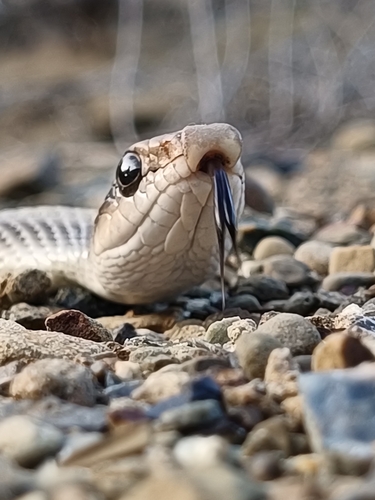 Western Patch-nosed SnakeSalvadora hexalepisHarmless
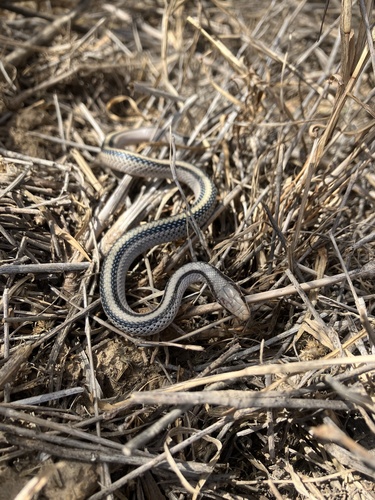 Texas Patch-nosed SnakeSalvadora lineataHarmless
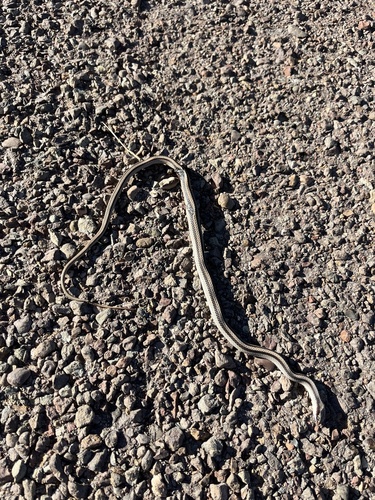 Mountain Patch-nosed SnakeSalvadora grahamiaeHarmless
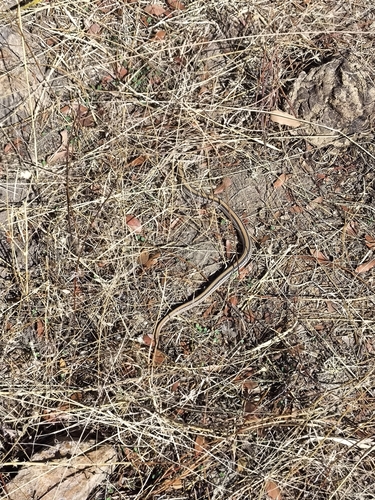 Big Bend Patch-nosed SnakeSalvadora deserticolaHarmless
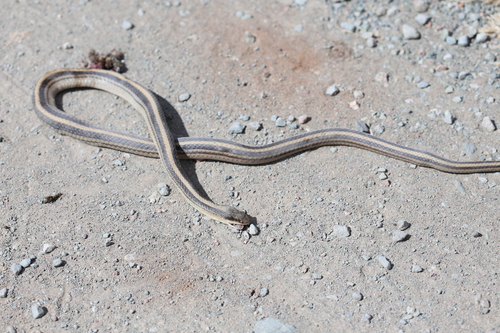 Baird's Patchnose SnakeSalvadora bairdiHarmless
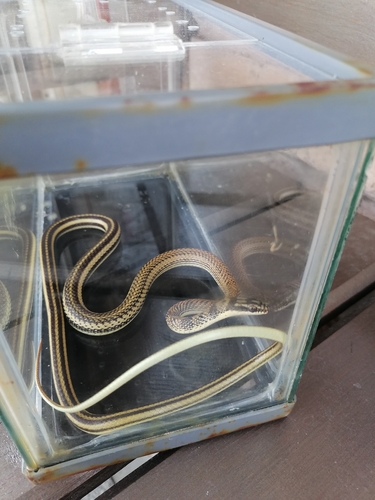 Mexican Patchnose SnakeSalvadora mexicanaHarmless
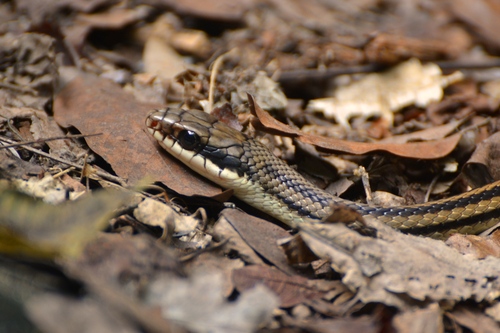 Pacific Patchnose SnakeSalvadora lemniscataHarmless
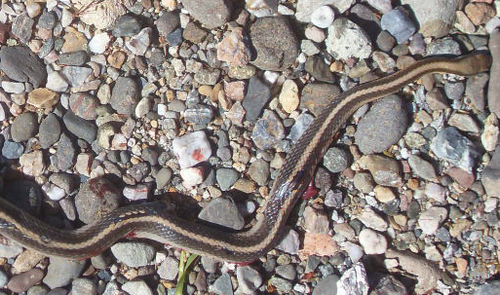 Oaxacan Patchnose SnakeSalvadora intermediaHarmless
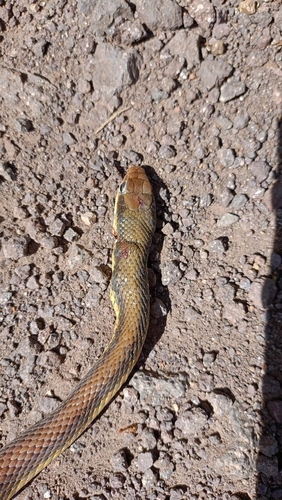 Salvadora gymnorhachisHarmless
Keep learning
- What Is a Snake? Anatomy and the BasicsA clear overview of what makes a snake a snake: limbless body plan, anatomy, evolution from lizards, species diversity, and why they are ectothermic.
- How Snakes Move, Hunt, and EatHow snakes move without legs, hunt as ambushers or active foragers, kill by constriction or venom, and swallow prey wider than their head.
- What Do Snakes Eat?All snakes are carnivores. Learn what snakes eat, how diet changes with size and age, how often they feed, and how they hunt and swallow prey.
- Venomous vs Nonvenomous: How to Tell the DifferenceThe folk rules for telling venomous snakes apart, where each one fails, and why location-based identification beats guessing by sight.