
Genus · Elapidae
Salomonelaps
The genus Salomonelaps contains a single species. It is venomous.
About Solomons coral snake
A single-species elapid genus found only on the Solomon Islands, related to the cobras, mambas, and coral snakes.
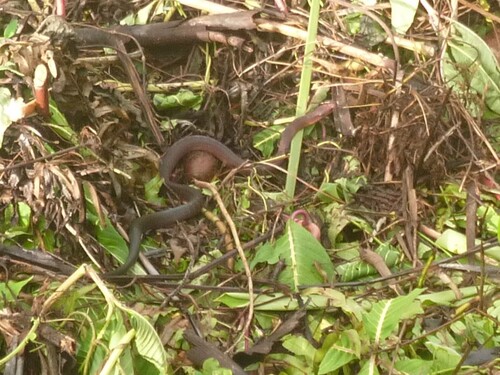
Salomonelaps is a small genus in the family Elapidae, the group that contains cobras, kraits, mambas, sea snakes, and the Australasian terrestrial elapids. The genus holds just one recognized species, Salomonelaps par, commonly called the Solomons coral snake. As an island endemic, it is restricted to the Solomon Islands in the southwestern Pacific, where it occupies forest and disturbed habitats and is one of the very few elapids native to that archipelago.
Like other elapids, Salomonelaps has fixed front fangs at the front of the upper jaw, the defining feature of the family. Members are moderate, slender snakes with smooth scales. Because the genus is geographically isolated and not widely studied, the safest way to recognize one is by context: a front-fanged snake encountered in the Solomon Islands is most likely this species, given how few elapids reach those islands. Color and pattern in island elapids vary, so identification should rely on a qualified local expert rather than appearance alone.
Elapids are venomous, and Salomonelaps should be treated as a venomous snake. The detailed toxicity and clinical effects of its bite are not well documented in the way that better-studied elapids are, so the responsible position is caution rather than reassurance. Do not handle a wild snake of this genus. If a bite occurs, treat it as a medical emergency and seek professional care immediately by contacting local emergency services, or in the United States call Poison Control at 1-800-222-1222. As with other elapids, this snake feeds on small vertebrates and is generally secretive, so most encounters can be avoided simply by leaving the animal alone.
Salomonelaps belongs to the Elapidae family (Cobras, mambas, coral & sea snakes). Front-fanged venomous snakes, many with potent neurotoxic venom. Usually slender with a head barely wider than the neck and fixed front fangs (not the folding fangs of vipers). Coral snakes are boldly ringed; sea snakes have a flattened, paddle-like tail.
Danger: All elapids are venomous and the family is responsible for a large share of fatal snakebites worldwide. Many are shy, but bites can be life-threatening. Treat any bite as a medical emergency.
All species (1)
Keep learning
- Venomous vs Nonvenomous: How to Tell the DifferenceThe folk rules for telling venomous snakes apart, where each one fails, and why location-based identification beats guessing by sight.
- Are Snakes Dangerous? The Real Risk, in PerspectiveMost snakes are harmless and avoid people. Here is the honest picture of snakebite risk worldwide and how to lower your own.
- Snake Venom Explained: How It Works and WhyWhat snake venom actually is, why it evolved, the main venom types, fang delivery, how antivenom works, and why ranking the most venomous snake is hard.
- How Snakes Move, Hunt, and EatHow snakes move without legs, hunt as ambushers or active foragers, kill by constriction or venom, and swallow prey wider than their head.