
Genus · Colubridae
Rodriguesophis
The genus Rodriguesophis contains a single species. It is not considered dangerous to humans.
About pampas snakes
A tiny genus of slender, burrowing South American ground snakes adapted to dry open country.
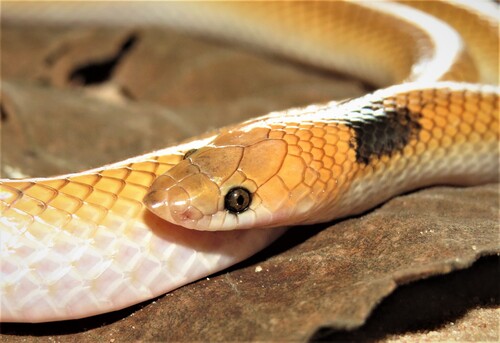
Rodriguesophis is a small genus placed in the family Colubridae, within the large South American radiation of dipsadine snakes (the assemblage often treated as Dipsadidae). It contains only a couple of recognized species, including Gomes' Pampas Snake (Rodriguesophis iglesiasi). These are modest, secretive snakes of Brazil, and they sit among the many fossorial and semi-fossorial ground snakes that dominate the open and seasonally dry landscapes of central and northeastern South America. As a small and poorly studied genus, much of what is known comes from broader patterns in its family and region rather than from detailed study of each species.
Members are typically small, slender snakes with smooth scales and a narrow head not much wider than the neck, a body plan shared by many burrowing and leaf-litter colubrids that push through soil, sand, and ground cover. Coloration in this group tends toward muted browns, grays, and tans, often with darker markings, which suits a life spent close to the ground in arid scrub, grassland, and the dry Caatinga and Cerrado habitats of Brazil. They are easy to mistake for other small ground snakes in the region, so reliable identification usually depends on locality, scale counts, and the judgment of someone familiar with the local fauna.
Like most small dipsadine ground snakes, Rodriguesophis is best regarded as harmless to people and not a medically dangerous snake. Some snakes in this broad group are rear-fanged, with mild secretions used to subdue small prey, but they are not considered a threat to humans and do not deliver venom in the way front-fanged vipers or elapids do. Their diet is expected to consist of small prey such as invertebrates and small vertebrates taken on or under the ground, and like related colubrids they are egg-laying. Even with a harmless reputation, no wild snake should be handled, and any snakebite that causes spreading pain, swelling, or other concerning symptoms warrants prompt medical care. In the United States contact Poison Control at 1-800-222-1222, or call local emergency services.
Rodriguesophis belongs to the Colubridae family (Colubrids). The largest snake family, and the one most snakes you meet belong to. Typically round pupils, a head only slightly wider than the neck, and no heat-sensing facial pit or rattle. Scales may be smooth and glossy or keeled and matte depending on the species.
Danger: Almost all colubrids are harmless. A small number are rear-fanged with medically significant venom, the boomslang and the twig (vine) snakes of Africa being the dangerous exceptions. Most colubrids will flee or bluff rather than bite.
All species (1)
Keep learning
- What Is a Snake? Anatomy and the BasicsA clear overview of what makes a snake a snake: limbless body plan, anatomy, evolution from lizards, species diversity, and why they are ectothermic.
- How Snakes Move, Hunt, and EatHow snakes move without legs, hunt as ambushers or active foragers, kill by constriction or venom, and swallow prey wider than their head.
- What Do Snakes Eat?All snakes are carnivores. Learn what snakes eat, how diet changes with size and age, how often they feed, and how they hunt and swallow prey.
- Venomous vs Nonvenomous: How to Tell the DifferenceThe folk rules for telling venomous snakes apart, where each one fails, and why location-based identification beats guessing by sight.