
Genus · Uropeltidae
Types of earth snakes
20+ species make up the genus Rhinophis, the snakes commonly called earth snakes. None are considered dangerous to humans.
About shieldtail snakes
Burrowing shieldtail snakes that spend almost their entire lives underground in the soils of South Asia.
Rhinophis is a genus of shieldtail snakes in the family Uropeltidae, a group of small, primitive burrowing snakes found only in southern India and Sri Lanka. The family name Uropeltidae means 'tail shield', a reference to the most distinctive feature shared across the group: a hardened, often roughened or flattened plate of scales at the tip of the tail. Rhinophis is one of the larger genera in this family, and our database includes 20+ species.
These are fossorial snakes, meaning they live underground and are built for digging. Members of Rhinophis have a narrow, pointed snout adapted for pushing through soil, a cylindrical body, very small eyes, and smooth, glossy scales that reduce friction as they move through the earth. The genus name itself comes from the prominent rostral shield on the snout, which the snake uses like a wedge. The tail ends abruptly in the characteristic keeled or spiny shield. They are generally small snakes, most measuring well under a foot in length, with bodies that often show iridescent dark coloration and pale or yellowish markings on the underside.
Rhinophis is restricted to South Asia. The center of its diversity is Sri Lanka, with additional species in the Western Ghats and other parts of peninsular India. Typical habitat is moist soil in forests, plantations, gardens, and agricultural land, especially areas with loose, damp earth where the snakes can tunnel. Because they live below the surface, they are rarely seen unless turned up by digging, flooding, or heavy rain that drives them out of the ground.
These snakes are harmless to people. They are non-venomous and pose no danger to humans. Shieldtails are not built to bite defensively in any meaningful way; their small mouths and gentle nature mean a person is far more likely to mistake one for an earthworm than to feel threatened by it. They feed mainly on earthworms and other soft-bodied soil invertebrates, which they hunt underground. When threatened, a shieldtail may hide its head in its coils and present the blunt, armored tail shield as a decoy, a behavior thought to protect the vulnerable head from predators.
Reproduction in Rhinophis and other uropeltids is live-bearing rather than egg-laying, with females giving birth to small litters of fully formed young. Their secretive, subterranean lifestyle means much of their detailed ecology and behavior remains poorly documented, and new species are still being described as researchers study the soils of India and Sri Lanka more closely. For anyone who encounters one, no first aid or medical concern applies; if there is ever genuine uncertainty about a snake or a bite from any wild animal, contact local emergency services or US Poison Control at 1-800-222-1222.
Rhinophis belongs to the Uropeltidae family (Shield-tailed snakes). Burrowing snakes with a bizarre, roughened tail tip. Small, glossy, cylindrical, with tiny eyes and a distinctive truncated or rough tail tip.
Danger: Harmless. No venom.
All species (23)
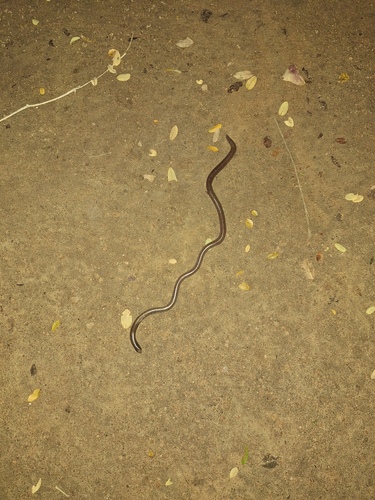 Schneider's ShieldtailRhinophis oxyrhynchusHarmless
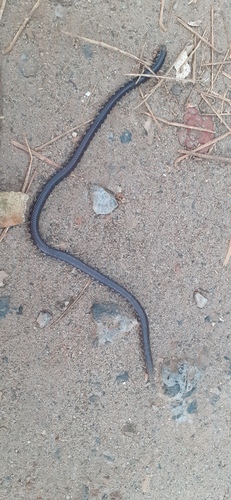 Bicoloured shieldtailRhinophis melanoleucusHarmless
 Cuvier's Earth SnakeRhinophis philippinusHarmless
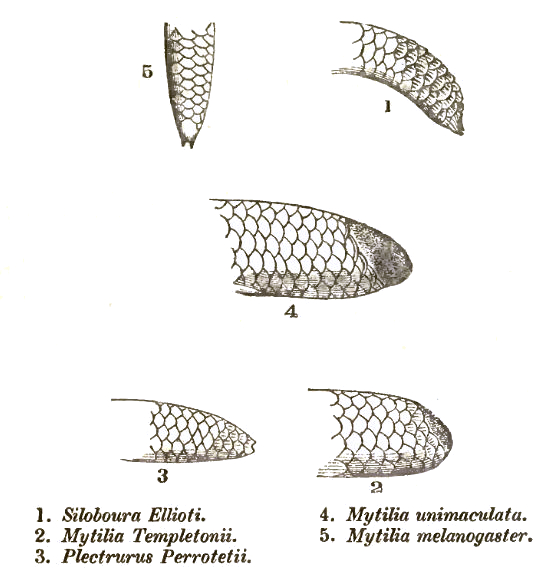 Blyth's Earth SnakeRhinophis blythiiHarmless
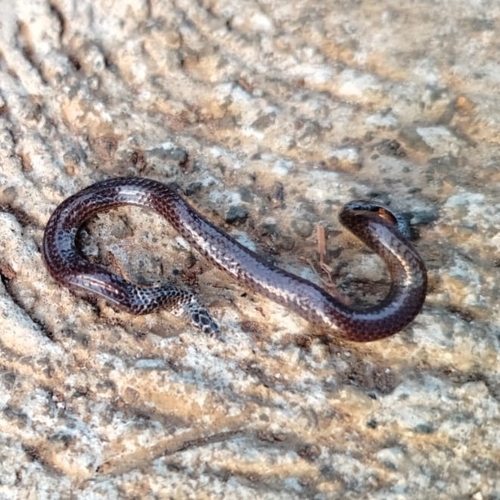 Karinthandan's shield tailRhinophis karinthandaniHarmless
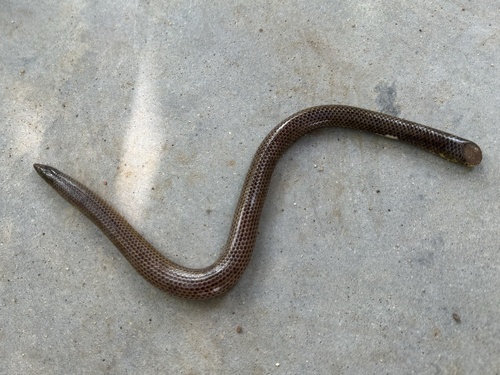 Large Shieldtail SnakeRhinophis saffragamusHarmless
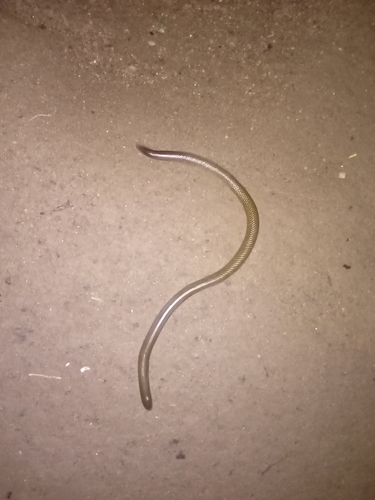 Gray's Earth SnakeRhinophis melanogasterHarmless
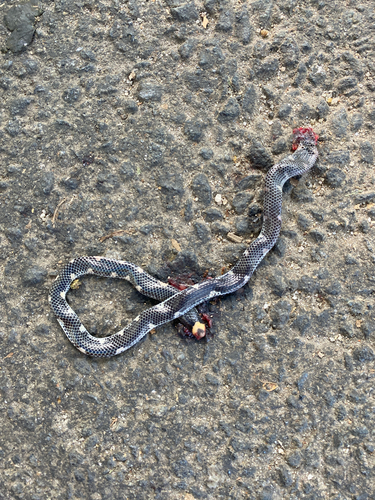 Trevelyan's Earth SnakeRhinophis homolepisHarmless
 Salty Earth SnakeRhinophis sanguineusHarmless
 Cardamom Hills Earth SnakeRhinophis fergusonianusHarmless
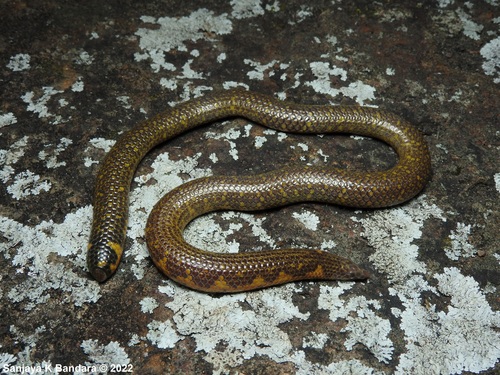 Drummond-Hay's Earth SnakeRhinophis drummondhayiHarmless
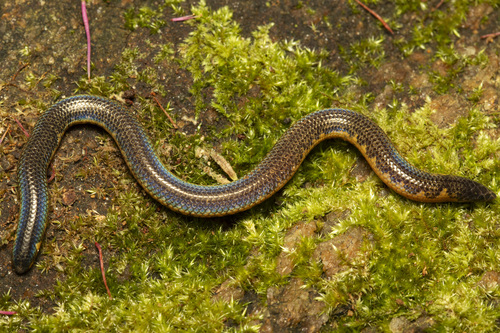 Eranga Viraj’s shieldtail snakeRhinophis erangavirajiHarmless
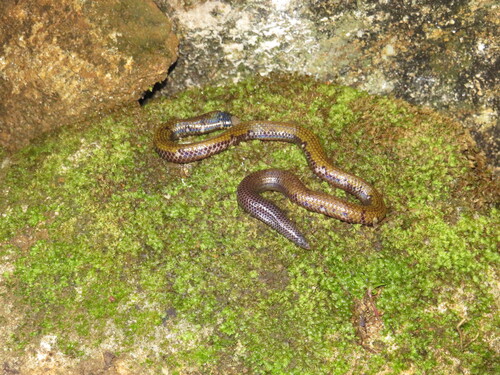 Sabaragamuwa ShieldtailRhinophis martinHarmless
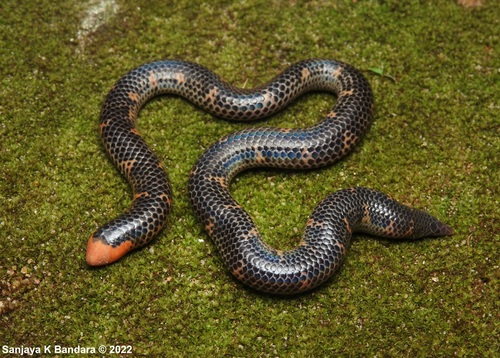 Mendis' ShieldtailRhinophis mendisiHarmless
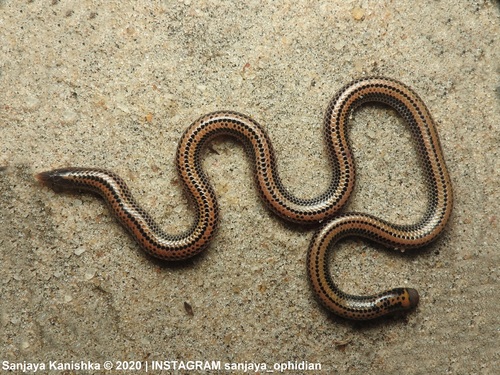 Müller's Earth SnakeRhinophis punctatusHarmless
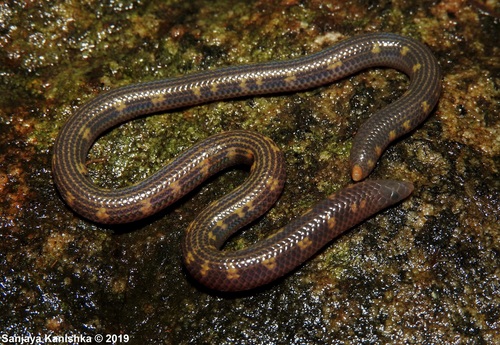 Phillipps' Earth SnakeRhinophis phillipsiHarmless
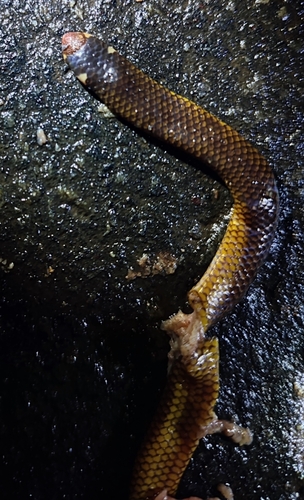 Deraniyagala’s ShieldtailRhinophis tricoloratusHarmless
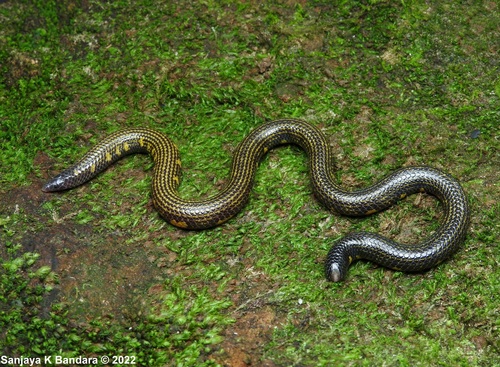 Matale ShieldtailRhinophis gunasekaraiHarmless
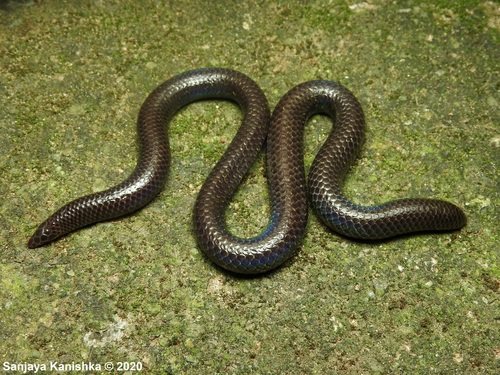 Roshan Perera's ShieldtailRhinophis roshanpereraiHarmless
 Siruvani Hills ShieldtailRhinophis siruvaniensisHarmless
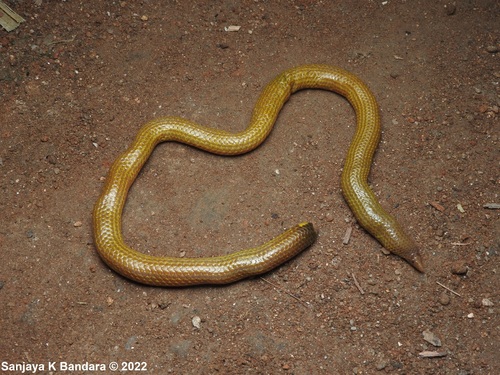 Striped RhinophisRhinophis lineatusHarmless
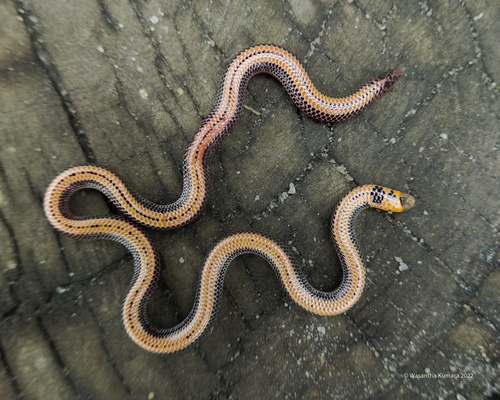 Willey's Earth SnakeRhinophis porrectusHarmless
- No photoTamil Nadu Earth SnakeRhinophis travancoricusHarmless
Keep learning
- What Is a Snake? Anatomy and the BasicsA clear overview of what makes a snake a snake: limbless body plan, anatomy, evolution from lizards, species diversity, and why they are ectothermic.
- How Snakes Move, Hunt, and EatHow snakes move without legs, hunt as ambushers or active foragers, kill by constriction or venom, and swallow prey wider than their head.
- What Do Snakes Eat?All snakes are carnivores. Learn what snakes eat, how diet changes with size and age, how often they feed, and how they hunt and swallow prey.
- Venomous vs Nonvenomous: How to Tell the DifferenceThe folk rules for telling venomous snakes apart, where each one fails, and why location-based identification beats guessing by sight.