
Genus · Homalopsidae
Raclitia
The genus Raclitia contains a single species. It is not considered dangerous to humans.
About Selangor mud snake
A rare, secretive mud snake from Peninsular Malaysia known from very few specimens, part of the rear-fanged Homalopsidae water snakes.
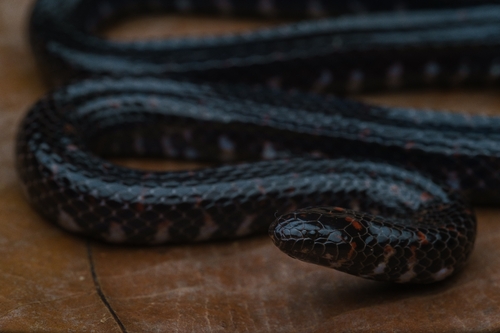
Raclitia is a tiny genus in the family Homalopsidae, the Indo-Australian or Oriental-Australian water and mud snakes. It contains a single recognized species, Raclitia indica, the Selangor mud snake, named for the Malaysian state where it was found. Like other homalopsids, it sits among the aquatic and semi-aquatic members of the broader snake radiation, a group built around life in mud, fresh water, and brackish margins rather than open land.
This is one of the more obscure snakes in the family. It is known from Peninsular Malaysia, where homalopsids typically live in lowland freshwater habitats such as slow streams, swamps, paddy fields, and muddy banks. Members of Homalopsidae are generally heavy-bodied, smooth or keeled, with eyes and nostrils set high on the head and often valved nostrils, adaptations for an aquatic, bottom-hugging lifestyle. Beyond its family placement and Malaysian range, very little has been documented about Raclitia specifically, which is normal for a snake represented by so few records.
Homalopsids are rear-fanged and mildly venomous, using enlarged grooved teeth at the back of the upper jaw to subdue prey such as fish, frogs, crustaceans, and other small aquatic animals. Their venom is adapted for small cold-blooded prey and is not considered medically significant to people, and most family members are live-bearing. That said, no specific venom data exists for Raclitia and it should not be handled. Treat any wild snake with caution: do not pick it up, and in the event of a bite from any snake, seek medical care, contacting local emergency services or, in the US, Poison Control at 1-800-222-1222.
Raclitia belongs to the Homalopsidae family (Mud & water snakes). Aquatic, mud-dwelling snakes with upward-facing eyes and nostrils. Stout, often drab snakes with upturned nostrils, found in or near muddy water.
Danger: Rear-fanged with mild venom; not considered dangerous to humans.
All species (1)
Keep learning
- What Is a Snake? Anatomy and the BasicsA clear overview of what makes a snake a snake: limbless body plan, anatomy, evolution from lizards, species diversity, and why they are ectothermic.
- How Snakes Move, Hunt, and EatHow snakes move without legs, hunt as ambushers or active foragers, kill by constriction or venom, and swallow prey wider than their head.
- What Do Snakes Eat?All snakes are carnivores. Learn what snakes eat, how diet changes with size and age, how often they feed, and how they hunt and swallow prey.
- Venomous vs Nonvenomous: How to Tell the DifferenceThe folk rules for telling venomous snakes apart, where each one fails, and why location-based identification beats guessing by sight.