
Genus · Colubridae
Types of diminutive snakes
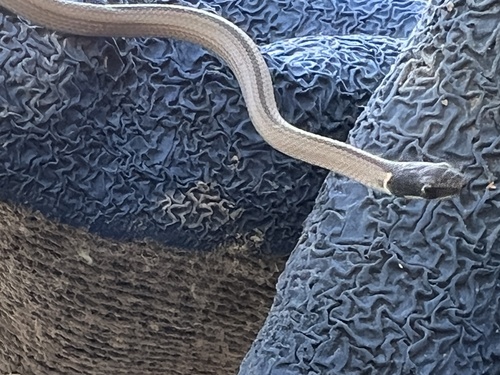
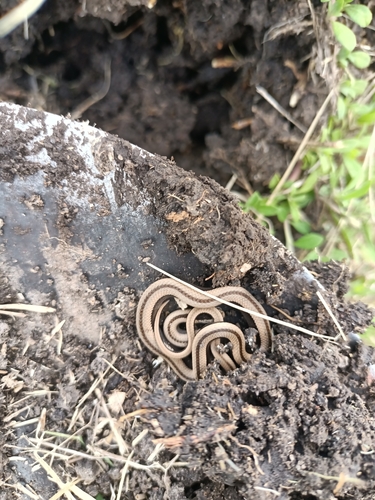
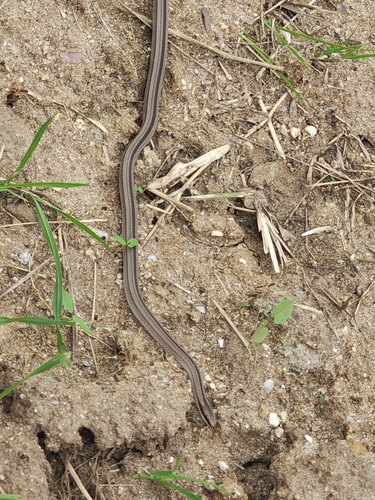
3 species make up the genus Psomophis, the snakes commonly called diminutive snakes. None are considered dangerous to humans.
About South American ground snakes
Small, slender, ground-dwelling South American snakes that spend their lives close to the soil and pose no real threat to people.
Psomophis is a small genus of colubrid snakes found in South America. It belongs to the family Colubridae, the largest and most diverse snake family in the world, which holds the majority of harmless and mildly venomous species. Within that family Psomophis sits among the many small terrestrial lineages often grouped under the loose label of ground snakes, and our database currently lists three species in the genus.
These are modestly sized, slim-bodied snakes built for life at or just below ground level. Like most small colubrids in their group, they tend toward smooth scales, a fairly uniform body shape, and earth-toned coloring that helps them disappear against soil and leaf litter. In general terms, a Psomophis is recognized less by any single flashy marking and more by the overall picture of a small, plain, secretive snake of open and semi-open South American country rather than a large or boldly patterned animal.
The genus is South American in range, associated with grasslands, savanna, scrub, and the edges of more open habitats across parts of the continent. Members live a largely hidden, surface-and-burrow existence, sheltering under cover and staying near the ground. This kind of cryptic habit is typical of small ground snakes, which is why they are encountered far less often than larger, more conspicuous species even where they are reasonably common.
On safety, Psomophis snakes are not considered dangerous to humans. They are small colubrids with no front fangs and no medically significant venom delivery, and they are essentially harmless to people going about normal activity. Even so, the responsible rule for any wild snake holds. Do not handle wild snakes, give them space, and let them move on. If anyone is ever bitten by a snake and there is uncertainty about the species or any concerning symptoms, treat it as a medical matter and contact emergency services or, in the United States, Poison Control at 1-800-222-1222.
Ecologically these snakes fill the role of small ground-level predators, the part of the food web typical of their group. Like related small South American colubrids they feed on small prey such as invertebrates and small vertebrates suited to their size, and they reproduce by laying eggs, which is the common pattern across most of this branch of the family. Their behavior is unobtrusive and non-aggressive, relying on concealment and retreat rather than confrontation. Real example members in our database include the Spirit Diminutive Snake and the Wide Ground Snake.
Psomophis belongs to the Colubridae family (Colubrids). The largest snake family, and the one most snakes you meet belong to. Typically round pupils, a head only slightly wider than the neck, and no heat-sensing facial pit or rattle. Scales may be smooth and glossy or keeled and matte depending on the species.
Danger: Almost all colubrids are harmless. A small number are rear-fanged with medically significant venom, the boomslang and the twig (vine) snakes of Africa being the dangerous exceptions. Most colubrids will flee or bluff rather than bite.
All species (3)
Keep learning
- What Is a Snake? Anatomy and the BasicsA clear overview of what makes a snake a snake: limbless body plan, anatomy, evolution from lizards, species diversity, and why they are ectothermic.
- How Snakes Move, Hunt, and EatHow snakes move without legs, hunt as ambushers or active foragers, kill by constriction or venom, and swallow prey wider than their head.
- What Do Snakes Eat?All snakes are carnivores. Learn what snakes eat, how diet changes with size and age, how often they feed, and how they hunt and swallow prey.
- Venomous vs Nonvenomous: How to Tell the DifferenceThe folk rules for telling venomous snakes apart, where each one fails, and why location-based identification beats guessing by sight.