
Genus · Pseudoxyrhophiidae
Types of brook snakes
7 species make up the genus Pseudoxyrhopus, the snakes commonly called brook snakes. None are considered dangerous to humans.
About Madagascar ground snakes
A small genus of secretive, ground-dwelling snakes found only on Madagascar.
Pseudoxyrhopus is a genus of snakes endemic to Madagascar, meaning its members live nowhere else on Earth. It belongs to the family Pseudoxyrhophiidae, a large group of mostly Old World snakes that radiated dramatically on Madagascar and now accounts for the great majority of the island's snake species. Within that family, Pseudoxyrhopus represents one of several lineages of small to medium ground snakes that fill the everyday predator roles other regions hand to colubrids.
These are terrestrial snakes that spend much of their time on or just under the forest floor, in leaf litter, soil, and low vegetation. They favor the humid and montane forests that cover parts of eastern and northern Madagascar, though the genus as a whole occupies a range of forest and edge habitats across the island. Several species in our database carry descriptive English names such as Three-striped Ground Snake, Striped Brook Snake, Brown Brook Snake, and Night Brook Snake, which point to patterned, modestly sized, often stream-associated and low-light-active animals.
In general terms, members of Pseudoxyrhophiidae like this genus are slender to moderately built snakes with smooth scales and rounded heads only slightly distinct from the neck. Many show longitudinal stripes or plain brown to dark coloration that helps them disappear against soil and litter. Recognizing the genus precisely is a task for specialists, since several Madagascan ground snakes look alike, but the combination of small size, terrestrial habits, and Madagascan range narrows the field considerably.
On safety, snakes in the family Pseudoxyrhophiidae are not front-fanged vipers or elapids. Many are completely harmless, and some are rear-fanged, meaning they have enlarged grooved teeth set toward the back of the jaw and mild saliva used to subdue small prey. There are no documented dangerous envenomations from Pseudoxyrhopus, and these snakes pose no meaningful threat to people. Even so, no wild snake should be handled, both for the animal's welfare and because field identification can be wrong. If a bite from any snake causes a reaction you did not expect, contact US Poison Control at 1-800-222-1222 or your local emergency services.
Ecologically these are small predators of the forest floor. Like related Madagascan ground snakes they feed on prey such as frogs, lizards, and other small animals they encounter while foraging through litter and soil. The family includes egg-laying species, and these ground snakes are generally egg layers. Behavior is secretive and non-aggressive: when disturbed they typically flee into cover rather than confront a larger animal, which is why they are seen far less often than their numbers would suggest.
Pseudoxyrhopus belongs to the Pseudoxyrhophiidae family (Malagasy snakes). A spectacular radiation of mostly harmless snakes centered on Madagascar. Highly variable; identification is usually by region and genus rather than a single family trait.
Danger: Considered harmless to humans. Some are mildly venomous (rear-fanged) but not medically significant.
All species (7)
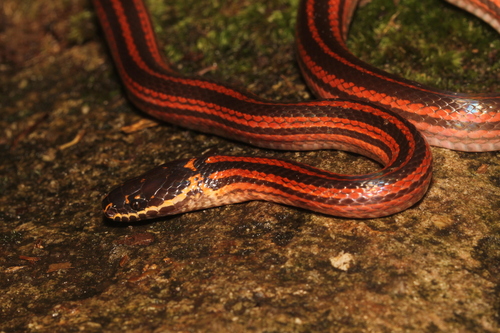 Three-striped Ground SnakePseudoxyrhopus tritaeniatusHarmless
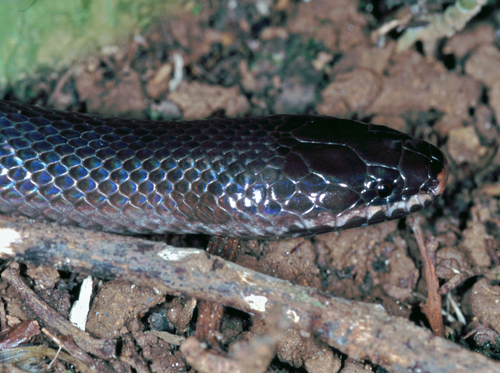 Night Brook SnakePseudoxyrhopus heterurusHarmless
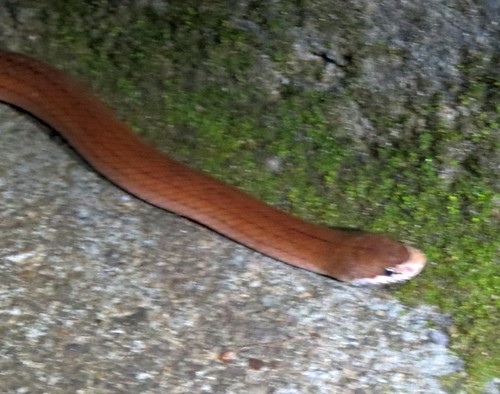 Striped Brook SnakePseudoxyrhopus quinquelineatusHarmless
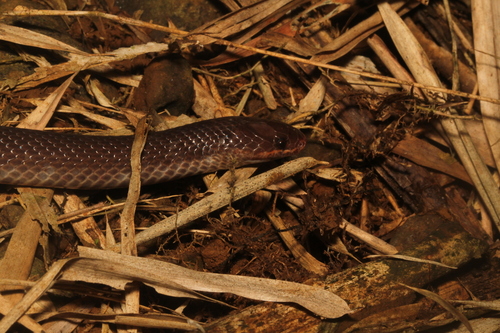 Brown Brook SnakePseudoxyrhopus micropsHarmless
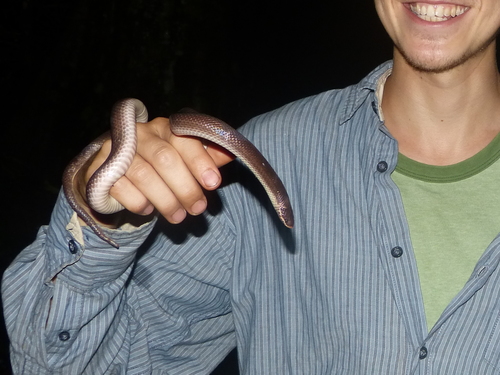 Ambre Brook SnakePseudoxyrhopus ambreensisHarmless
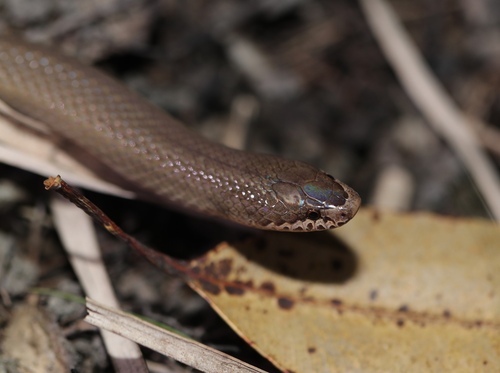 Sokosoko Ground SnakePseudoxyrhopus sokosokoHarmless
- No photoRanomafana Ground SnakePseudoxyrhopus oblectatorHarmless
Keep learning
- What Is a Snake? Anatomy and the BasicsA clear overview of what makes a snake a snake: limbless body plan, anatomy, evolution from lizards, species diversity, and why they are ectothermic.
- How Snakes Move, Hunt, and EatHow snakes move without legs, hunt as ambushers or active foragers, kill by constriction or venom, and swallow prey wider than their head.
- What Do Snakes Eat?All snakes are carnivores. Learn what snakes eat, how diet changes with size and age, how often they feed, and how they hunt and swallow prey.
- Venomous vs Nonvenomous: How to Tell the DifferenceThe folk rules for telling venomous snakes apart, where each one fails, and why location-based identification beats guessing by sight.