
Genus · Colubridae
Pseudoleptodeira
The genus Pseudoleptodeira contains a single species. It is not considered dangerous to humans.
About false cat-eyed snakes
A small Middle American colubrid genus of slender, vertical-pupiled night snakes that mimic the true cat-eyed snakes.
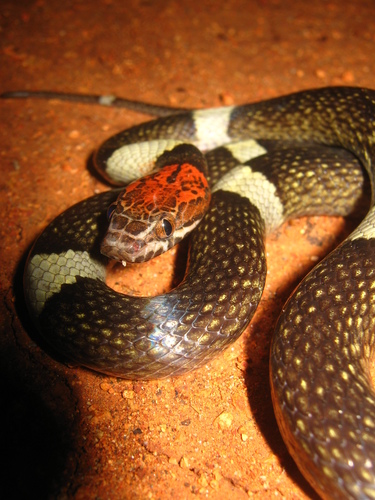
Pseudoleptodeira is a small genus in the family Colubridae, the largest snake family and a catch-all of mostly slender, agile, egg-laying species. The genus name means false Leptodeira, a nod to the true cat-eyed snakes (Leptodeira) that it closely resembles. The best known member is the False Cat-eyed Snake (Pseudoleptodeira latifasciata), a slim nocturnal snake of western Mexico. These snakes carry the classic cat-eyed look: a relatively broad head set off from a narrow neck, large eyes with vertical, slit-like pupils, and a banded or blotched pattern over a pale ground color. The vertical pupil is a common adaptation in night-active snakes and helps separate this group from round-pupiled day hunters.
Members live in the dry forests, scrub, and rocky hillsides of Pacific-slope Mexico, where they are active at night and shelter by day under rocks, logs, or leaf litter. Like many small colubrids in this part of the world, they feed largely on small vertebrates such as lizards and frogs and are believed to lay eggs rather than bear live young, which is the typical colubrid pattern. They are secretive and rarely encountered, so detailed natural-history records are limited; much of what is understood comes from general patterns across similar Middle American colubrids rather than from extensive study of this genus itself.
These are rear-fanged snakes, meaning they have enlarged grooved teeth toward the back of the upper jaw and a mild saliva used to subdue small prey. They are not considered dangerous to people, and there are no records of serious harm to humans from this group. Even so, no wild snake should be handled. A rear-fanged bite can cause local swelling or irritation in some people, and field identification of small banded snakes is easy to get wrong, so it is safest to leave any unknown snake alone. If a bite occurs or you are unsure what bit you, contact emergency services or US Poison Control at 1-800-222-1222 rather than attempting first aid yourself.
Pseudoleptodeira belongs to the Colubridae family (Colubrids). The largest snake family, and the one most snakes you meet belong to. Typically round pupils, a head only slightly wider than the neck, and no heat-sensing facial pit or rattle. Scales may be smooth and glossy or keeled and matte depending on the species.
Danger: Almost all colubrids are harmless. A small number are rear-fanged with medically significant venom, the boomslang and the twig (vine) snakes of Africa being the dangerous exceptions. Most colubrids will flee or bluff rather than bite.
All species (1)
Keep learning
- What Is a Snake? Anatomy and the BasicsA clear overview of what makes a snake a snake: limbless body plan, anatomy, evolution from lizards, species diversity, and why they are ectothermic.
- How Snakes Move, Hunt, and EatHow snakes move without legs, hunt as ambushers or active foragers, kill by constriction or venom, and swallow prey wider than their head.
- What Do Snakes Eat?All snakes are carnivores. Learn what snakes eat, how diet changes with size and age, how often they feed, and how they hunt and swallow prey.
- Venomous vs Nonvenomous: How to Tell the DifferenceThe folk rules for telling venomous snakes apart, where each one fails, and why location-based identification beats guessing by sight.