
Genus · Elapidae
Types of cobras
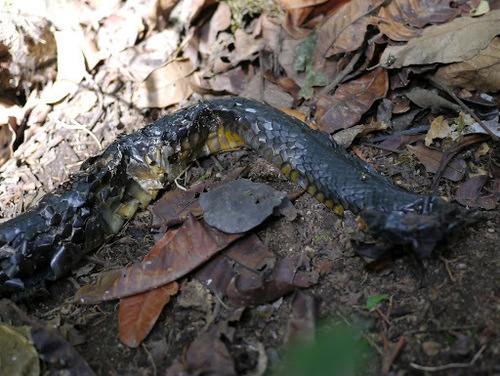
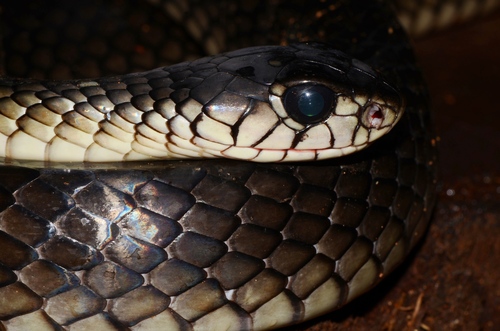
2 species make up the genus Pseudohaje, the snakes commonly called cobras. All of them are venomous.
About tree cobras
Pseudohaje are Africa's elapid tree cobras, large arboreal relatives of the true cobras with enormous eyes built for life in the canopy.
Pseudohaje is a small genus in the family Elapidae, the front-fanged group that includes cobras, mambas, kraits, coral snakes, and sea snakes. It holds just two recognized species, both found in tropical forests of sub-Saharan Africa: the African tree cobra (Pseudohaje goldii) and the black tree cobra (Pseudohaje nigra). As elapids, they carry fixed front fangs and are considered venomous, but they are poorly studied compared to better-known African cobras, so much of what is known comes from family-level and regional context rather than detailed field study.
These are forest snakes tied to wet, lowland rainforest and adjacent waterways across West and Central Africa. They are strongly arboreal, spending much of their lives in trees, and are also capable swimmers often found near rivers, streams, and swampy ground. In general terms they are slender, large-bodied snakes that can reach well 2+ meters, glossy and dark in color, and they are most easily recognized by their exceptionally large eyes, an adaptation that sets them apart from ground-dwelling cobras and suits an active, visually guided hunter in the canopy. They are alert and quick to flee rather than confront.
As members of Elapidae, tree cobras are venomous and should be treated as potentially dangerous; they are not safe to handle, and any bite from a wild snake should be treated as a medical emergency. Bites are rare because these snakes are reclusive, shy, and live away from people in dense forest, but caution is warranted near their habitat. If a bite occurs, do not attempt to manage it yourself: seek emergency medical care immediately and contact local emergency services, or in the United States call Poison Control at 1-800-222-1222. Ecologically they are believed to prey on amphibians, fish, and small vertebrates, and like most elapids they reproduce by laying eggs, with behavior centered on stealth, climbing, and rapid escape.
Pseudohaje belongs to the Elapidae family (Cobras, mambas, coral & sea snakes). Front-fanged venomous snakes, many with potent neurotoxic venom. Usually slender with a head barely wider than the neck and fixed front fangs (not the folding fangs of vipers). Coral snakes are boldly ringed; sea snakes have a flattened, paddle-like tail.
Danger: All elapids are venomous and the family is responsible for a large share of fatal snakebites worldwide. Many are shy, but bites can be life-threatening. Treat any bite as a medical emergency.
All species (2)
Keep learning
- Venomous vs Nonvenomous: How to Tell the DifferenceThe folk rules for telling venomous snakes apart, where each one fails, and why location-based identification beats guessing by sight.
- Are Snakes Dangerous? The Real Risk, in PerspectiveMost snakes are harmless and avoid people. Here is the honest picture of snakebite risk worldwide and how to lower your own.
- Snake Venom Explained: How It Works and WhyWhat snake venom actually is, why it evolved, the main venom types, fang delivery, how antivenom works, and why ranking the most venomous snake is hard.
- How Snakes Move, Hunt, and EatHow snakes move without legs, hunt as ambushers or active foragers, kill by constriction or venom, and swallow prey wider than their head.