
Genus · Colubridae
Pseudoficimia
The genus Pseudoficimia contains a single species. It is not considered dangerous to humans.
About false hook-nosed snake
A small, secretive Mexican burrower named for its resemblance to the true hook-nosed snakes of the genus Ficimia.
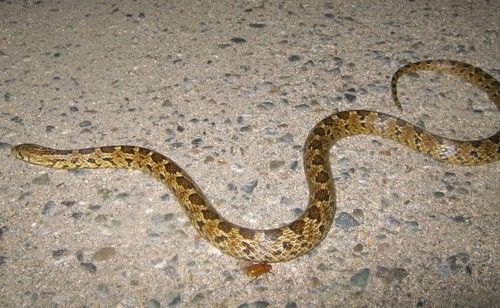
Pseudoficimia is a small genus in the family Colubridae, the largest snake family and home to most of the world's harmless, egg-laying and nonvenomous-to-people species. The genus is best known by the false ficimia, Pseudoficimia frontalis, a slender snake endemic to western and central Mexico. Its name means false Ficimia, a nod to the true hook-nosed snakes it superficially resembles in its small size, slightly upturned snout, and burrowing way of life. It sits among the New World colubrids that have specialized for a life spent largely under cover.
Members of this genus are small, modest-bodied snakes adapted for moving through loose soil, leaf litter, and the spaces beneath rocks and debris. Like other small fossorial colubrids, they tend to have smooth scales, a rounded or slightly reinforced snout for nosing into the substrate, and cryptic earth-toned coloring that blends with dry ground. They occupy semiarid scrub, thornforest, and rocky slopes across their Mexican range, where they stay hidden by day and become more active in cooler, humid conditions. Encounters with people are uncommon because the snakes spend so much time out of sight.
These are not snakes that pose a meaningful danger to people. Like the vast majority of small colubrids, they are not regarded as dangerously venomous and are essentially harmless in normal encounters, feeding on small prey such as insects and other invertebrates rather than anything large. As a general rule, no wild snake should be handled, and any bite that does break the skin should be cleaned and watched. If you are ever bitten and unsure of the species, or if symptoms develop, contact emergency services or US Poison Control at 1-800-222-1222 rather than trying to manage it yourself. Most colubrids in this group lay eggs, and like their relatives they play a quiet role in local ecosystems as predators of small ground-dwelling creatures.
Pseudoficimia belongs to the Colubridae family (Colubrids). The largest snake family, and the one most snakes you meet belong to. Typically round pupils, a head only slightly wider than the neck, and no heat-sensing facial pit or rattle. Scales may be smooth and glossy or keeled and matte depending on the species.
Danger: Almost all colubrids are harmless. A small number are rear-fanged with medically significant venom, the boomslang and the twig (vine) snakes of Africa being the dangerous exceptions. Most colubrids will flee or bluff rather than bite.
All species (1)
Keep learning
- What Is a Snake? Anatomy and the BasicsA clear overview of what makes a snake a snake: limbless body plan, anatomy, evolution from lizards, species diversity, and why they are ectothermic.
- How Snakes Move, Hunt, and EatHow snakes move without legs, hunt as ambushers or active foragers, kill by constriction or venom, and swallow prey wider than their head.
- What Do Snakes Eat?All snakes are carnivores. Learn what snakes eat, how diet changes with size and age, how often they feed, and how they hunt and swallow prey.
- Venomous vs Nonvenomous: How to Tell the DifferenceThe folk rules for telling venomous snakes apart, where each one fails, and why location-based identification beats guessing by sight.