
Genus · Homalopsidae
Pseudoferania
The genus Pseudoferania contains a single species. It is not considered dangerous to humans.
About water snakes
A small group of mud-dwelling Australasian water snakes in the rear-fanged mud snake family.
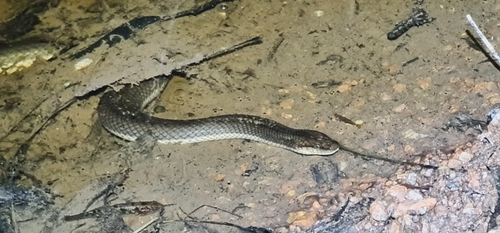
Pseudoferania is a genus in the family Homalopsidae, the mud snakes, a group of rear-fanged aquatic and semiaquatic snakes spread across South and Southeast Asia and into northern Australia and New Guinea. The best known member is Macleay's water snake, Pseudoferania polylepis, found in the freshwater rivers, swamps, lagoons, and floodplains of northern Australia and southern New Guinea. Like other homalopsids, these snakes sit at the watery edge of the snake world, more at home in mud and shallow water than on dry land.
Members of this genus follow the general homalopsid body plan. They are stout, smooth-bodied snakes with small eyes and valvular nostrils set high on the snout, an adaptation that lets them breathe at the surface while the rest of the body stays submerged. Coloration tends toward plain olive, brown, or grey above with a paler belly, helping them blend into muddy water. You recognize the family more by where and how it lives than by flashy markings: a thick freshwater snake hugging the bottom of a tropical waterway is a reasonable candidate for a homalopsid.
These are rear-fanged snakes, with enlarged grooved teeth toward the back of the upper jaw and mild venom suited to subduing the fish and frogs that make up their diet. That venom is adapted to small aquatic prey, not to people, and homalopsids are not considered dangerous to humans. Even so, this is a wild snake with venom delivery, so the honest guidance is to observe and not handle it. If anyone is bitten by any snake and symptoms develop or the identity is uncertain, treat it as a medical matter and contact emergency services or US Poison Control at 1-800-222-1222. Like many mud snakes, members of the family give birth to live young rather than laying eggs, and they hunt mainly at night in the water.
Pseudoferania belongs to the Homalopsidae family (Mud & water snakes). Aquatic, mud-dwelling snakes with upward-facing eyes and nostrils. Stout, often drab snakes with upturned nostrils, found in or near muddy water.
Danger: Rear-fanged with mild venom; not considered dangerous to humans.
All species (1)
Keep learning
- What Is a Snake? Anatomy and the BasicsA clear overview of what makes a snake a snake: limbless body plan, anatomy, evolution from lizards, species diversity, and why they are ectothermic.
- How Snakes Move, Hunt, and EatHow snakes move without legs, hunt as ambushers or active foragers, kill by constriction or venom, and swallow prey wider than their head.
- What Do Snakes Eat?All snakes are carnivores. Learn what snakes eat, how diet changes with size and age, how often they feed, and how they hunt and swallow prey.
- Venomous vs Nonvenomous: How to Tell the DifferenceThe folk rules for telling venomous snakes apart, where each one fails, and why location-based identification beats guessing by sight.