
Genus · Colubridae
Types of boas
6 species make up the genus Pseudoboa, the snakes commonly called boas. None are considered dangerous to humans.
About false boas
Slender, smooth-scaled Neotropical snakes that look like small boas but are rear-fanged colubrids.
Pseudoboa is a genus of New World snakes in the large family Colubridae, the group that contains most of the world's snake species. Despite the name, false boas are not true boas and do not constrict in the same way the boa family does. They are placed in the dipsadine line of colubrids, a mostly tropical American radiation, and the genus holds a handful of species spread across Central and South America. Our database lists six species, including the Black False Boa, Neuwied's False Boa, the Crowned False Boa, and the Parana False Boa.
These are terrestrial, mostly nocturnal snakes found across a broad swath of the Neotropics, from southern Central America through much of South America east of the Andes. Typical habitat is lowland forest, forest edge, savanna, and scrub, and some species tolerate disturbed or agricultural ground where prey and cover are available. They tend to shelter under logs, leaf litter, and debris during the day and become active after dark.
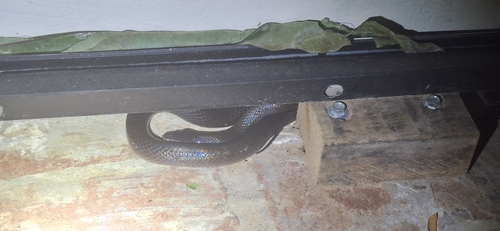
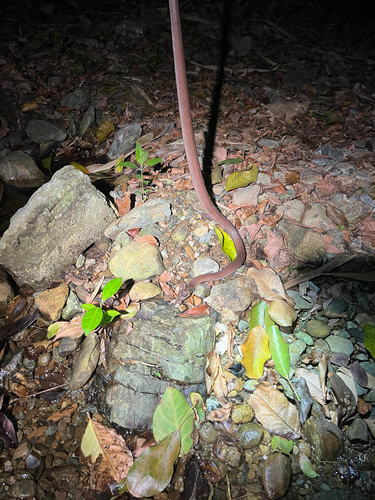
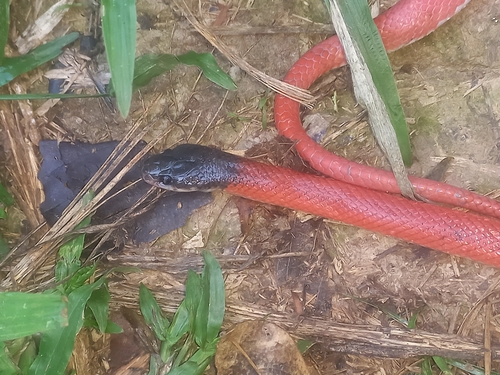
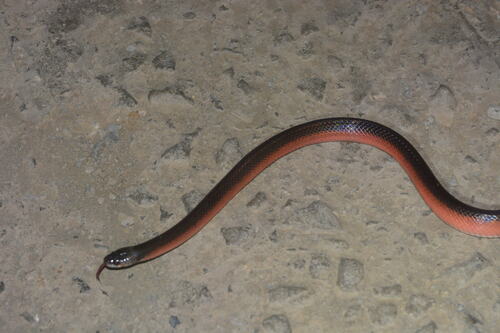
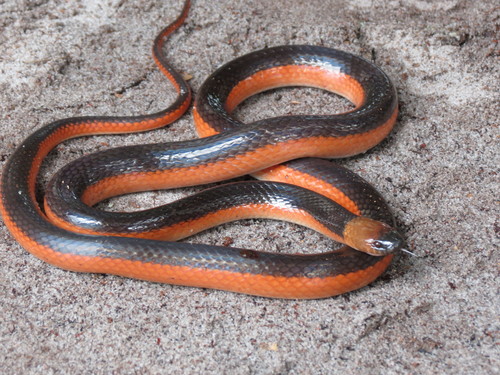
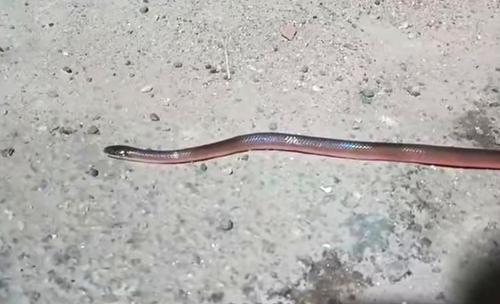
In general terms, members are recognizable as moderately slender snakes with smooth, often glossy scales and a head only slightly distinct from the neck. Coloration varies by species, ranging from nearly uniform dark or reddish tones to patterns with a pale collar or banding, especially in juveniles. Identifying a snake to the exact species usually requires close attention to scale counts and locality, so the genus-level traits above are a starting point rather than a field-proof identification.
Pseudoboa are rear-fanged, meaning they have enlarged grooved teeth set toward the back of the upper jaw and produce a mild venom used to subdue prey. They are not considered dangerously venomous to people, and bites are uncommon, but rear-fanged species can still cause local reactions, and any wild snake can bite. Do not handle wild snakes. If a bite occurs and you are unsure of the species, or symptoms develop, seek medical care promptly and contact US Poison Control at 1-800-222-1222 or your local emergency services.
Ecologically, false boas are predators of small vertebrates. Diet commonly includes other snakes and lizards, along with small mammals and frogs depending on the species, and the mild venom plus body coils help overpower prey. Like most colubrids in this group they are egg-laying. Behavior is generally secretive and they rely on hiding and nocturnal activity rather than aggression, which is why encounters with people are limited.
Pseudoboa belongs to the Colubridae family (Colubrids). The largest snake family, and the one most snakes you meet belong to. Typically round pupils, a head only slightly wider than the neck, and no heat-sensing facial pit or rattle. Scales may be smooth and glossy or keeled and matte depending on the species.
Danger: Almost all colubrids are harmless. A small number are rear-fanged with medically significant venom, the boomslang and the twig (vine) snakes of Africa being the dangerous exceptions. Most colubrids will flee or bluff rather than bite.
All species (6)
Keep learning
- What Is a Snake? Anatomy and the BasicsA clear overview of what makes a snake a snake: limbless body plan, anatomy, evolution from lizards, species diversity, and why they are ectothermic.
- How Snakes Move, Hunt, and EatHow snakes move without legs, hunt as ambushers or active foragers, kill by constriction or venom, and swallow prey wider than their head.
- What Do Snakes Eat?All snakes are carnivores. Learn what snakes eat, how diet changes with size and age, how often they feed, and how they hunt and swallow prey.
- Venomous vs Nonvenomous: How to Tell the DifferenceThe folk rules for telling venomous snakes apart, where each one fails, and why location-based identification beats guessing by sight.