
Genus · Pseudaspididae
Types of vipers
2 species make up the genus Psammodynastes, the snakes commonly called vipers. None are considered dangerous to humans.
About mock vipers
Small Asian snakes that bluff like vipers but belong to a very different, rear-fanged lineage.
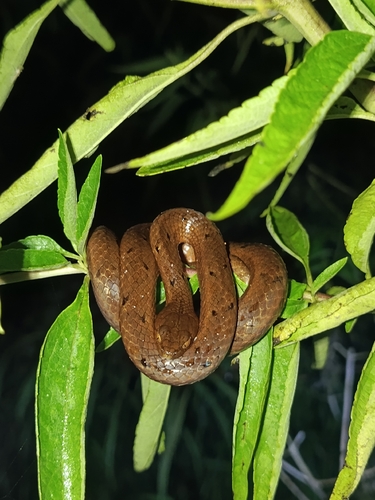
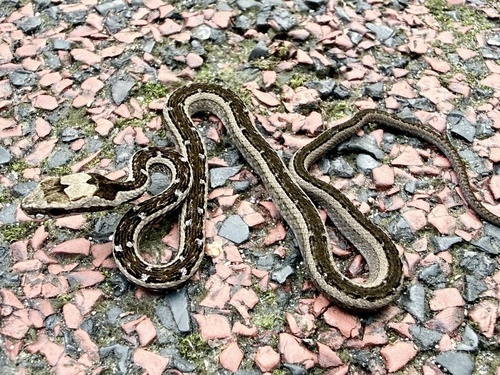
Psammodynastes is a small genus of slender, rear-fanged snakes native to South and Southeast Asia. They are commonly called mock vipers because of a viper-like look and attitude: a short, triangular, distinctly defined head, keeled-looking body, vertically elliptical pupils, and a habit of coiling and striking when cornered. Despite that performance they are not true vipers at all. They are part of the broad lineage of advanced colubroid snakes often grouped near the Lamprophiidae and allied families rather than the front-fanged Viperidae. The genus holds only a couple of recognized species, the widespread Common Mock Viper (Psammodynastes pulverulentus) and the Painted Mock Viper (Psammodynastes pictus).
These are terrestrial to semi-arboreal snakes of forests, forest edges, plantations, leaf litter, and the margins of streams and damp ground across regions including India, southern China, mainland Southeast Asia, and parts of the Indonesian and Philippine archipelagos. They are usually small, often under a meter and frequently much shorter, with variable brown, gray, or reddish coloration and dark markings that help them disappear into ground debris. You can recognize the group by the combination of the stout triangular head set off from a thin neck, the keeled vertebral appearance, the elliptical pupil, and the strong tendency to flatten and strike defensively when threatened. That mimicry of dangerous vipers is exactly what the common name records.
Mock vipers are rear-fanged, meaning they have enlarged grooved teeth toward the back of the upper jaw and a mild venom delivered by chewing rather than a fast frontal strike. They prey mostly on small vertebrates such as lizards, frogs, and occasionally small snakes or fish, and reproduction in the well-studied Common Mock Viper is live-bearing. Their venom is adapted for subduing small cold-blooded prey and is not considered medically dangerous to humans; bites typically cause only minor local effects. Even so, this is a wild venomous snake, and no wild venomous snake is safe to handle. Do not pick it up, do not try to test or provoke it, and give it distance. If anyone is bitten or has a serious reaction, do not attempt home treatment; contact emergency services or US Poison Control at 1-800-222-1222 (or your local emergency number) right away.
Psammodynastes belongs to the Pseudaspididae family (Mole snakes & allies). Robust African burrowers and their relatives. Mole snakes are heavy-bodied with a pointed snout; coloration varies widely.
Danger: Non-venomous, though a large mole snake can deliver a strong bite if cornered.
All species (2)
Keep learning
- What Is a Snake? Anatomy and the BasicsA clear overview of what makes a snake a snake: limbless body plan, anatomy, evolution from lizards, species diversity, and why they are ectothermic.
- How Snakes Move, Hunt, and EatHow snakes move without legs, hunt as ambushers or active foragers, kill by constriction or venom, and swallow prey wider than their head.
- What Do Snakes Eat?All snakes are carnivores. Learn what snakes eat, how diet changes with size and age, how often they feed, and how they hunt and swallow prey.
- Venomous vs Nonvenomous: How to Tell the DifferenceThe folk rules for telling venomous snakes apart, where each one fails, and why location-based identification beats guessing by sight.