
Genus · Viperidae
Proatheris
The genus Proatheris contains a single species. It is venomous.
About swamp viper
A single small African viper built for life in wet lowland grass and marsh edges.
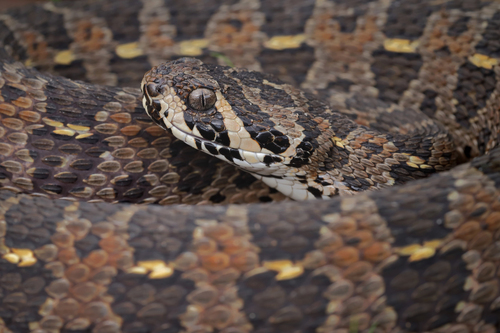
Proatheris is a monotypic genus in the viper family, Viperidae, meaning it currently holds just one recognized species, the lowland swamp viper (Proatheris superciliaris). It belongs to the same broad group of true vipers that includes the puff adders and the African bush vipers, and it sits taxonomically close to those relatives, but it occupies its own genus because of a distinct combination of body form and ecology. Like all vipers, it has the hinged, hollow front fangs that fold against the roof of the mouth and swing forward to strike, the defining trait that separates vipers from most other snakes.
The lowland swamp viper is a small, fairly slender species found in southeastern Africa, in the lowlands around Malawi, Mozambique, and Tanzania. As its name suggests, it favors damp habitats: floodplains, marsh margins, swamp grasslands, and low wet meadows rather than dry bush or forest. It is recognizable in general terms as a modestly sized viper with a row of dark, often eye-spot-like blotches running down the back over a paler ground color, and the broad, somewhat triangular head typical of vipers. It feeds on small prey such as amphibians and small mammals, and like many vipers it gives birth to live young rather than laying eggs.
This is a venomous snake, and it should be treated as potentially dangerous. Detailed medical data on bites from this species is limited, which is itself a reason for caution rather than confidence. Never handle a wild venomous snake and never assume a bite is harmless. If anyone is bitten, keep them calm and still, remove rings and tight items, and get to emergency medical care immediately. In the United States call Poison Control at 1-800-222-1222, and elsewhere contact local emergency services. The safest approach with any swamp viper, as with all vipers, is to give it distance and leave it alone.
Proatheris belongs to the Viperidae family (Vipers & pit vipers). Heavy-bodied venomous snakes with long, hinged, hollow fangs. Broad, triangular head distinct from a narrow neck, heavy body, and (usually) vertical, cat-like pupils. Pit vipers also have a heat-sensing pit; true vipers do not.
Danger: Every viper is venomous, and the family includes some of the world's most medically important snakes. Venom is typically hemotoxic, causing pain, swelling, tissue damage, and bleeding. Treat any viper bite as a medical emergency.
All species (1)
Keep learning
- Venomous vs Nonvenomous: How to Tell the DifferenceThe folk rules for telling venomous snakes apart, where each one fails, and why location-based identification beats guessing by sight.
- Are Snakes Dangerous? The Real Risk, in PerspectiveMost snakes are harmless and avoid people. Here is the honest picture of snakebite risk worldwide and how to lower your own.
- Snake Venom Explained: How It Works and WhyWhat snake venom actually is, why it evolved, the main venom types, fang delivery, how antivenom works, and why ranking the most venomous snake is hard.
- How Snakes Move, Hunt, and EatHow snakes move without legs, hunt as ambushers or active foragers, kill by constriction or venom, and swallow prey wider than their head.