
Genus · Uropeltidae
Types of shieldtails
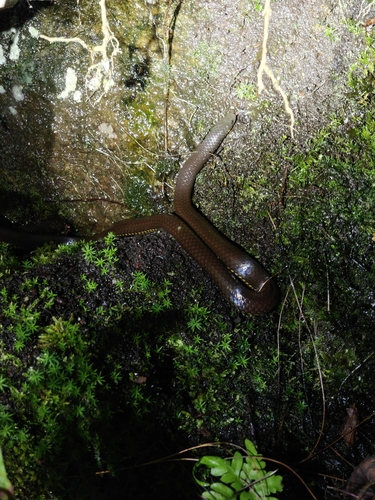
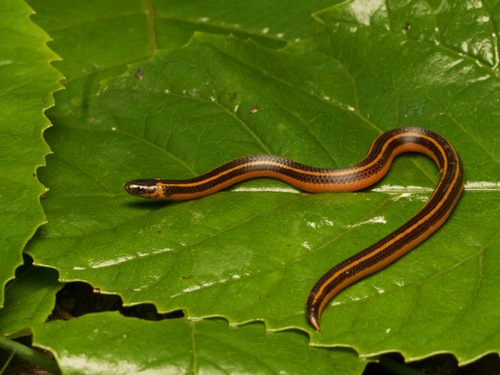
2 species make up the genus Platyplectrurus, the snakes commonly called shieldtails. None are considered dangerous to humans.
About shieldtails
A tiny genus of secretive, burrowing shieldtail snakes from the hill forests of southern India and Sri Lanka.
Platyplectrurus is a small genus in the family Uropeltidae, the shieldtails, a group of fossorial (burrowing) snakes found only in peninsular India and Sri Lanka. Our database holds two species in this genus, including the Madurai Shieldtail and the Three-lined Shieldtail. Like other uropeltids, they live almost their entire lives underground in moist forest soil and leaf litter, so they are rarely seen even in the regions where they occur. The family name refers to the distinctive tail, which in most shieldtails ends in an enlarged, often roughened or flattened scale or shield thought to help plug the burrow behind the animal as it moves through the earth.
Members are small, slender, cylindrical snakes built for life in the soil. Shieldtails in general have smooth, glossy, often iridescent scales, a small head no wider than the neck, tiny eyes, and a short tail, all classic adaptations for pushing through compacted ground. They are easy to confuse with other small burrowing snakes at a glance, and reliable identification of an obscure genus like Platyplectrurus depends on close examination of scale counts and tail structure by someone familiar with the group, ideally within its limited southern Indian and Sri Lankan hill-country range. These are not snakes most people will encounter casually.
Shieldtails are harmless to humans. They are non-venomous, have small mouths suited to soft-bodied prey, and pose no medical danger. Uropeltids feed mainly on earthworms and other soft soil invertebrates, foraging in the burrows and damp earth where they spend their lives. Many shieldtails are known to give live birth to small litters, a common pattern in the family, though specific reproductive details vary by species and are poorly documented for rarely studied genera. If you find one, it is best left undisturbed in its habitat; any snake that cannot be confidently identified should be treated with caution, and in the case of a bite from an unknown snake, contact local emergency services or US Poison Control at 1-800-222-1222.
Platyplectrurus belongs to the Uropeltidae family (Shield-tailed snakes). Burrowing snakes with a bizarre, roughened tail tip. Small, glossy, cylindrical, with tiny eyes and a distinctive truncated or rough tail tip.
Danger: Harmless. No venom.
All species (2)
Keep learning
- What Is a Snake? Anatomy and the BasicsA clear overview of what makes a snake a snake: limbless body plan, anatomy, evolution from lizards, species diversity, and why they are ectothermic.
- How Snakes Move, Hunt, and EatHow snakes move without legs, hunt as ambushers or active foragers, kill by constriction or venom, and swallow prey wider than their head.
- What Do Snakes Eat?All snakes are carnivores. Learn what snakes eat, how diet changes with size and age, how often they feed, and how they hunt and swallow prey.
- Venomous vs Nonvenomous: How to Tell the DifferenceThe folk rules for telling venomous snakes apart, where each one fails, and why location-based identification beats guessing by sight.