
Genus · Pseudoxyrhophiidae
Types of tree snakes
3 species make up the genus Phisalixella, the snakes commonly called tree snakes. None are considered dangerous to humans.
About Malagasy banded tree snakes
Slender, banded tree snakes found only on Madagascar, part of the island's distinctive Pseudoxyrhophiidae radiation.
Phisalixella is a small genus of slender, arboreal snakes endemic to Madagascar. It belongs to the family Pseudoxyrhophiidae, a group that makes up the bulk of Madagascar's snake fauna. These snakes evolved on the island in isolation, which is why the family is concentrated there and on the nearby Comoros, with close relatives in mainland Africa.
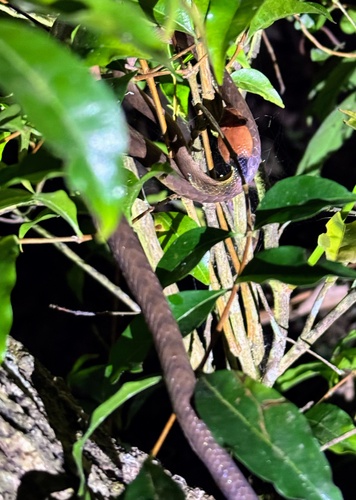
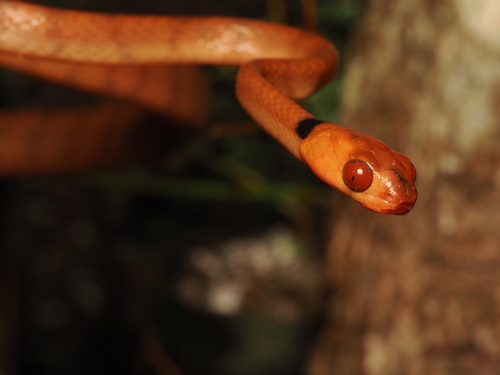
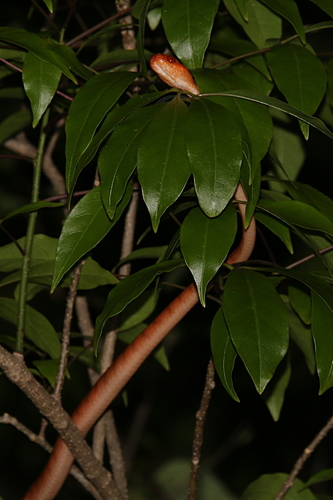
The members in this database, the White Banded Tree Snake, the Orange Tree Snake, and the Western Banded Tree Snake, reflect the genus name people most often use when searching: banded or tree snakes from Madagascar. As the names suggest, these are climbing snakes, built long and thin with large eyes, well suited to moving through branches and foliage. Many show banded or contrasting color patterns along the body.
In general terms you recognize this group by its slim build, relatively long tail, and a head that is somewhat distinct from the neck, along with the arboreal habits and the banded or boldly marked patterning that gives several species their common names. Identifying an individual snake to species is difficult from appearance alone and is best left to regional field guides and herpetologists, since several Madagascar tree snakes look broadly similar.
Like most members of the family Pseudoxyrhophiidae, these snakes are rear-fanged. They have enlarged teeth toward the back of the upper jaw and a mild oral secretion used to subdue small prey, not a front-fang venom delivery system like that of vipers or cobras. They are not considered dangerous to people and there is no record of them causing serious harm to humans. Even so, no wild snake should be handled. A bite from any rear-fanged snake can cause local irritation, and misidentification of a wild snake is a real risk. If a bite occurs, do not attempt home treatment; contact emergency services or, in the United States, Poison Control at 1-800-222-1222.
Ecologically, Madagascar tree snakes of this type are active hunters in trees and shrubs, typically feeding on small vertebrates such as lizards and frogs, which are abundant on the island. Like most pseudoxyrhophiids they are egg-laying. Detailed natural history for individual species in this genus is limited in the scientific literature, so the most reliable picture comes from the well-documented patterns of the family and the Malagasy region rather than species-by-species claims.
Phisalixella belongs to the Pseudoxyrhophiidae family (Malagasy snakes). A spectacular radiation of mostly harmless snakes centered on Madagascar. Highly variable; identification is usually by region and genus rather than a single family trait.
Danger: Considered harmless to humans. Some are mildly venomous (rear-fanged) but not medically significant.
All species (3)
Keep learning
- What Is a Snake? Anatomy and the BasicsA clear overview of what makes a snake a snake: limbless body plan, anatomy, evolution from lizards, species diversity, and why they are ectothermic.
- How Snakes Move, Hunt, and EatHow snakes move without legs, hunt as ambushers or active foragers, kill by constriction or venom, and swallow prey wider than their head.
- What Do Snakes Eat?All snakes are carnivores. Learn what snakes eat, how diet changes with size and age, how often they feed, and how they hunt and swallow prey.
- Venomous vs Nonvenomous: How to Tell the DifferenceThe folk rules for telling venomous snakes apart, where each one fails, and why location-based identification beats guessing by sight.