
Genus · Colubridae
Types of green snakes
20+ species make up the genus Philothamnus, the snakes commonly called green snakes. None are considered dangerous to humans.
About African green and bush snakes
Slender, fast, bright green African colubrids that hunt by day and are essentially harmless to people.
Philothamnus is a genus of small to medium slender snakes in the family Colubridae, the largest snake family. Members are commonly called green snakes or bush snakes, and the genus is found across sub-Saharan Africa with a few species reaching into northeastern Africa. They are classic colubrids: agile, alert, day-active hunters with large eyes and smooth or lightly keeled scales. There are roughly two dozen recognized species, and our database holds 22.
These snakes are built for moving through vegetation. Most are some shade of bright green, sometimes with black bars, spots, or speckling along the body, and many have a pale or yellowish belly. The body is long and thin, the tail is long, and the eye is proportionally large with a round pupil, all features that suit a visually oriented daytime predator that climbs and threads through bushes, reeds, and waterside plants. Adults of most species fall in the roughly 60 to 100 centimeter range, light bodied for their length.
Habitat tracks the name. Bush snakes favor shrubs, trees, gardens, and forest edges, while several species, such as those called green water snakes, are tied to wetlands, riverbanks, and reed beds where they hunt along and over the water. Because they like green cover and are active by day, people often encounter them in gardens and around homes, which leads to frequent mistaken-identity scares.
On safety, Philothamnus snakes are harmless to humans. They are non-venomous colubrids with no medically significant venom and no fangs designed to deliver one. Their main defenses are speed, escape, and bluff: a cornered bush snake may inflate its throat to show bright skin between the scales, flatten its neck, and gape or strike, but a bite from one is trivial. The real risk is confusion. Green bush snakes are regularly mistaken for the highly dangerous green mamba or for boomslang, both of which are serious, so identification matters. If you cannot positively identify a snake, do not handle it, give it space, and let it move off. For any bite where the species is unknown or a dangerous snake is suspected, treat it as an emergency and contact local emergency services, or in the US call Poison Control at 1-800-222-1222.
Ecologically these are active foragers. Their diet centers on small prey they can overpower and swallow: frogs and tadpoles, lizards such as geckos and skinks, and occasionally small fish, insects, or nestling birds, with the waterside species leaning heavily on amphibians. Philothamnus species are egg layers, depositing small clutches that hatch into miniature versions of the adults. Their behavior is shy and flight-prone rather than aggressive, and as common, prey-controlling daytime snakes they are a routine and beneficial part of African garden and wetland ecosystems.
Philothamnus belongs to the Colubridae family (Colubrids). The largest snake family, and the one most snakes you meet belong to. Typically round pupils, a head only slightly wider than the neck, and no heat-sensing facial pit or rattle. Scales may be smooth and glossy or keeled and matte depending on the species.
Danger: Almost all colubrids are harmless. A small number are rear-fanged with medically significant venom, the boomslang and the twig (vine) snakes of Africa being the dangerous exceptions. Most colubrids will flee or bluff rather than bite.
All species (22)
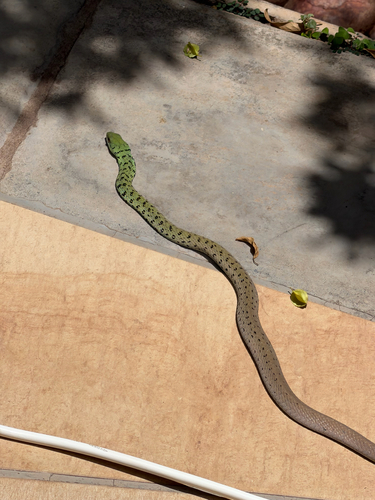 Spotted Bush SnakePhilothamnus semivariegatusHarmless
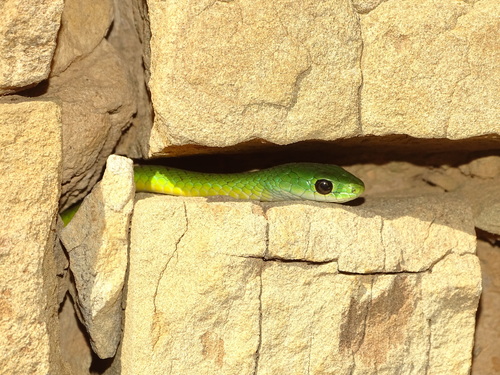 Western Natal Green SnakePhilothamnus occidentalisHarmless
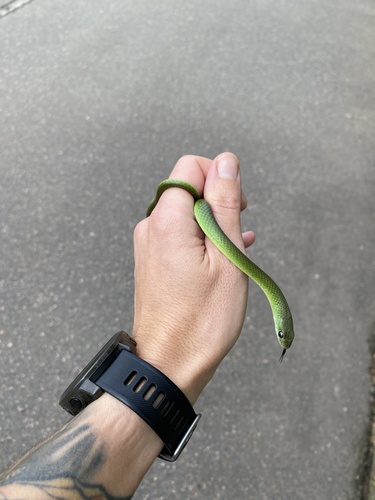 Green Water SnakePhilothamnus hoplogasterHarmless
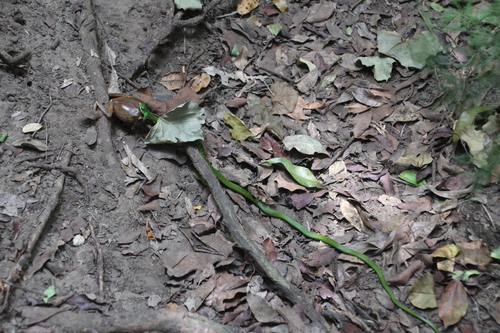 Eastern Green SnakePhilothamnus natalensisHarmless
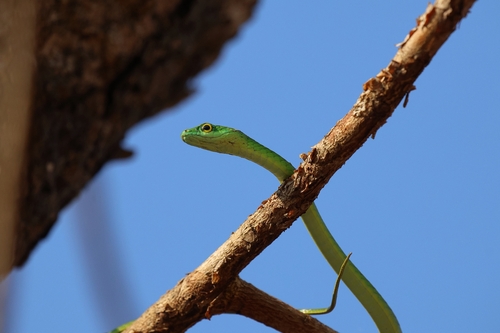 Spotted Green SnakePhilothamnus punctatusHarmless
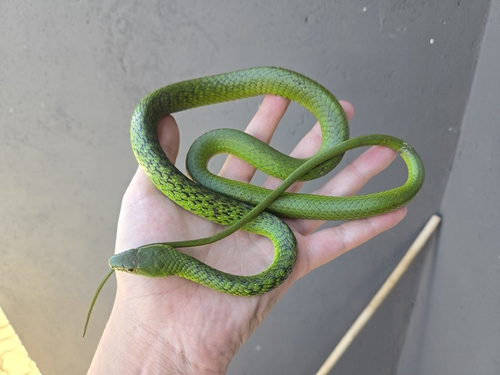 Western Green SnakePhilothamnus angolensisHarmless
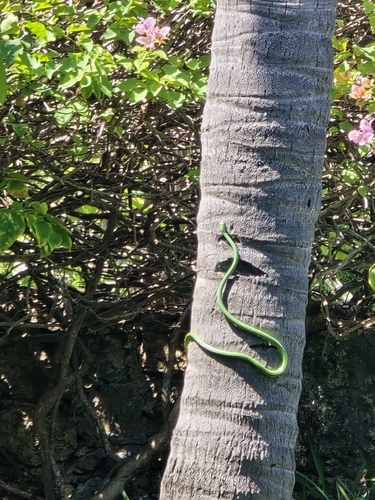 Battersby's Green SnakePhilothamnus battersbyiHarmless
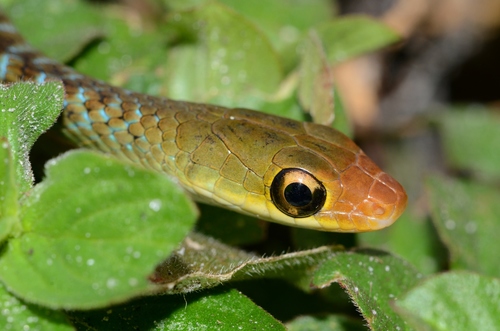 Striped Green SnakePhilothamnus dorsalisHarmless
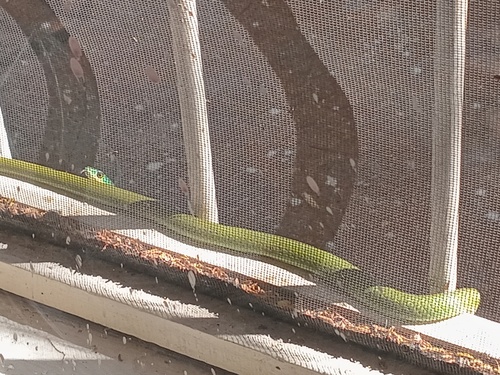 Common Bush SnakePhilothamnus irregularisHarmless
 São Tomé Wood SnakePhilothamnus thomensisHarmless
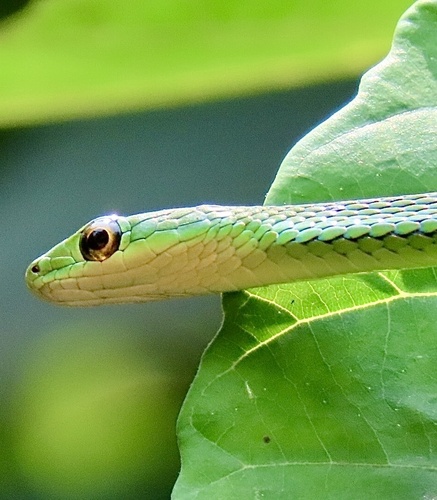 Slender Green SnakePhilothamnus heterolepidotusHarmless
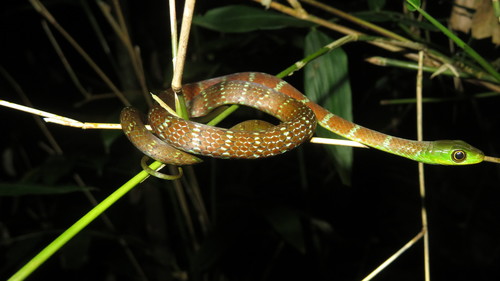 Usambara Green SnakePhilothamnus macropsHarmless
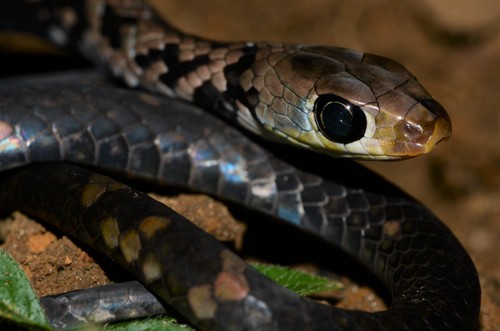 Thirteen-scaled Green SnakePhilothamnus carinatusHarmless
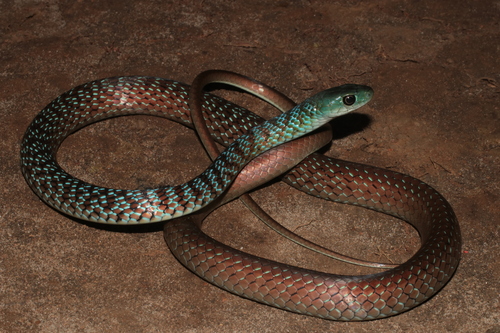 Hughes' Green SnakePhilothamnus hughesiHarmless
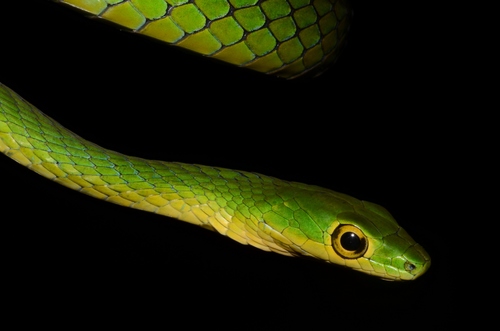 Green Bush SnakePhilothamnus nitidusHarmless
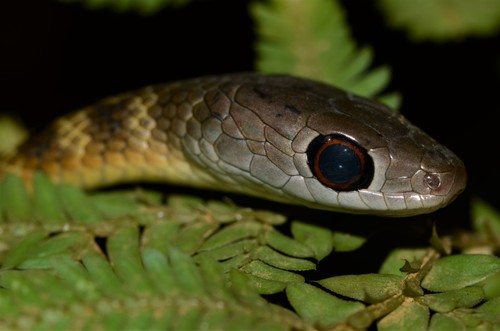 Emerald Green SnakePhilothamnus heterodermusHarmless
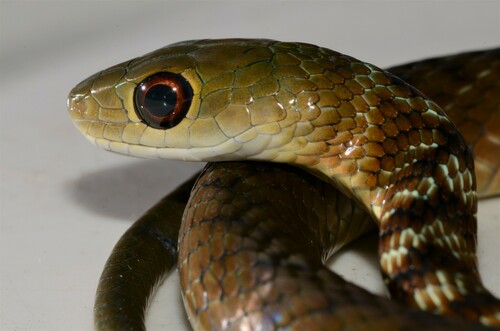 Philothamnus mayombensisHarmless
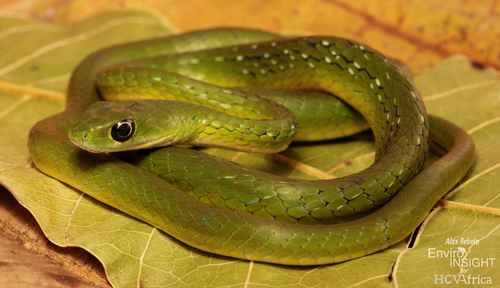 Bequaert's Green SnakePhilothamnus bequaertiHarmless
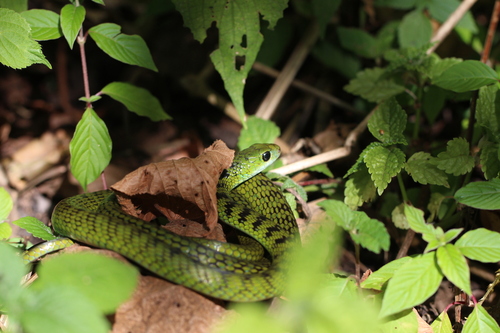 Ruanda Emerald Green SnakePhilothamnus ruandaeHarmless
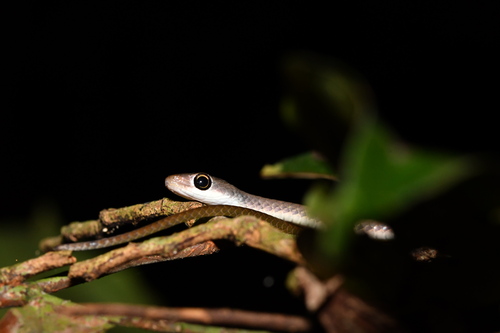 Philothamnus brunneusHarmless
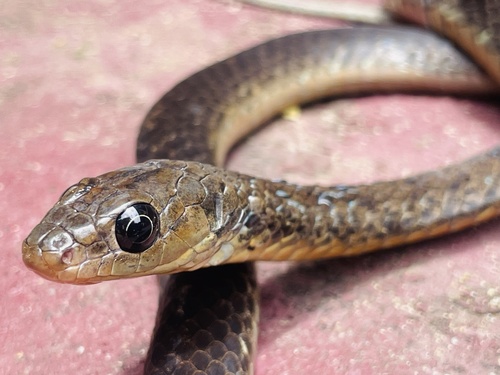 Philothamnus pobeguiniHarmless
- No photoOrnate Green SnakePhilothamnus ornatusHarmless
Keep learning
- What Is a Snake? Anatomy and the BasicsA clear overview of what makes a snake a snake: limbless body plan, anatomy, evolution from lizards, species diversity, and why they are ectothermic.
- How Snakes Move, Hunt, and EatHow snakes move without legs, hunt as ambushers or active foragers, kill by constriction or venom, and swallow prey wider than their head.
- What Do Snakes Eat?All snakes are carnivores. Learn what snakes eat, how diet changes with size and age, how often they feed, and how they hunt and swallow prey.
- Venomous vs Nonvenomous: How to Tell the DifferenceThe folk rules for telling venomous snakes apart, where each one fails, and why location-based identification beats guessing by sight.