
Genus · Elapidae
Paroplocephalus
The genus Paroplocephalus contains a single species. It is venomous.
About Lake Cronin snake
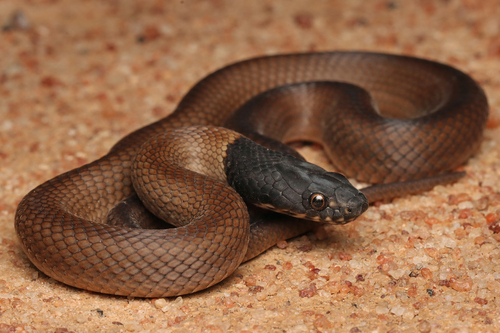
A rare Western Australian elapid known from a single species, the Lake Cronin snake.
Paroplocephalus is a monotypic genus in the family Elapidae, meaning it contains just one recognized species: the Lake Cronin snake (Paroplocephalus atriceps). It belongs to the Australasian radiation of elapids, the same lineage that includes Australia's many terrestrial venomous snakes. It was once placed within related genera before being separated into its own genus based on anatomical and genetic study, which is why older references may list it under a different name.
This is a snake of southwestern Western Australia, where it is associated with semi-arid shrubland and heath habitats in the region around its namesake Lake Cronin. It is poorly known and rarely encountered, with most knowledge coming from a small number of records. As a member of the front-fanged Australian elapid group, it is a fixed-fang venomous snake, not a rear-fanged or harmless species. Members of this family are recognized as smooth-scaled snakes with relatively uniform body proportions, and like its relatives this species typically shows a darker head against the body.
Like other Australian elapids, the Lake Cronin snake is venomous, so it should never be handled in the wild and is not safe to pick up. Because the genus is so obscure, the precise potency and medical significance of its venom are not well documented, which is all the more reason to treat any encounter with caution and give it distance. Elapids in this region generally feed on small vertebrates such as lizards and frogs, and many are live-bearing rather than egg-laying. If a bite from any Australian elapid occurs, treat it as a medical emergency and contact emergency services immediately. In the United States, contact Poison Control at 1-800-222-1222, or use your local emergency number.
Paroplocephalus belongs to the Elapidae family (Cobras, mambas, coral & sea snakes). Front-fanged venomous snakes, many with potent neurotoxic venom. Usually slender with a head barely wider than the neck and fixed front fangs (not the folding fangs of vipers). Coral snakes are boldly ringed; sea snakes have a flattened, paddle-like tail.
Danger: All elapids are venomous and the family is responsible for a large share of fatal snakebites worldwide. Many are shy, but bites can be life-threatening. Treat any bite as a medical emergency.
All species (1)
Keep learning
- Venomous vs Nonvenomous: How to Tell the DifferenceThe folk rules for telling venomous snakes apart, where each one fails, and why location-based identification beats guessing by sight.
- Are Snakes Dangerous? The Real Risk, in PerspectiveMost snakes are harmless and avoid people. Here is the honest picture of snakebite risk worldwide and how to lower your own.
- Snake Venom Explained: How It Works and WhyWhat snake venom actually is, why it evolved, the main venom types, fang delivery, how antivenom works, and why ranking the most venomous snake is hard.
- How Snakes Move, Hunt, and EatHow snakes move without legs, hunt as ambushers or active foragers, kill by constriction or venom, and swallow prey wider than their head.