
Genus · Pseudoxyrhophiidae
Parastenophis
The genus Parastenophis contains a single species. It is not considered dangerous to humans.
About Madagascan tree snakes
A slender Madagascan tree snake genus in the family Pseudoxyrhophiidae, known from the Betsileo White-banded Tree Snake.
Parastenophis is a small genus in the family Pseudoxyrhophiidae, the dominant group of snakes on Madagascar. The family radiated across the island into a wide range of forms and lifestyles, and Parastenophis sits among its arboreal and semi-arboreal members. With only one or two recognized species in our database, the best known is the Betsileo White-banded Tree Snake, named for the Betsileo highlands region of central Madagascar. The genus has been revised over the years as researchers reorganized the many Madagascan pseudoxyrhophiids, so some members appear in older literature under different generic names.
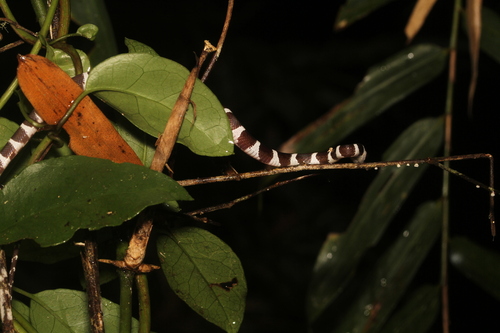
Members are Madagascan endemics, found in the island's forested regions where pseudoxyrhophiids reach their greatest diversity. As a tree snake, the genus is built for life in vegetation: a slender body, a relatively long tail, and large eyes typical of active, visually oriented arboreal snakes. Recognition in the field rests on this gracile build, banded or patterned coloration in the case of the white-banded form, and Madagascan locality, rather than on any single field mark unique to the genus. Because the taxon is obscure, identification is best confirmed against regional keys and the work of herpetologists who study Madagascar's snake fauna.
Like most Pseudoxyrhophiidae, these snakes are rear-fanged, meaning they have enlarged grooved teeth toward the back of the upper jaw and produce a mild venom used to subdue small prey. They are not considered dangerous to humans, and no member of this genus is regarded as a serious medical threat. Still, no wild snake should be handled: any bite from a rear-fanged colubroid can cause local irritation, and free handling of a wild animal is never safe. If a bite causes spreading symptoms or you are unsure of the snake's identity, seek medical care and contact emergency services, or in the United States call Poison Control at 1-800-222-1222. Ecologically, arboreal pseudoxyrhophiids like these typically hunt small vertebrates such as frogs, lizards, and their eggs, and most snakes in the family lay eggs.
Parastenophis belongs to the Pseudoxyrhophiidae family (Malagasy snakes). A spectacular radiation of mostly harmless snakes centered on Madagascar. Highly variable; identification is usually by region and genus rather than a single family trait.
Danger: Considered harmless to humans. Some are mildly venomous (rear-fanged) but not medically significant.
All species (1)
Keep learning
- What Is a Snake? Anatomy and the BasicsA clear overview of what makes a snake a snake: limbless body plan, anatomy, evolution from lizards, species diversity, and why they are ectothermic.
- How Snakes Move, Hunt, and EatHow snakes move without legs, hunt as ambushers or active foragers, kill by constriction or venom, and swallow prey wider than their head.
- What Do Snakes Eat?All snakes are carnivores. Learn what snakes eat, how diet changes with size and age, how often they feed, and how they hunt and swallow prey.
- Venomous vs Nonvenomous: How to Tell the DifferenceThe folk rules for telling venomous snakes apart, where each one fails, and why location-based identification beats guessing by sight.