
Genus · Cyclocoridae
Types of shrub snakes
2 species make up the genus Oxyrhabdium, the snakes commonly called shrub snakes. None are considered dangerous to humans.
About Philippine shrub snakes
Small, secretive Philippine burrowers that belong to a snake family found nowhere else on Earth.
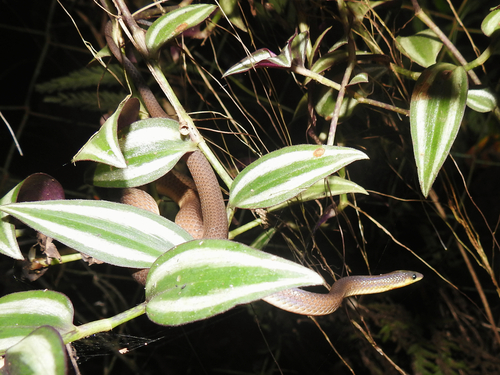
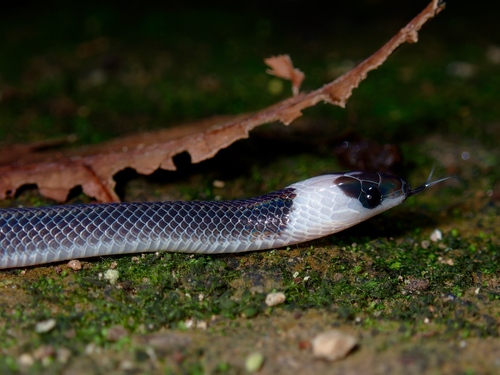
Oxyrhabdium is a small genus of slender, ground-dwelling snakes endemic to the Philippines. It holds just two recognized species, the Philippine shrub snake (Oxyrhabdium modestum) and the banded Philippine burrowing snake (Oxyrhabdium leporinum). Both are part of the family Cyclocoridae, a lineage of snakes restricted entirely to the Philippine islands. That family-level placement is the most important fact about this genus, because Cyclocoridae groups together several modest, little-studied Philippine snakes that were once scattered among the larger colubrid families before genetic work pulled them together.
These are forest-floor animals. They favor moist, leaf-littered habitats in lowland and montane forest, where they spend much of their time in soil, under logs, in root tangles, and beneath ground cover rather than out in the open. The smooth, cylindrical body and reduced head typical of the genus reflect a burrowing and semifossorial life. In general terms you would recognize them as small to medium snakes with plain to faintly banded brownish coloration, a body built for pushing through soil and litter rather than climbing or swimming. Because they are cryptic and uncommonly encountered, even basic natural history details are thinly documented in the scientific literature.
Oxyrhabdium snakes are not front-fanged vipers or elapids and are not considered dangerous to people. Like most members of their family they are small predators of soft-bodied prey such as earthworms, soft invertebrates, and small vertebrates, and they reproduce by laying eggs as is typical for these forest colubroids. Even when a snake is regarded as harmless, the responsible practice with any wild snake is to observe it and leave it undisturbed rather than handle it. If anyone is ever bitten by a snake and the species is uncertain, treat it seriously and contact emergency services or, in the United States, Poison Control at 1-800-222-1222.
Oxyrhabdium belongs to the Cyclocoridae family (Philippine snakes). A small family of harmless snakes endemic to the Philippines. Small, secretive snakes; identification is by region and genus.
Danger: Harmless.
All species (2)
Keep learning
- What Is a Snake? Anatomy and the BasicsA clear overview of what makes a snake a snake: limbless body plan, anatomy, evolution from lizards, species diversity, and why they are ectothermic.
- How Snakes Move, Hunt, and EatHow snakes move without legs, hunt as ambushers or active foragers, kill by constriction or venom, and swallow prey wider than their head.
- What Do Snakes Eat?All snakes are carnivores. Learn what snakes eat, how diet changes with size and age, how often they feed, and how they hunt and swallow prey.
- Venomous vs Nonvenomous: How to Tell the DifferenceThe folk rules for telling venomous snakes apart, where each one fails, and why location-based identification beats guessing by sight.