
Genus · Viperidae
Types of pitvipers
9 species make up the genus Ovophis, the snakes commonly called pitvipers. All of them are venomous.
About Asian mountain pit vipers
Stout, secretive pit vipers of cool, forested highlands across South and East Asia.
Ovophis is a genus of pit vipers in the family Viperidae, the same family that contains true vipers, rattlesnakes, and other pit vipers. Like all members of the pit viper line, these snakes carry a pair of heat-sensing pits set between the eye and the nostril, which detect the body warmth of prey. Our database holds 9 species in this genus, with members such as the Okinawa pitviper, the Taiwan mountain pitviper, the Tonkin pit viper, and the Chinese mountain pit viper.
The genus sits within the Crotalinae, the pit viper subfamily of Viperidae. Pit vipers share the hallmark viper traits: a broad, somewhat triangular head distinct from a narrow neck, vertically elliptical pupils, and long, hinged front fangs that fold against the roof of the mouth and swing forward to strike. Ovophis members tend to be thick-bodied and relatively short for their bulk, with rough, keeled scales and a fairly short tail, an overall build suited to ambush rather than chase.
These are snakes of cool, damp uplands. Their range spans montane and submontane forests of South and East Asia, including parts of the Himalayan foothills, southern China, Taiwan, the Ryukyu Islands of Japan, and Southeast Asia. They favor leaf litter, the forest floor, stream margins, and the cover of rocks and logs in higher-elevation woodland, where humidity stays high and temperatures stay moderate. Many are most active at night or in the low light of dawn and dusk.
In general terms, you can recognize the group as heavy-set, ground-dwelling vipers with a blunt, wedge-shaped head, keeled scales, and a blotched or banded pattern in browns, grays, and reddish tones that blends into the forest floor. Telling individual Ovophis species apart, and separating them from related Asian pit viper genera, often comes down to scale counts and locality and is a job for specialists. Treat any thick-bodied, triangular-headed snake in their range with caution rather than trying to key it out by eye.
Ecologically, Ovophis are ambush predators. They lie still in cover and wait for prey to pass, using the heat pits to aim a strike in darkness. The diet centers on small mammals such as rodents and shrews, along with frogs, lizards, and other small vertebrates. Behavior is generally slow and sedentary; these snakes rely on camouflage and stillness rather than flight. Reproduction in the genus is reported to involve egg-laying, and females of some species are noted for attending their clutch. These are venomous snakes capable of a medically significant bite. Never handle a wild venomous snake; if a bite occurs, keep the person calm and still, do not cut, suck, or apply a tourniquet, and seek emergency care immediately. In the US contact Poison Control at 1-800-222-1222, or call local emergency services.
Ovophis belongs to the Viperidae family (Vipers & pit vipers). Heavy-bodied venomous snakes with long, hinged, hollow fangs. Broad, triangular head distinct from a narrow neck, heavy body, and (usually) vertical, cat-like pupils. Pit vipers also have a heat-sensing pit; true vipers do not.
Danger: Every viper is venomous, and the family includes some of the world's most medically important snakes. Venom is typically hemotoxic, causing pain, swelling, tissue damage, and bleeding. Treat any viper bite as a medical emergency.
All species (9)
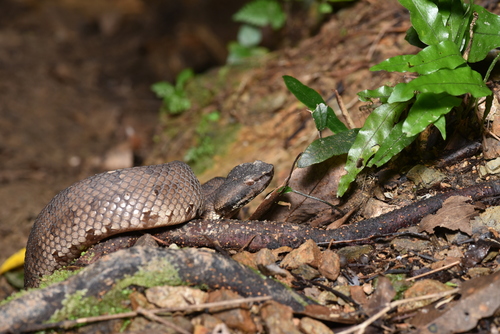 Okinawa PitviperOvophis okinavensisVenomous
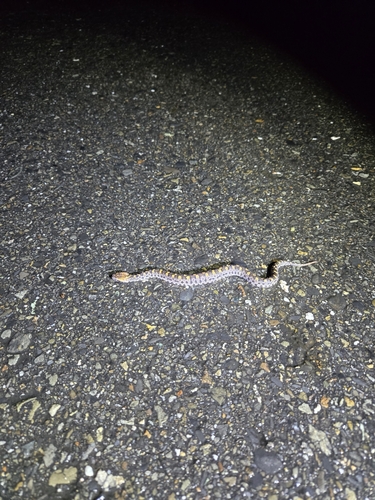 Taiwan mountain pitviperOvophis makazayazayaVenomous
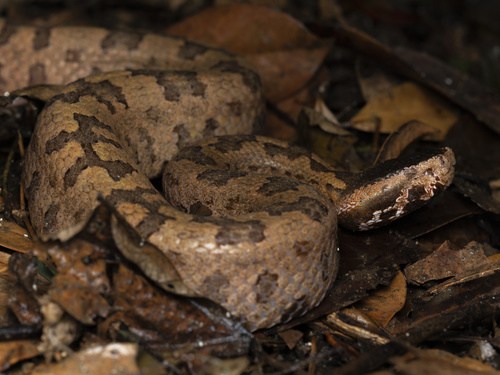 Tonkin Pit ViperOvophis tonkinensisVenomous
 Chinese Mountain Pit ViperOvophis monticolaVenomous
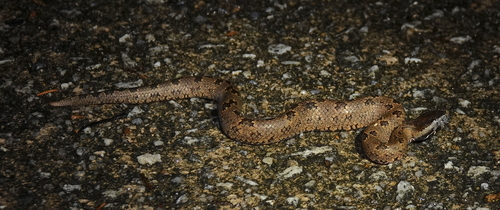 Indo-Malayan mountain pitviperOvophis convictusVenomous
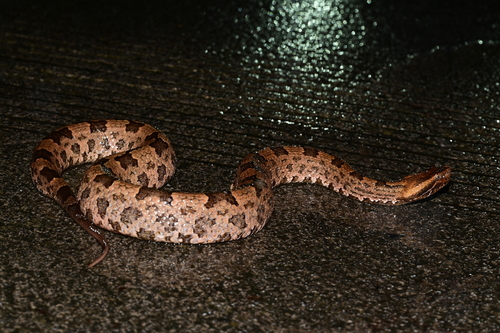 Pingbian Mountain PitviperOvophis anitaeVenomous
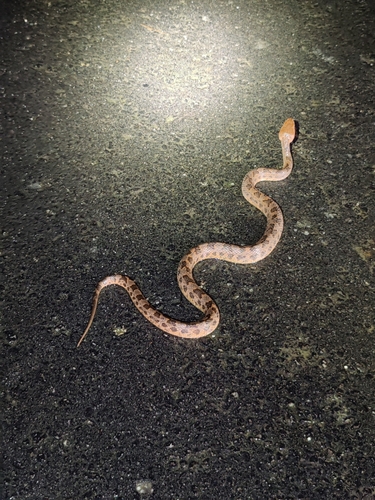 Zayuan Mountain PitviperOvophis zayuensisVenomous
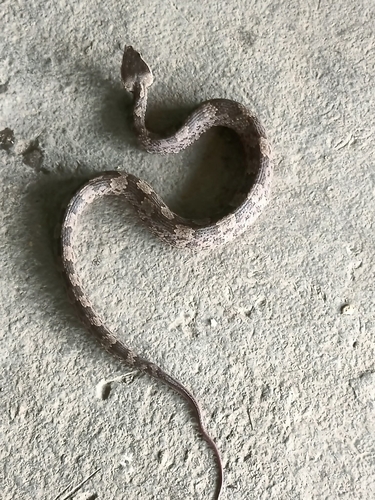 Guanyinshan Mountain PitviperOvophis zhaoermiiVenomous
 Jenkins’ mountain pitviperOvophis jenkinsiVenomous
Keep learning
- Venomous vs Nonvenomous: How to Tell the DifferenceThe folk rules for telling venomous snakes apart, where each one fails, and why location-based identification beats guessing by sight.
- Are Snakes Dangerous? The Real Risk, in PerspectiveMost snakes are harmless and avoid people. Here is the honest picture of snakebite risk worldwide and how to lower your own.
- Snake Venom Explained: How It Works and WhyWhat snake venom actually is, why it evolved, the main venom types, fang delivery, how antivenom works, and why ranking the most venomous snake is hard.
- How Snakes Move, Hunt, and EatHow snakes move without legs, hunt as ambushers or active foragers, kill by constriction or venom, and swallow prey wider than their head.