
Genus · Colubridae
Oocatochus
The genus Oocatochus contains a single species. It is not considered dangerous to humans.
About frog-eating rat snake
A single East Asian rat snake that hunts in wet, low ground and feeds heavily on frogs.
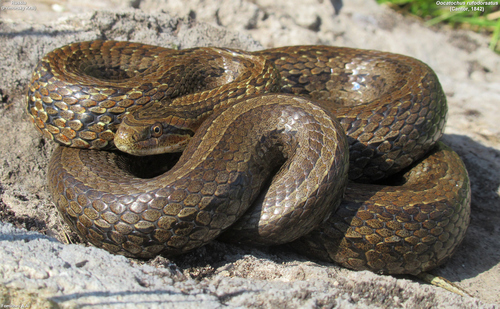
Oocatochus is a small genus in the family Colubridae, the largest and most diverse family of snakes. For most purposes it holds one recognized species, the Frog-eating Rat Snake (Oocatochus rufodorsatus), a slender, medium-sized snake of eastern Asia. It was long placed among the typical rat snakes in genera like Elaphe before being separated out, and it sits within the broad colubrid radiation of nonvenomous, egg-laying or live-bearing terrestrial snakes that includes many of the familiar rat snakes, racers, and kingsnakes.
The genus is tied to the temperate east of the continent, ranging across northeastern China, the Korean Peninsula, the Russian Far East, and adjacent areas. Unlike many climbing rat snakes, members favor damp, low-lying habitats: the edges of ponds, marshes, rice paddies, slow streams, and wet meadows. This affinity for water shapes the whole animal, from where it shelters to what it eats. Recognition is general rather than flashy: a moderately built snake with patterned, often reddish or brownish dorsal coloration and longitudinal markings, keeled-looking body scales, and the round pupils and lack of any heat-sensing pits that mark it as a harmless colubrid rather than a viper or pit viper.
These snakes are not venomous in any medically significant way and pose no real danger to people; they are not constricting giants nor front-fanged biters. As with any wild snake, the right approach is to observe and leave it alone rather than handle it, since a cornered snake may bite defensively and any wild bite warrants washing and basic care. Ecologically the genus is defined by its diet, which leans strongly on amphibians such as frogs and tadpoles along with fish and other small aquatic prey, matching its wetland life. The Frog-eating Rat Snake is notable for giving live birth rather than laying eggs, an adaptation well suited to cooler temperate climates, and it spends much of its time near water where it forages and basks.
Oocatochus belongs to the Colubridae family (Colubrids). The largest snake family, and the one most snakes you meet belong to. Typically round pupils, a head only slightly wider than the neck, and no heat-sensing facial pit or rattle. Scales may be smooth and glossy or keeled and matte depending on the species.
Danger: Almost all colubrids are harmless. A small number are rear-fanged with medically significant venom, the boomslang and the twig (vine) snakes of Africa being the dangerous exceptions. Most colubrids will flee or bluff rather than bite.
All species (1)
Keep learning
- What Is a Snake? Anatomy and the BasicsA clear overview of what makes a snake a snake: limbless body plan, anatomy, evolution from lizards, species diversity, and why they are ectothermic.
- How Snakes Move, Hunt, and EatHow snakes move without legs, hunt as ambushers or active foragers, kill by constriction or venom, and swallow prey wider than their head.
- What Do Snakes Eat?All snakes are carnivores. Learn what snakes eat, how diet changes with size and age, how often they feed, and how they hunt and swallow prey.
- Venomous vs Nonvenomous: How to Tell the DifferenceThe folk rules for telling venomous snakes apart, where each one fails, and why location-based identification beats guessing by sight.