
Genus · Colubridae
Types of coffee snakes
10+ species make up the genus Ninia, the snakes commonly called coffee snakes. None are considered dangerous to humans.
About coffee snakes
Small, secretive forest-floor colubrids of Central and South America that hunt slugs and earthworms and pose no danger to people.
Ninia is a genus of small snakes in the family Colubridae, the vast and varied family that holds most of the world's living snakes. The genus is commonly known as the coffee snakes, a name tied to the reddish-brown to dark coloration of several species and to their frequent appearance in shaded plantation and forest leaf litter. Our database lists 10+ species, including the Red Coffee Snake, the Spotted Coffee Snake, and the Ringneck Coffee Snake.
These snakes range across the Neotropics, from southern Mexico through Central America and into northern and western South America. They are animals of humid environments, favoring tropical rainforest, cloud forest, plantation edges, and other damp, shaded ground. Coffee snakes spend most of their lives hidden in leaf litter, under logs, beneath rocks, and within the moist debris of the forest floor, which is why they are seen far less often than their actual abundance would suggest.
Coffee snakes are easy to overlook and easy to mistake for other small forest serpents. They are generally short, rarely exceeding about 40 to 50 centimeters, with a slender to moderately stout body and a head only slightly distinct from the neck. Many species show keeled scales that give the body a matte, ridged texture, along with brown, gray, or reddish ground colors. Some carry a pale neck band or ring, and a few display spotting or banding. Because coloration overlaps with many unrelated species, the genus is best confirmed by a specialist rather than by color alone.
On the question of danger, coffee snakes are harmless to humans. They are non-venomous in any medically meaningful sense and are not equipped to harm a person. Their small mouths and gentle disposition mean bites are rare and inconsequential. As with any wild animal, the sensible practice is to observe and not handle wildlife, and to leave identification of unfamiliar snakes to people who know the local fauna. If anyone is ever bitten by a snake they cannot confidently identify, contact emergency services or US Poison Control at 1-800-222-1222 rather than guessing.
Ecologically, Ninia are specialists of soft-bodied prey. They feed largely on slugs, snails, and earthworms found in the damp litter where they live, a diet that places them among the slug-eating snakes in habit if not in strict classification. They are egg-laying, producing small clutches, and they are secretive and non-aggressive, relying on concealment rather than confrontation. Their abundance on the forest floor makes them quiet but meaningful players in controlling invertebrate populations across Neotropical ecosystems.
Ninia belongs to the Colubridae family (Colubrids). The largest snake family, and the one most snakes you meet belong to. Typically round pupils, a head only slightly wider than the neck, and no heat-sensing facial pit or rattle. Scales may be smooth and glossy or keeled and matte depending on the species.
Danger: Almost all colubrids are harmless. A small number are rear-fanged with medically significant venom, the boomslang and the twig (vine) snakes of Africa being the dangerous exceptions. Most colubrids will flee or bluff rather than bite.
All species (13)
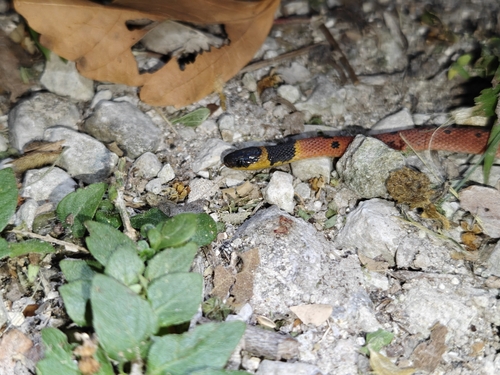 Red Coffee SnakeNinia sebaeHarmless
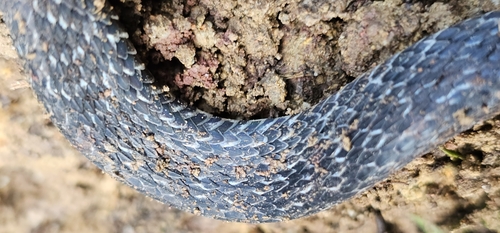 Spotted Coffee SnakeNinia maculataHarmless
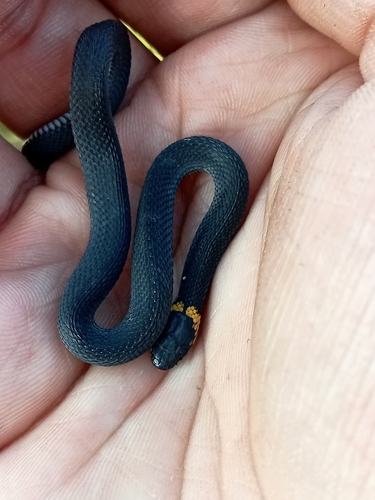 Ringneck Coffee SnakeNinia diademataHarmless
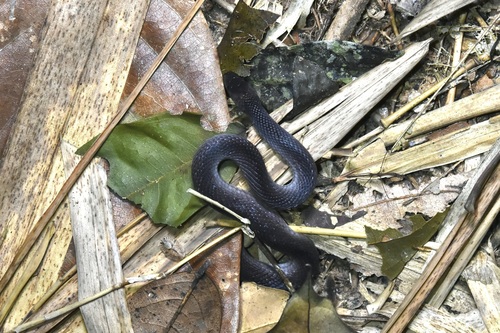 Hallowell's Coffee SnakeNinia atrataHarmless
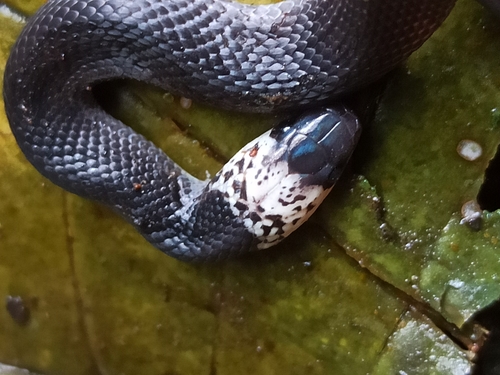 Ninia teresitaeHarmless
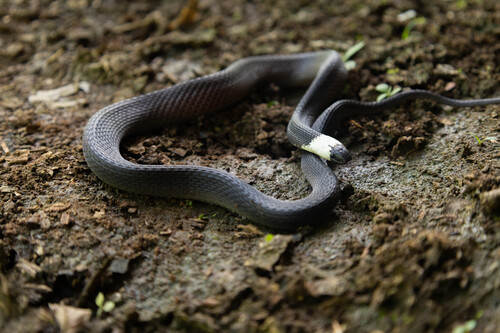 Hudson's Coffee SnakeNinia hudsoniHarmless
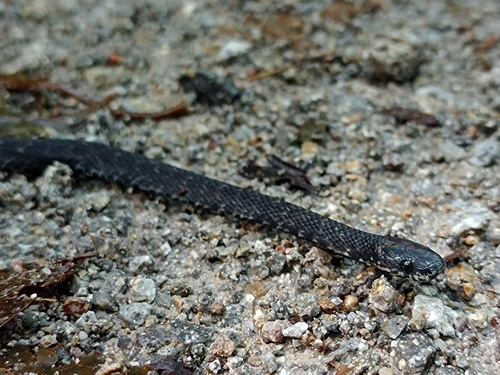 Cope's Coffee SnakeNinia psephotaHarmless
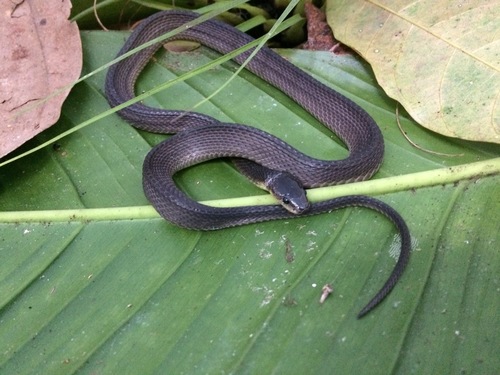 Espinal's Coffee SnakeNinia espinaliHarmless
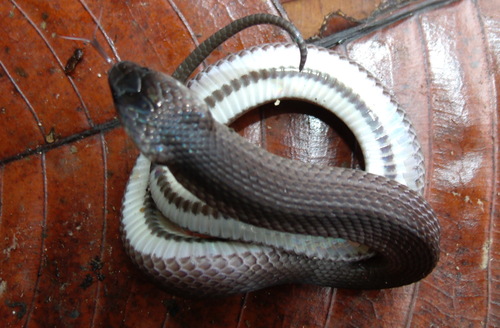 Costa Rican Coffee SnakeNinia celataHarmless
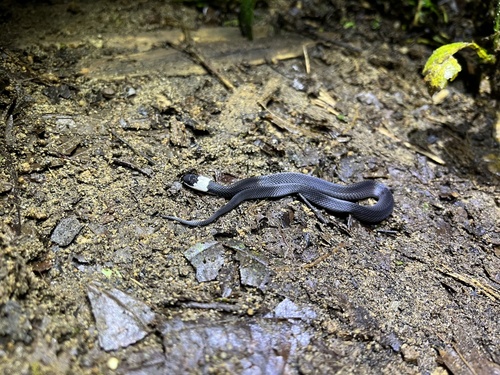 Tudors’s Coffee-SnakeNinia guytudoriHarmless
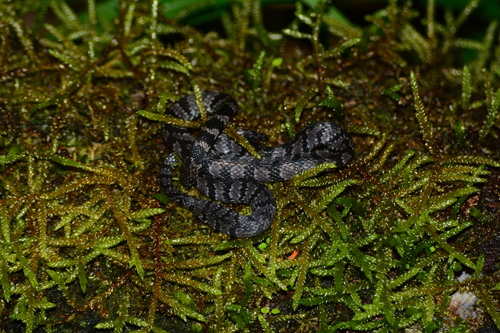 Northern Banded Coffee SnakeNinia pavimentataHarmless
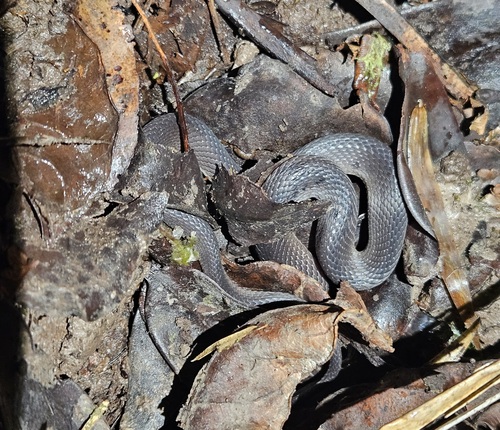 Simla CoffeesnakeNinia franciscoiHarmless
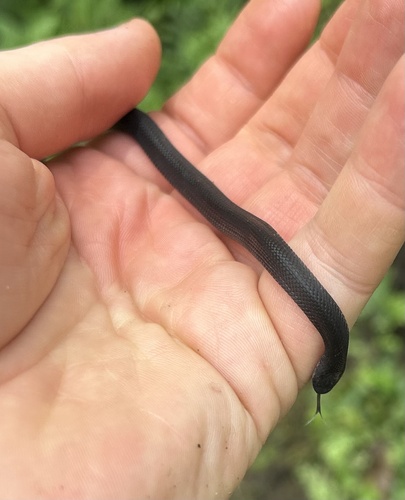 Schmidt’s Coffee-SnakeNinia schmidtiHarmless
Keep learning
- What Is a Snake? Anatomy and the BasicsA clear overview of what makes a snake a snake: limbless body plan, anatomy, evolution from lizards, species diversity, and why they are ectothermic.
- How Snakes Move, Hunt, and EatHow snakes move without legs, hunt as ambushers or active foragers, kill by constriction or venom, and swallow prey wider than their head.
- What Do Snakes Eat?All snakes are carnivores. Learn what snakes eat, how diet changes with size and age, how often they feed, and how they hunt and swallow prey.
- Venomous vs Nonvenomous: How to Tell the DifferenceThe folk rules for telling venomous snakes apart, where each one fails, and why location-based identification beats guessing by sight.