
Genus · Colubridae
Types of marsh snakes
5 species make up the genus Natriciteres, the snakes commonly called marsh snakes. None are considered dangerous to humans.
About African marsh snakes
Small, secretive African water snakes of marshes and wet grassland that pose no real threat to people.
Natriciteres is a genus of small snakes in the large family Colubridae, the same broad family that holds most of the world's harmless and rear-fanged snakes. They are known in plain English as African marsh snakes, a name that captures both where they live and the wet ground they favor. The genus is restricted to sub-Saharan Africa, and its members are tied closely to water and damp vegetation rather than dry open country.
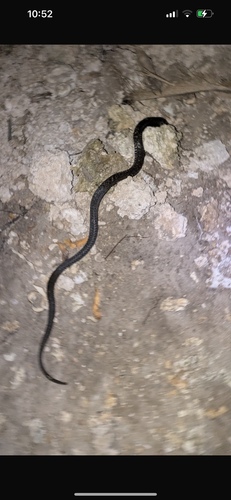
These are modest, slender snakes, generally well under a meter and often much smaller, with smooth to weakly keeled scales and a build suited to slipping through grass roots, leaf litter, and shallow water margins. Coloration tends toward olive, brown, or gray tones along the back, frequently with darker striping or speckling and a paler belly. Because several members look broadly similar, marsh snakes are usually identified by a combination of locality, habitat, and scale and tooth detail rather than by a single bold field mark.
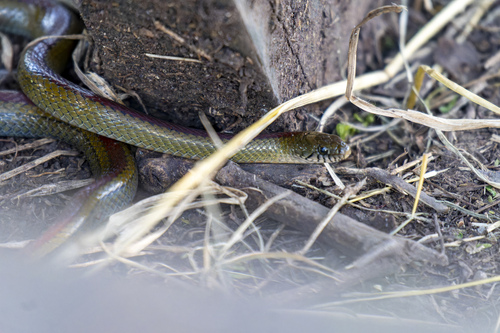
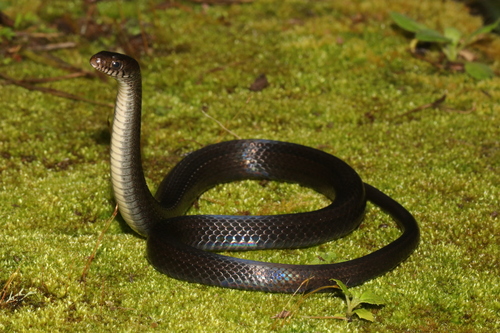
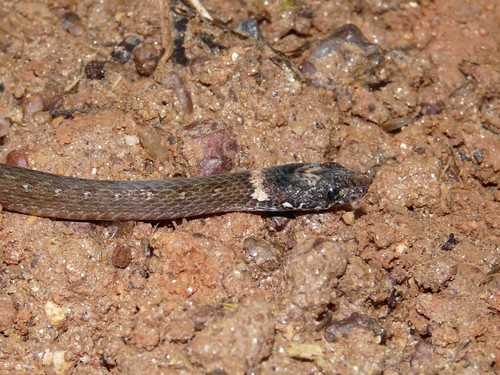
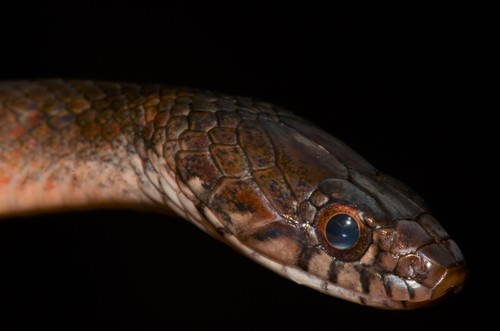
The genus includes species such as the Olive Marsh Snake, Forest Marsh Snake, and Variable Marsh Snake, along with others referred to simply as marsh snakes. As the names suggest, they are creatures of swamps, marsh edges, flooded grassland, streambanks, and the moist floor of forests. They are most often found near permanent or seasonal water, where they hunt and shelter close to cover.
In terms of risk, Natriciteres are not considered dangerous to humans. Like many colubrids they are essentially harmless, lacking the front-fanged venom delivery of vipers, cobras, or mambas, and there is no evidence they cause medically significant envenomation. They are shy and inclined to flee or hide rather than confront. Even so, any wild snake can bite if seized, and no wild snake should be handled casually. If a bite from any snake causes spreading pain, swelling, or other concerning symptoms, contact emergency services or, in the United States, Poison Control at 1-800-222-1222 rather than waiting to see what happens.
Ecologically, marsh snakes fit the role of small, water-associated predators. They feed largely on the small prey their wet habitats provide, such as frogs, tadpoles, small fish, and various invertebrates, taking food in and around the water and damp ground where they live. Members of the genus are egg-laying, and like most small colubrids they live quiet, low-profile lives, active near cover and quick to retreat into water or vegetation when disturbed.
Natriciteres belongs to the Colubridae family (Colubrids). The largest snake family, and the one most snakes you meet belong to. Typically round pupils, a head only slightly wider than the neck, and no heat-sensing facial pit or rattle. Scales may be smooth and glossy or keeled and matte depending on the species.
Danger: Almost all colubrids are harmless. A small number are rear-fanged with medically significant venom, the boomslang and the twig (vine) snakes of Africa being the dangerous exceptions. Most colubrids will flee or bluff rather than bite.
All species (5)
Keep learning
- What Is a Snake? Anatomy and the BasicsA clear overview of what makes a snake a snake: limbless body plan, anatomy, evolution from lizards, species diversity, and why they are ectothermic.
- How Snakes Move, Hunt, and EatHow snakes move without legs, hunt as ambushers or active foragers, kill by constriction or venom, and swallow prey wider than their head.
- What Do Snakes Eat?All snakes are carnivores. Learn what snakes eat, how diet changes with size and age, how often they feed, and how they hunt and swallow prey.
- Venomous vs Nonvenomous: How to Tell the DifferenceThe folk rules for telling venomous snakes apart, where each one fails, and why location-based identification beats guessing by sight.