
Genus · Elapidae
Narophis
The genus Narophis contains a single species. It is venomous.
About black-naped burrowing snakes
A tiny, secretive Mexican elapid that spends most of its life hidden underground.
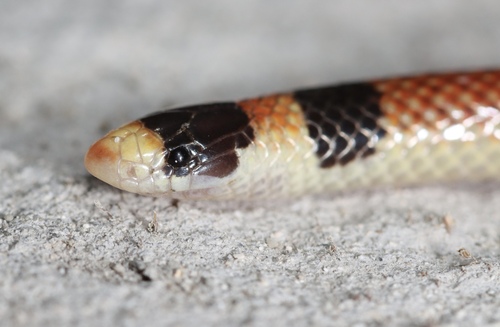
Narophis is a small genus in the family Elapidae, the group that includes cobras, coral snakes, sea snakes, and their relatives. It holds the Black-naped Burrowing Snake, a slender, fossorial species native to Mexico. As a member of the elapids, it belongs to the same broad lineage as the New World coral snakes, and it sits among a handful of small, burrowing, coral-snake allies adapted to life in soil and leaf litter rather than in the open. Because the genus is poorly known, most of what can be said about it comes from the well-documented biology of its family and region rather than detailed study of the snake itself.
Like other small fossorial elapids, members of Narophis are built for digging and moving through loose ground. Expect a slim, cylindrical body, smooth scales, a small head not much wider than the neck, and tiny eyes suited to a life mostly spent out of sight. These are not large, conspicuous snakes; they are easy to overlook and are encountered far less often than surface-active species. Coloration in this group tends toward patterns that aid concealment in soil and litter, and the common name points to dark markings around the nape.
Elapids are venomous and have fixed front fangs, so Narophis should be treated as a venomous snake even though it is small, rarely seen, and not considered a significant threat to people. The specific toxicity and medical importance of this genus are not well established, so the honest approach is caution rather than false reassurance. Do not handle a wild venomous snake; observe from a distance and leave it alone. If a bite from any venomous or unknown snake occurs, treat it as a medical emergency and contact local emergency services or, in the United States, Poison Control at 1-800-222-1222. As a small burrowing elapid, its likely ecology centers on hunting small prey in the soil, with reproduction and behavior following the secretive, low-profile pattern typical of fossorial snakes in this family.
Narophis belongs to the Elapidae family (Cobras, mambas, coral & sea snakes). Front-fanged venomous snakes, many with potent neurotoxic venom. Usually slender with a head barely wider than the neck and fixed front fangs (not the folding fangs of vipers). Coral snakes are boldly ringed; sea snakes have a flattened, paddle-like tail.
Danger: All elapids are venomous and the family is responsible for a large share of fatal snakebites worldwide. Many are shy, but bites can be life-threatening. Treat any bite as a medical emergency.
All species (1)
Keep learning
- Venomous vs Nonvenomous: How to Tell the DifferenceThe folk rules for telling venomous snakes apart, where each one fails, and why location-based identification beats guessing by sight.
- Are Snakes Dangerous? The Real Risk, in PerspectiveMost snakes are harmless and avoid people. Here is the honest picture of snakebite risk worldwide and how to lower your own.
- Snake Venom Explained: How It Works and WhyWhat snake venom actually is, why it evolved, the main venom types, fang delivery, how antivenom works, and why ranking the most venomous snake is hard.
- How Snakes Move, Hunt, and EatHow snakes move without legs, hunt as ambushers or active foragers, kill by constriction or venom, and swallow prey wider than their head.