
Genus · Leptotyphlopidae
Types of thread snakes
3 species make up the genus Namibiana, the snakes commonly called thread snakes. None are considered dangerous to humans.
About thread snakes
Tiny, worm-like burrowing snakes of southern Africa that are completely harmless to people and easy to mistake for an earthworm.
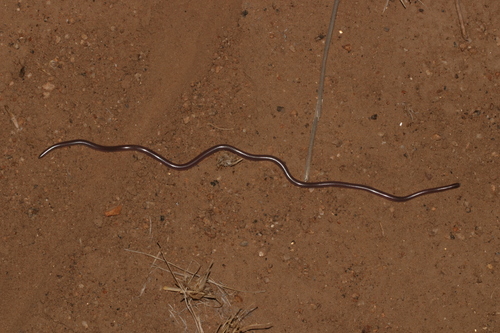
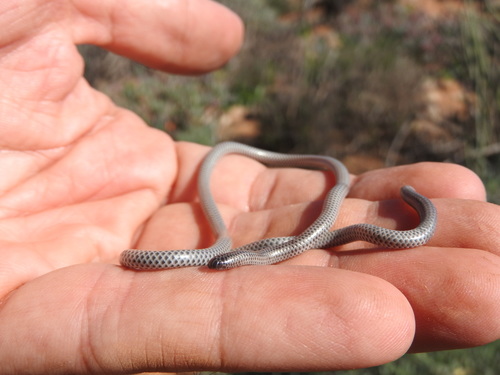
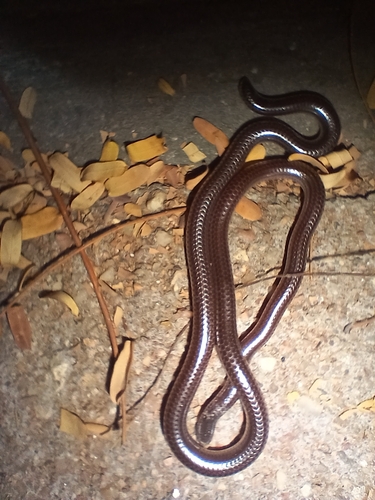
Namibiana is a genus of thread snakes in the family Leptotyphlopidae, the slender blind snakes. Like the rest of that family, these are among the smallest and most specialized snakes on Earth. They are built for a life spent almost entirely underground, with thin, cylindrical, worm-shaped bodies, smooth glossy scales, and a blunt head and tail that look almost alike at a glance. Our database lists 3 species in the genus, including the Western Thread Snake, the Slender Thread Snake, and the Damara Thread Snake.
As the name suggests, Namibiana is centered on southern Africa, in the dry country around Namibia and neighboring regions. Members of the leptotyphlopid family in general favor sandy or loose soils, leaf litter, and the cover of rocks and logs, where they can move easily through the ground. These are fossorial animals, meaning they live by burrowing, and they spend the great majority of their lives out of sight. They are most likely to be noticed when turned up under a stone, washed out by rain, or found crossing open ground at night.
Recognizing a thread snake comes down to general body form rather than bold markings. They are very small and extremely slender, often no thicker than a length of string, with a rounded blunt snout and eyes reduced to tiny dark spots beneath the head scales, since sharp vision is of little use underground. Coloration is usually plain, in browns, pinks, or grays, sometimes with a faint sheen. Their proportions and uniform shape are why people so often confuse them with earthworms.
Thread snakes are harmless to humans. They are non-venomous, they are not rear-fanged, and their mouths are far too small to deliver a meaningful bite to a person. They pose no medical danger and have no interest in people. Even so, the right approach with any wild snake is to observe and not handle, both for the animal's welfare and because small species can be hard to identify with certainty in the field. If a bite from an unknown wild snake ever occurs, contact emergency services or US Poison Control at 1-800-222-1222.
Ecologically, these are quiet specialists of the soil. Leptotyphlopid thread snakes feed largely on ants and termites, including their eggs and larvae, and are known for raiding nests and feeding on the soft brood inside. This diet ties them closely to the insect colonies of their dry-country habitats. Like many in the family they are egg-laying, and they are secretive and largely active in cooler or darker hours, fitting their low-profile role as underground insect hunters rather than surface predators.
Namibiana belongs to the Leptotyphlopidae family (Slender blindsnakes (threadsnakes)). Among the smallest snakes in the world, thin as a thread. Extremely thin and worm-like, uniformly colored, with vestigial eyes. Resembles a shiny piece of string.
Danger: Harmless. No venom and far too small to harm a person.
All species (3)
Keep learning
- What Is a Snake? Anatomy and the BasicsA clear overview of what makes a snake a snake: limbless body plan, anatomy, evolution from lizards, species diversity, and why they are ectothermic.
- How Snakes Move, Hunt, and EatHow snakes move without legs, hunt as ambushers or active foragers, kill by constriction or venom, and swallow prey wider than their head.
- What Do Snakes Eat?All snakes are carnivores. Learn what snakes eat, how diet changes with size and age, how often they feed, and how they hunt and swallow prey.
- Venomous vs Nonvenomous: How to Tell the DifferenceThe folk rules for telling venomous snakes apart, where each one fails, and why location-based identification beats guessing by sight.