
Genus · Homalopsidae
Types of water snakes
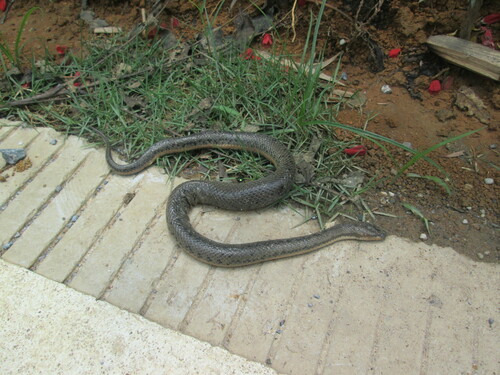
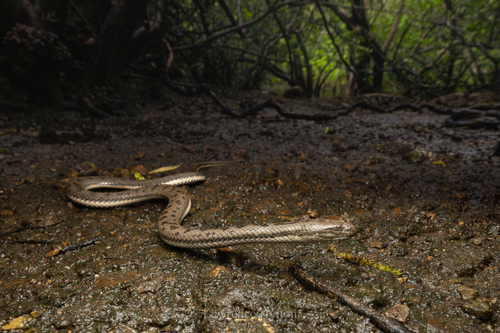
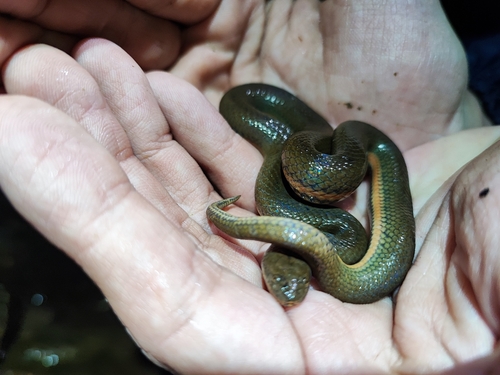
3 species make up the genus Myrrophis, the snakes commonly called water snakes. None are considered dangerous to humans.
About Asian water snakes
Mildly venomous, rear-fanged mud and water snakes of East and Southeast Asian wetlands, harmless to people but built entirely for life in the water.
Myrrophis is a small genus in the family Homalopsidae, the group commonly called mud snakes or Oriental-Australian water snakes. The family contains roughly 50 species across Asia and northern Australia, and nearly all of them are aquatic or semiaquatic, spending their lives in fresh, brackish, or coastal waters. Myrrophis sits firmly inside this aquatic family, and its members are best understood as typical homalopsids: low-slung, water-bound snakes adapted to hunting in soft-bottomed wetlands rather than on dry land.
The genus is centered on East and Southeast Asia. Its best-known member, the Chinese water snake, ranges across southern China, Taiwan, and Vietnam, where it lives in rice paddies, ponds, slow rivers, irrigation ditches, and marshes. The second species, Bennett's mud snake, occupies similar lowland freshwater and brackish habitats in the same broad region. These are snakes of muddy, shallow, slow-moving water, the kind of soft-edged wetland where they can burrow into sediment and ambush prey.
Members of Myrrophis show the classic homalopsid build. They have stout, cylindrical bodies, smooth or weakly keeled scales, small eyes set high on the head, and nostrils positioned toward the top of the snout, all features that let them breathe and watch for prey while mostly submerged. Coloration is generally muted: olive, brown, or grayish above, often with darker stripes or banding and a paler belly. Like other water snakes, they are not built for speed on land and move awkwardly when out of the water. General identification rests on the combination of an aquatic lifestyle, a heavy body, and the high-set eyes and nostrils typical of the family.
These snakes are rear-fanged and mildly venomous, like the rest of Homalopsidae. Their enlarged grooved teeth sit at the back of the upper jaw, and the venom is weak and adapted to subduing fish and amphibians, not large animals. Bites to humans are rare and typically cause only minor local effects such as slight swelling or irritation. They are not considered dangerous to people, and there are no records of serious envenomation from this group. Even so, no wild snake should be handled, and a bite from any wild snake warrants washing the wound and watching for unexpected reactions. If a bite causes spreading symptoms or any difficulty, contact US Poison Control at 1-800-222-1222 or your local emergency services.
Ecologically, Myrrophis snakes are aquatic predators that feed mainly on fish and amphibians, hunting in the murky shallows where they live. In keeping with most homalopsids, they are live-bearing, giving birth to small litters of fully formed young rather than laying eggs, an adaptation well suited to an aquatic existence. They are generally nocturnal or crepuscular and secretive, staying hidden in vegetation, mud, and submerged debris. The Chinese water snake in particular is harvested in large numbers across parts of its range for food, skins, and the wildlife trade, which makes habitat loss and overcollection relevant pressures on the genus.
Myrrophis belongs to the Homalopsidae family (Mud & water snakes). Aquatic, mud-dwelling snakes with upward-facing eyes and nostrils. Stout, often drab snakes with upturned nostrils, found in or near muddy water.
Danger: Rear-fanged with mild venom; not considered dangerous to humans.
All species (3)
Keep learning
- What Is a Snake? Anatomy and the BasicsA clear overview of what makes a snake a snake: limbless body plan, anatomy, evolution from lizards, species diversity, and why they are ectothermic.
- How Snakes Move, Hunt, and EatHow snakes move without legs, hunt as ambushers or active foragers, kill by constriction or venom, and swallow prey wider than their head.
- What Do Snakes Eat?All snakes are carnivores. Learn what snakes eat, how diet changes with size and age, how often they feed, and how they hunt and swallow prey.
- Venomous vs Nonvenomous: How to Tell the DifferenceThe folk rules for telling venomous snakes apart, where each one fails, and why location-based identification beats guessing by sight.