
Genus · Homalopsidae
Types of mangrove snakes
2 species make up the genus Myron, the snakes commonly called mangrove snakes. None are considered dangerous to humans.
About mangrove snakes
Small rear-fanged water snakes of Australasian tidal mudflats, built for hunting in brackish mangrove channels.
Myron is a small genus in the family Homalopsidae, the mud snakes and Indo-Australian water snakes. The family is a group of mostly aquatic and semiaquatic snakes adapted to slow water, estuaries, and mud, and Myron sits squarely in its coastal, salt-tolerant wing. The two species in our database, the Broome Mangrove Snake and Richardson's Mangrove Snake, are northern Australian forms tied to mangrove and tidal flat habitats. They are modest in size, typically well under a meter, with stout bodies, smooth or weakly keeled scales, and eyes and nostrils set high on the head, all hallmarks of snakes that spend their time in shallow muddy water.
These are coastal animals of tropical northern Australia and nearby waters, living in mangrove forests, tidal creeks, mudflats, and estuaries where fresh and salt water mix. Like other homalopsids they are most active at night and at the tide's edge, foraging across exposed mud and through shallow channels. In general terms you recognize a Myron by the combination of a small heavy-bodied water snake found in brackish coastal mud, with upward-facing eyes and nostrils and a habit of moving with the tides rather than living far inland.
Myron is rear-fanged, meaning it has enlarged grooved teeth toward the back of the upper jaw and a mild venom used to subdue small prey such as fish and crustaceans, the typical homalopsid diet. The venom is adapted to those prey, not to people, and these snakes are not considered dangerous to humans, but rear-fanged does not mean harmless: a prolonged chewing bite can deliver venom and cause local effects, so no wild snake should be handled. Homalopsids in this group are generally live-bearing, producing small litters. If a bite causes a reaction beyond minor local irritation, do not wait it out at home, contact US Poison Control at 1-800-222-1222 or your local emergency services.
Myron belongs to the Homalopsidae family (Mud & water snakes). Aquatic, mud-dwelling snakes with upward-facing eyes and nostrils. Stout, often drab snakes with upturned nostrils, found in or near muddy water.
Danger: Rear-fanged with mild venom; not considered dangerous to humans.
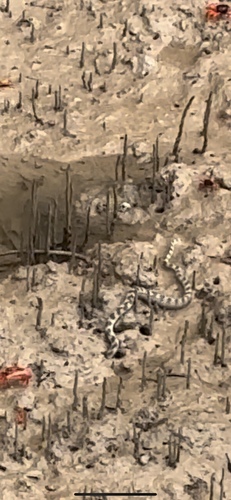
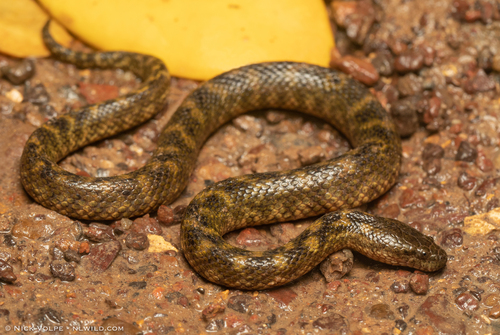
All species (2)
Keep learning
- What Is a Snake? Anatomy and the BasicsA clear overview of what makes a snake a snake: limbless body plan, anatomy, evolution from lizards, species diversity, and why they are ectothermic.
- How Snakes Move, Hunt, and EatHow snakes move without legs, hunt as ambushers or active foragers, kill by constriction or venom, and swallow prey wider than their head.
- What Do Snakes Eat?All snakes are carnivores. Learn what snakes eat, how diet changes with size and age, how often they feed, and how they hunt and swallow prey.
- Venomous vs Nonvenomous: How to Tell the DifferenceThe folk rules for telling venomous snakes apart, where each one fails, and why location-based identification beats guessing by sight.